
Updated ,first published
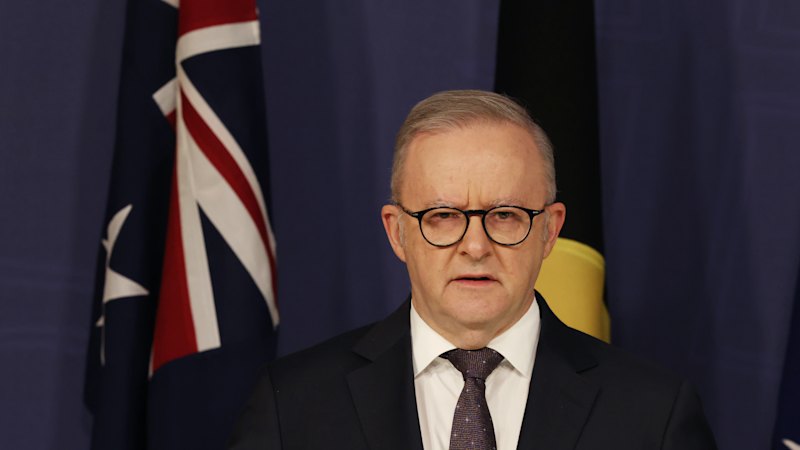
Anthony Albanese says tapering the fuel excise cut is a sensible measure that will provide certainty to motorists as fragile peace talks come under threat and Iran says it closed the Strait of Hormuz because of Israel’s continued attacks on Lebanon.
The prime minister said on Sunday that drivers would get 16¢ a litre off fuel for the month of July – an extra month of relief, but at half the rate of the 32¢ discount that had been applied since April. The announcement came after the United States and Iran signed a memorandum of understanding to end hostilities on Friday.
By Sunday, Iran had accused the US of a “clear breach of its commitments” by failing to end Israeli attacks on Lebanon.
Albanese will meet with state and territory leaders at national cabinet on Monday and said he expected them to do “the right thing” and agree to continue forgoing GST windfall profits to help fund the relief extension.
“A step-down is a sensible thing to do,” Albanese told Sky News. “We know that families are still under pressure, and we also know that the impact of this conflict on the other side of the world will have a long economic tail to it.”
He said that while oil prices had come down this week, it would take some time to see that reflected at the pump.
“I’ve got a national cabinet meeting on Monday, and I’ve already had discussions with the chair of the Council of Federation, Premier Roger Cook, to inform him that we’ll take a proposal and I’m confident that the states will, just as they did the right thing beforehand, step down accordingly.”
The extension is expected to cost $400 million.
Albanese said the government would continue to assess the circumstances in the Middle East and respond to future shocks appropriately.
Asked whether the nation would join the United States if it removed sanctions on Iran to get a peace deal over the line, Albanese said Australia would make its own decisions.
“Bear this in mind that Iran orchestrated attacks on Australian soil. We don’t take it lightly – we expelled the Iranian ambassador from Australia, the first time an ambassador has been expelled since the Second World War.”
Coalition foreign affairs spokesman Ted O’Brien said the peace deal between the US and Iran was fragile and blamed Lebanese militant group Hezbollah for undermining the agreement with attacks on Israel.
“If you think of it from an Australian point of view, if we actually had missiles raining down on our country, the expectation would be our government acts,” he told the ABC’s Insiders.
“We’re dealing with a terrorist organisation – we’re dealing with Hezbollah again. This is a proxy of Iran, a despotic regime that kills not only their own people but other people around the world, and this is what makes it so complicated that I don’t think we can simplify it.”
O’Brien said Labor should be credited for gradually reducing the excise cut, while Opposition Leader Angus Taylor was more circumspect, saying he hadn’t seen all the detail.
“I understand the logic of having a graduated taper of this, and as I say, we’ll look at it, but we have been supportive of cuts to the fuel excise from the start,” Taylor said. “In fact, we proposed it in the first place, and Labor copied us.”
Taylor said the relief should be offset with cuts from other parts of the budget.
Former Nationals leader David Littleproud told Channel Nine’s Today program he welcomed the extension of the fuel excise cut, but said “it’s still a kick in the guts” for motorists.
“We haven’t got a lasting peace agreement in the Middle East. This is going to take some time for it to wash through,” he said.
Australian Chamber of Commerce and Industry chief executive Andrew McKellar said the decision to extend the cut to the fuel excise and the heavy vehicle road user charge was welcome aid for freight operators and the businesses that depend on them.
“Transport costs flow through the entire economy. When those costs spike, it pushes up prices and adds to the pressure businesses are already facing from weak demand and rising operating costs,” McKellar said in a statement. “The government should remain ready to respond if conditions deteriorate.”
National Roads and Motorists’ Association spokesman Peter Khoury warned the lost revenue would have consequences for the nation’s infrastructure.
“We are absolutely delivering relief when you halve the excise, there’s no doubt about that, but then the flip side to that, of course, is we have roads that need to be maintained and upgraded,” he said at a press conference.
“We need this war to end, and we need the strait to open – otherwise, all we’re doing is really tinkering around the edges.”
Cut through the noise of federal politics with news, views and expert analysis. Subscribers can sign up to our weekly Inside Politics newsletter.
 Brittany Busch is a federal politics reporter for The Age and Sydney Morning Herald.Connect via email.