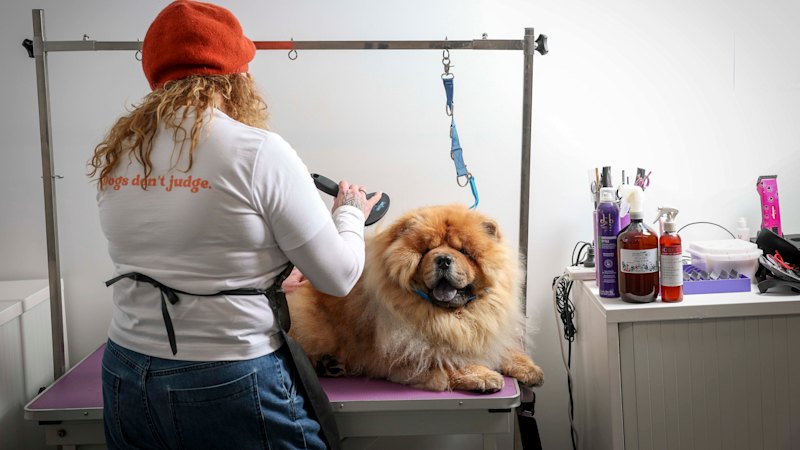

A new dog-styling salon fits right in among the boutiques and cafes of the upmarket shopping strip along Maling Road in Canterbury.
Customers drop off their pooches, like Desi the purebred chow chow, for a nail-clipping, wash and blow dry at New Leash while they go off to get their own nails and hair done.
But there are two twists in this tale. New Leash does not pay rent. And some of its employees have served time in prison.
It is the first social enterprise in the 79-year history of the charity, Prison Network, which supports women both during incarceration and after their release.
In addition to pampering pooches, the salon’s aim is to provide an employment path “for women with lived experience of the justice system”.
Prison Network CEO Amelia Pickering says since the shop opened eight weeks ago, there have been 240 canine clients, “mostly cavoodles”, and the feedback had been good.
Pickering feels a dog salon is the perfect business to help formerly incarcerated women readjust to society while learning skills like customer service and dog washing.
“We often say, ‘dogs don’t judge’,” Pickering says.
“So when a woman comes out [of jail], and is struggling with stigma and shame, being able to work with a dog that’s going to love and validate her, that felt like a perfect business model.”
Philanthropist Cynthia Carter gave Prison Network rent-free use of the former fruit shop that she owns in Maling Road.
Carter was already a Prison Network supporter after spotting a church newsletter five years ago calling for Tim Tam biscuit donations for Christmas hampers that the charity would send to inmates.
Her curiosity about the program led to Carter volunteering for two years, in a craft program with women at Tarrengower Prison near Maldon.
Pickering mentioned to Carter that Prison Network would love to open a social enterprise.
“I said, ‘I think I can help you’,” Carter says, and offered free use of the Canterbury shop.
Pickering says seeing numerous dogs walking past, and knowing how difficult owners find it to get into a dog groomer “because they’re all booked out”, the penny dropped that they should open a dog-styling salon.
Carter, who is secretary of the Maling Road Business Association, says it is the type of business that traders want for the street, “so they were very excited”.
“I explained the not-for-profit behind it and they instantly embraced it. They’re calling it ‘our local charity’.”
New Leash employee Louise (not her real name) says she felt lonely after being released last November after a stint “inside”, but her role at the grooming salon has helped her make friends.
She works part-time and is studying to be an alcohol and other drugs counsellor.
While Louise helps wash dogs, she mostly works front of house, learning new computer systems and gaining confidence. “For me, it’s a stable job, which I’m totally enjoying.”
Prison Network was founded in 1947 by Myrtle Breen, who visited female inmates in Pentridge Prison. The network’s activities range from running fitness and craft classes to driving children to visit their mothers “inside”, and helping with employment and housing outside prison. It has more than 130 volunteers.
In another big step for Prison Network, from July 1, it will change its name to Hope Network.
Pickering says women in custody at Dame Phyllis Frost Centre in Deer Park came up with the name.
She says that when writing references to help women obtain leases or jobs, “having the word ‘prison’ in our name is not ideal”.
With the name, Hope Network, “we’re replacing prison with hope because that’s what we’re trying to do”.
Start the day with a summary of the day’s most important and interesting stories, analysis and insights. Sign up for our Morning Edition newsletter.