RUSALKA ★★★★
Glasshouse Theatre, QPAC, until July 4
We all remember Ariel’s undersea world, full of fishy friends, chirpy songs and colourful Disney adventures.
By contrast, Rusalka’s curtain rises on a murky lake bed peopled by sad, bald-headed female polyps in grey, mud-stained smocks. Their patriarch Vodnik (Warwick Fyfe) is as much cult leader as Water King; it’s little wonder his wistful nymph daughter Rusalka (Eleanor Lyons) would look to dry land and want to be where the people are. Or so it seems.
Czech Romantic composer Antonin Dvorak is best known for orchestral works such as the New World Symphony, but his ninth opera Rusalka (1900) has risen from the depths in recent decades to be a canonical favourite.
It’s an Eastern European take on the folk tales that inspired Hans Christian Andersen’s The Little Mermaid. The composer’s tightly orchestrated score is powered by Czechian folk melody and Wagnerian leitmotif – those musical cues signalling characters, emotions and epiphanies. It practically takes the listener by the hand, with flutes signalling the fluttering of hearts, shimmering harps evoking sunlight on water, and the timpani flagging the forces of destiny. The fact they’re singing in Czech (with surtitles) hardly matters.
In the version of the story adapted by Dvorak’s librettist Jaroslav Kvapil, the heroine pines for the human Prince (Rosario La Spina) and makes a deal with a witch. Here she’s called Jezibaba and played by Ashlyn Tymms as a sardonic bag lady; try to leave not humming her spell-song, the playfully sinister waltz Cury mury fuk.
Rusalka’s transformation into a human means trading her voice for a full head of hair and a flashier wardrobe. But the love of men like the Prince is fickle, and the human world a shallow sham. Much humour is derived from the heroine’s inability to walk downstairs in a tight skirt, and the expectations of the leering mob are similarly constricting.
Directed by Sarah Giles, this dark and twisted Rusalka arrives having played in Sydney last year and Perth the year before that, with different lead performers. The arrangement allows the state opera companies to share the considerable costs, and when the show they collectively produce is as strange and captivating as this one, why wouldn’t they?
For Brisbane, Lyons (joined by her husband Vladimir Fanshil as conductor) is equal to the many climactic trills in Dvorak’s score, and her rendition of the famous Song to the Moon aria skirts the sublime. When Rusalka loses her voice in the second act the orchestra takes over in conveying her emotional state and she can focus on her acting; Giles teases out a wealth of psychological depth using blocking and gesture.
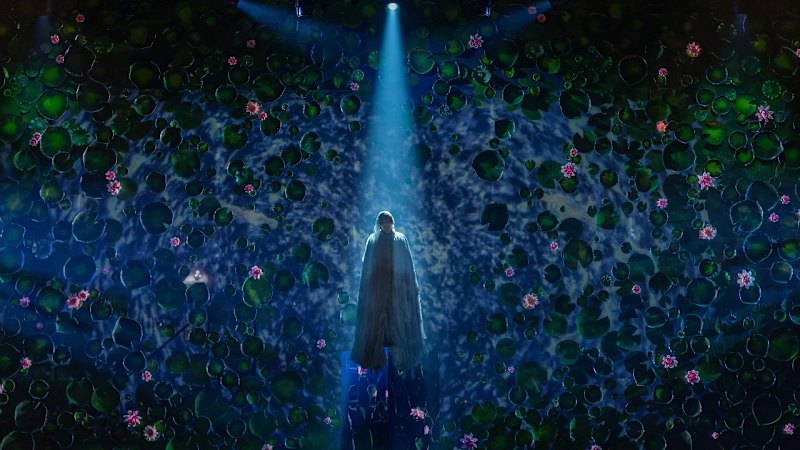
Set designer Charles Davis gives us a torpid lake floor with a lily pad-dotted ceiling, the angular confines of a pillared castle, and a strange green netherworld inhabited by will-o’-the-wisps.
Then there’s those agreeably unhinged costumes by Renee Mulder. Wood sprites sport elongated arms like tree roots, party guests wear helmet-like masks, and Jezibaba holds court over a Muppetish entourage. When the full cast comes out at the end to take their bows, it’s like somebody turned on all the lights at one of Freddie Mercury’s parties.
Disney’s mermaid Ariel is on a fast track from fatherly control to compliant wifedom. This opera isn’t sure that love is worth it, or that growing up itself is such a good idea. Who even is Rusalka? The opera makers have clearly had a huge amount of fun trying to find out.
Start the day with a summary of the day’s most important and interesting stories, analysis and insights. Sign up for our Morning Edition newsletter.
 Nick Dent is a Culture Reporter at Brisbane Times, covering arts, entertainment and things to do in the city.Connect via email.