
Reuters reported that an Iranian official said about 2000 people had been killed so far during the protests, broadly matching claims by activists. Meanwhile, a spokesman for the United Nations human rights office said it was hearing the number was in the hundreds, citing sources in Iran.
The Islamic regime has cut off internet access in Iran and is attempting to jam Elon Musk’s Starlink satellite service, which protesters have been using to organise and communicate with the outside world. That makes assessing the death toll and full scale of the demonstrations difficult.
Iranians attend an anti-government protest in Tehran on January 9. The scale of the demonstrations has surpassed all recent Iranian uprisings. Credit: AP
Bloomberg reported early on Wednesday (AEDT) that Musk’s SpaceX was waiving subscription fees in Iran, offering the service for free.
Still, with some phone services now restored, more reports from are now emerging from within Iran.
“I saw it with my own eyes – they fired directly into lines of protesters, and people fell where they stood,” one protester told the BBC.
Loading
Omid – in his early 40s and whose name the BBC changed for his safety – security forces had opened fire at unarmed protesters in his city with assault rifles. “We are fighting a brutal regime with empty hands,” he said.
Medics in Iran say the healthcare system is on the brink of collapse.
“Dead bodies and injured people – men, women and children – are arriving in trucks, ambulances and private cars,” one medic near Tehran told London’s Telegraph.
“We cannot help everyone. Many died because we could not even visit them. Some of my colleagues have collapsed. We have shortages of everything.
Loading
“There are rivers of blood in hospitals here.”
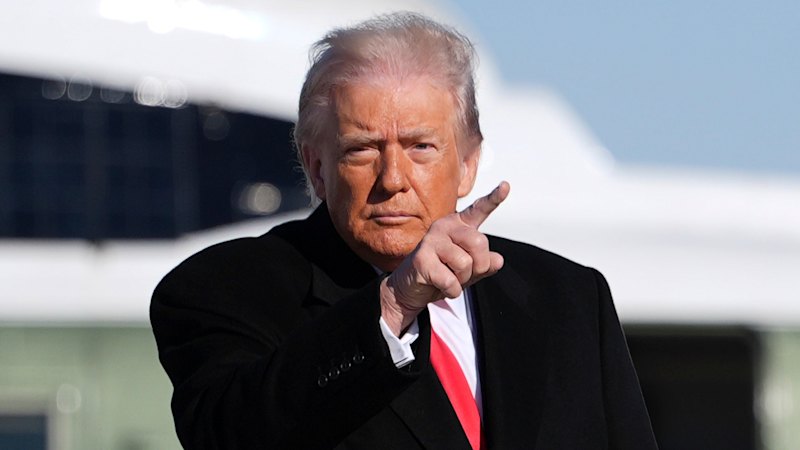
On a trip to Michigan early on Wednesday (AEDT), Trump declined to explain his statement that help was on its way. But in a speech at the Detroit Economic Club, he implied that it referred to the 25 per cent tariffs he had announced on any countries still doing business with Iran.
Trump also said the death toll was not clear. “I hear five different sets of numbers [but] one death is too much,” he said. “It’s all very fragile. It would have happened to us, I’m telling you. If I didn’t win the election, it would have happened to us.”
Reza Pahlavi, the exiled crown prince and son of the deposed shah of Iran, is also among those urging Trump to intervene militarily.
“The level of massacre has been unbelievable. The regime is, with no pity, using military machinery – AK-47s – to shoot to death protesters. Morgues are overfilled,” he told Fox News.

Reza Pahlavi, exiled son of Iran’s toppled shah, in Paris last year. It’s unclear whether he has much support among protesters in Iran.Credit: AP
“The decisive element that everybody’s waiting for is: when will the cavalry arrive? Part of the reason they are still on the street fighting is they believe that this president is committed to do what he promised he will.”
Vice President JD Vance rejected a report in The Wall Street Journal that suggested he was trying to convince Trump to pursue a diplomatic solution instead of using force, in contrast to Secretary of State Marco Rubio.
Vance’s aide William Martin released a statement saying Vance and Rubio were together presenting a suite of diplomatic and military options to the president, “without bias or favour”.
In Europe, governments summoned Iranian ambassadors to account for the regime’s brutality against its own people. The German Foreign Office called the Islamic Republic’s actions “shocking” in a statement on X.
British Foreign Secretary Yvette Cooper announced the United Kingdom was preparing new sanctions that targeted Iranian finance, energy, transport, software and other industries.
“This latest conduct by the Iranian regime is no aberration. It is no outlier. It is all too in keeping with the fundamental nature and track record of this regime,” Cooper told the House of Commons.
“Just as they did in 2022, it is absolutely clear that the Iranian regime are trying to paint these protests as the result of foreign influence and instigation.
“They are using that accusation to try and whip up opposition to the protests amongst anti-Western Iranians, and to try and justify their vicious and sickening attacks on the ordinary civilians marching in the streets.”
The protests began on December 28 over the fall in value of the currency and have grown into wider demonstrations and calls for the fall of the clerical establishment.
Iran’s authorities have taken a dual approach, cracking down while also calling protests over economic problems legitimate.
The US, which has not had diplomatic relations with Iran since 1980, and already warns Americans against travelling to the country, issued an alert saying US citizens in Iran should consider departing to Armenia or Turkey if safe to do so.
Get a note directly from our foreign correspondents on what’s making headlines around the world. Sign up for our weekly What in the World newsletter.