
Future Fund chief executive Raphael Arndt sent his executive assistant on at least two business class trips overseas, including one to inspect hotel rooms for the executives, while Arndt attended the exclusive members-only Club 33 at Disneyland.
During questioning in Senate Estimates on Tuesday evening, Arndt was accused by Senator David Pocock of spending taxpayer money “in a cavalier way”, as the Future Fund boss admitted he had visited the Disney club but “not as a recreational activity” and was unable to say if taxpayers or Disney picked up the bill for that trip.
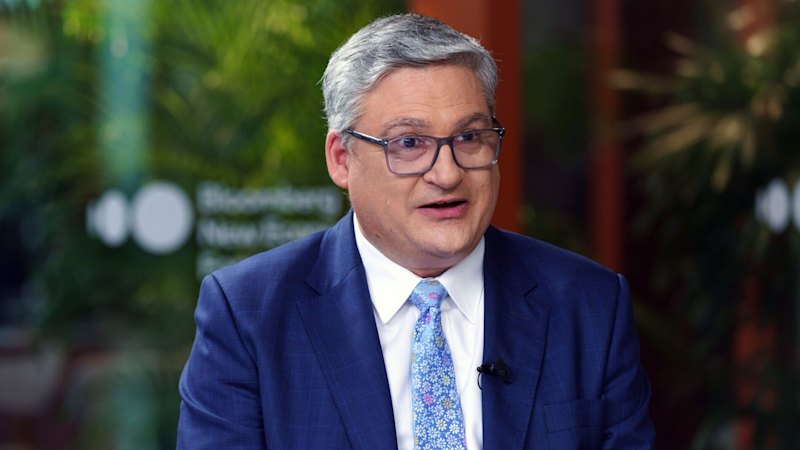
Raphael Arndt, chief executive officer of Future Fund. Credit: Bloomberg
The Future Fund is Australia’s sovereign wealth fund and invests and manages major agencies including the Medical Research Future Fund, the Housing Australia Future Fund and five other entities. It was established in 2006.
The exclusive Club 33 was founded by Disney creator Walt Disney in 1967, and membership is by invitation only. If invited to join the club, prospective members have to pay $US35,000 ($53,000) up front and then an annual fee of about $US15,000, according to online reports.
Arndt said he went to the exclusive Disney club to learn about the entertainment giant’s training programs.
“On one of the trips we did, when we were looking at setting up a Learning Academy for the Future Fund, The Future Fund Academy, which teaches culture, one of the peer groups that we identified in the study was Disney and the Disney University, because they do cultural induction for their teams in a way that seems quite effective. And so we organised for some meetings with a person who was involved in that activity, and had a tour of the facility, which included lunch at the location that you are referring to.”
During the hearing on Tuesday evening, independent senator David Pocock asked Arndt if his former executive assistant, who was not named, had ever travelled overseas for work.
“I can think of twice, but it might be more, but she supported a board trip, and she also went on a trip to assess hotels as to their suitability for our staff and support with one other person, the negotiation of rates with hotels to get better deals,” Arndt said.
“So it was my view when I became the CEO that it would make sense to centralise that function [travel booking] and negotiate rates with hotels. The business case that was put up, which I’ve looked at recently, so I recall it, was that the trip would cost about $20,000 and that the annual savings should be at least $30,000 and my understanding is we’ve realised more savings than that as a result of that project.