
Sarah Bailey
My friend Lucy took a photo recently. Lucy rides horses and had just finished a ride when she noticed that a nearby kangaroo was standing next to a fox while a bird flew artfully in the sky above them. In the shot, flowers form a vivid mauve haze and the surrounding grass is a lush green. It’s objectively a great photo and she did what most of us do when we take a good snap these days: she posted it online.
Within minutes the comments came rolling in.
AI, one person wrote.
Not real, another agreed.
That bird looks fake.
Lucy and I texted about it later, agreeing it was sad so many people were eager to dismiss the photo as fake.
A few days later my dad sent me a reel on Instagram. It was an old video of George W. Bush talking about America’s immigration policy. Hopefully this isn’t AI, Dad wrote. Because it’s relevant to what I was saying the other day. As I was watching the video, my eldest son walked into the kitchen talking on the phone to his friend. I could only hear one side of the conversation. Ha, nah I saw that too, man. It’s fake for sure.
Humans have never been satisfied with the real world and have relentlessly tinkered with it, often taking its bones and enhancing them.
SARAH BAILEY
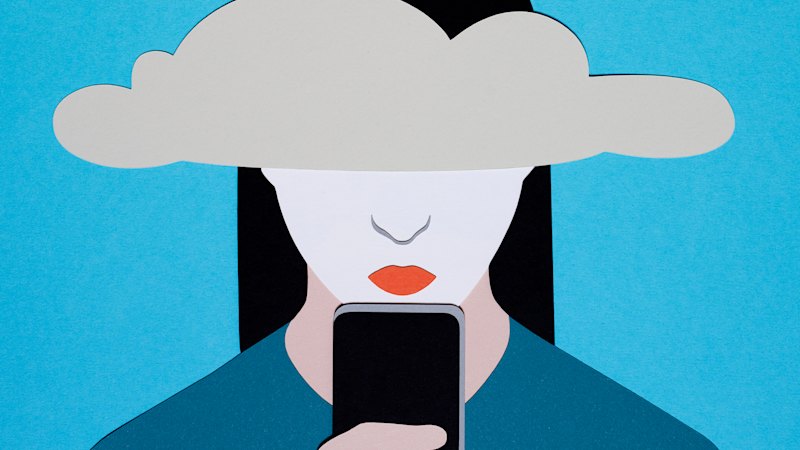
“Probably AI” is a common catchphrase in our house these days and it is said without any emotion. From the point of view of my teenage kids, even if they see it with their own eyes, it’s not necessarily real. Play on. And I’m left wondering, does this widespread scepticism matter?
My latest novel, Click, explores how AI is being used by criminals and the challenge this presents police. From fraud to deep fakes to terrorism, I delve into what happens when things are not as they seem. It’s the darkest book I’ve written, namely because there is nothing scarier than what we can’t trust.
Fortunately, Click is a work of fiction, born from my imagination and all the disparate threads of information I’ve banked over the years. It’s not “real”, either. So why do I feel such an uneasiness about the avalanche of fakery AI has unleashed? It’s not like reality hasn’t been distorted in the past. Humans have never been satisfied with the real world and have relentlessly tinkered with it, often taking its bones and enhancing them. Remember filters? It would be naff to bother posting a shot with the hashtag #nofilter these days; we’ve got bigger things to worry about.
More than 10 million people liked a fake wedding photo of celebrity couple Zendaya and Tom Holland. No big deal, I guess, especially seeing they did get married. But there are also AI-generated photos coming out of war zones – based on real atrocities, mind you, but still. It feels wrong. And god (and Elon) knows what is being created on sites such as Grok.
And that’s the problem. A bunch of people debating whether a nature photo is real or not might not be a big deal – but if there’s one thing the last decade has taught us, it’s that the slope is slippery, especially when Big Tech sees cash at the bottom.
I regularly observe my toddler deftly navigating what is real and what isn’t. He watches cartoons and 3D renders, he’s obsessed with Spider-Man, and he sees his older brothers yelling into screens as they fight zombies and build complex worlds out of pixels. He intuitively knows there is a difference between those things and reality, and for this reason I see him as a good litmus test. He loves Bluey but he knows she isn’t real. However, when I told him an AI-generated video of a baby mouse curled asleep with a kitten wasn’t real, he looked at me like I was crazy.
Maybe that’s why this new wave of fakery feels different. It’s fraudulent, a trick. It crosses an important line, a line that helps us make decisions, form opinions and safely navigate the world. And it leaves us in a puzzling catch-22. We’ve quickly learned to be wary, to look for the trick, and this is leading us to assume everything is AI. “It’s fake,” we say. “It’s bullshit.” We’d rather be wrong about something being real than feel like a dumbass because we got duped.
It’s not like reading a novel or going to a magic show where we willingly suspend our disbelief and step into an alternate reality. AI is a contract we haven’t signed up for, yet it’s coming at us from every angle. Parking for a moment the where-to-from-here of it all, I worry what this collective lack of trust does to our empathy and to our ability to form a coherent opinion. If we can’t trust what we see with our own eyes, what happens to our humanity?
I’m not sure what the answer is. AI labels? More regulation? Codes of conduct for registered media outlets? Increased media literacy? How do we put the fast-talking tech bro back into a bottle?
For me, it’s going to be about small acts of defy-AI-ance: being in nature, spending time with animals, meeting a friend, going to a party, reading a book. AI may be muddying what’s real online, but the real world isn’t going anywhere. It’s up to us to seek it out.
Click (Allen & Unwin) by Sarah Bailey is out March 31.
Get the best of Sunday Life magazine delivered to your inbox every Sunday morning. Sign up here for our free newsletter.