
I still remember my first time. I logged into my brother’s ICQ messaging account and tormented his friends. I remember my first time on social media, when my friend showed me this new site called MySpace where we could demonstrate our excellent taste in music and covertly chat to boys.
But most clearly, I remember my first meaningful time online. It was 2012. I was on my first big solo overseas trip, in a bedroom with a balcony looking over a pool. I arranged the scene carefully, laying out my most precious things. I took a photo on my iPhone, selected the Valencia filter and shared my first Instagram post.
That began my longest online relationship. For the next decade, I posted to Instagram constantly. Early on I was free and easy, sharing friends’ wedding photos with the same enthusiasm as funny signs I saw in shop windows. Then my output went from constant to curated. A favourite fashion editorial, an artfully obscure actress, perhaps an exceptionally flattering photo. Now, it’s rare that I repost more than an infographic on Stories.
When I was compulsively sharing and being shared with, I was expressing the person I wanted to be. I saw my feed as a space for community. But now I’m just lurking. Silently observing the lives (or rather, products and brands) of others. Inevitably, I’ve reached the final circle of online hell: doom-scrolling.
There’s little mystery over how I fell out of love with the internet. Because while the shift may feel personal, I’m not alone in this tempestuous relationship. Like many, I’ve found myself not wanting to share as much. I’m conscious of how my data and images are disseminated, my life is less dedicated to photogenic leisure, and I doubt my followers are as interested in potty training as they were in the parties and holidays of my 20s.
Last year The New Yorker’s Kyle Chayka described this decline in sharing on social media as “Posting Ennui”. While younger generations are conscious of avoiding the “vulnerability hangover” that often comes with over exposure, for Chayka and his fellow millennials – once the front line of live-streaming our lives – now increasingly see the practice as cringe.
Much of this evolution can be attributed to age’s ability to slough away youthful self-obsession. But blame can also be placed on the apps themselves. Mark Zuckerberg has spoken extensively about his decisions to shift Facebook and Instagram away from being a social gathering place for friends to what he optimistically called a space of “entertainment and learning about the world and discovering what’s going on”. During Meta’s Federal Trade Commission’s antitrust trial, Zuckerberg shared that the time users spend viewing content by their actual friends has declined in the past two years.
As an experiment, I recently tracked the types of content my Instagram feed showed me. It was all branded content, shopping links, ads and a handful of media brands or celebrities. No posts were from a person I actually know. Afterwards, I wasn’t angry at Instagram, I was angry at myself.
There was a time when the worst thing the internet could do was make us feel bad about ourselves. To stare at the polished lives of others and not see our own reflection. But now, mindlessly lurking, I don’t see a version of the world I want to inhabit. All I see are the dull eyes of lifeless AI avatars.
I once loved Instagram, and before that Facebook, Myspace, Livejournal, MSN Messenger, ICQ, hell even NeoPets. Which means I’ve witnessed the rise and fall of many techno-utopias since childhood.
I’ve heard many young people bemoan what they’ve lost with the social media ban: friends, information, a space to discover and create themselves. I can relate. When I remember ICQ, or LiveJournal or even the early years of Instagram, I remember a sense of excitement. But I also remember a sense of purpose, one I’m not convinced they know having grown up with this late-stage, zombie form of the internet. In my early online days I could have told you what I was doing there: connecting, tending an imaginary pet, being entertained, tormenting a sibling’s friends. Today, when I reach for my phone, I’ve usually forgotten the reason by the time my eyes adjust to the screen. By the time I put my phone back down, I feel worse than before.
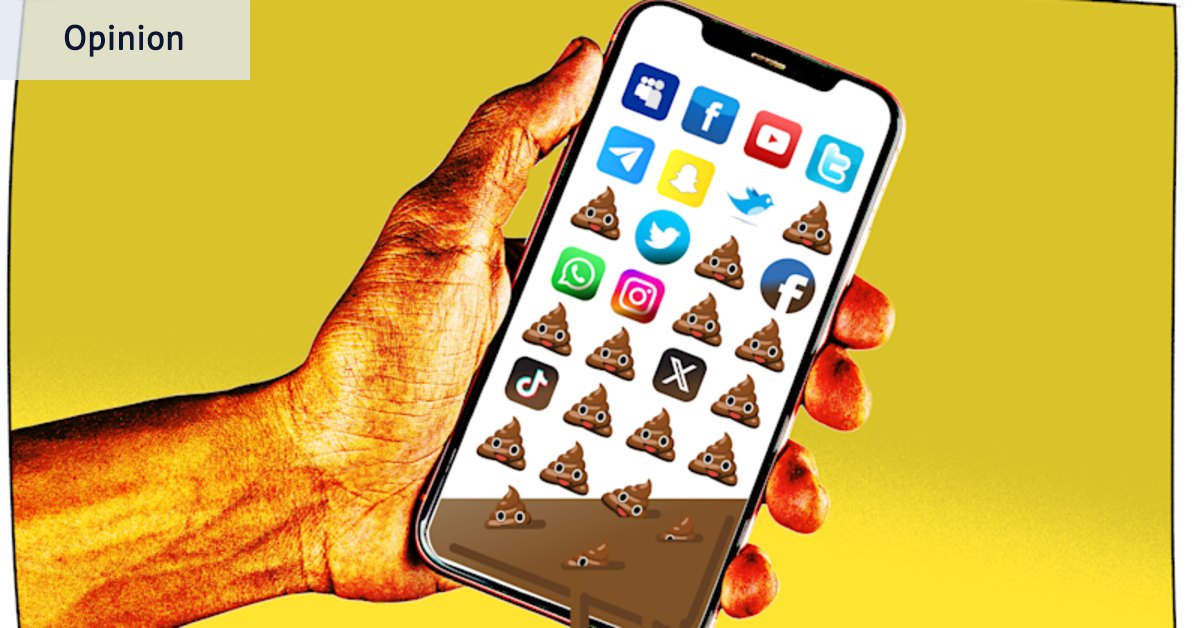
Technology critic Cory Doctorow explored this effect and impact in his book Enshittification. He coined the term in 2022 and in 2024 it was the Macquarie Dictionary’s word of the year. Macquarie defined it as: “the gradual deterioration of a service or product brought about by a reduction in the quality of service provided, especially of an online platform, and as a consequence of profit-seeking.” He captured a sense of collective frustration over how something that once held so much promise – the internet largely, and more specifically social media – went so bad.
The real mystery now isn’t why these digital spaces have become awful, but rather, why are we still here?
Sadly, I do not have the power, understanding or even sheer will to fix the internet. My near-life-long relationship to it has taught me it is the unstoppable cycle of digital life that good things online become bad. Safe places become unsafe. I cannot change this, but I haven’t given up hope of changing myself.
I wish I could say that I threw my phone in a creek or erased myself from all online spaces. Sadly that is not true. I am a child of the digital and physical world. But the bitter realisation that the internet has been drawing me in, disappointing me, and resnaring me since the ’90s has led to some self-awareness.
I still find myself doom-scrolling, but after the third or fourth post from a brand, a bot or at best a stranger, I’m starting to look up. I see my real, physical life, one that also disappoints me sometimes, but delights and surprises in ways that no techno-utopia ever managed to, even for a minute. And I put my phone down.
Wendy Syfret is the author of The Sunny Nihilist and a freelance writer based in Melbourne.
The Opinion newsletter is a weekly wrap of views that will challenge, champion and inform your own. Sign up here.
 Wendy Syfret is the author of The Sunny Nihilist and a freelance writer based in Melbourne.