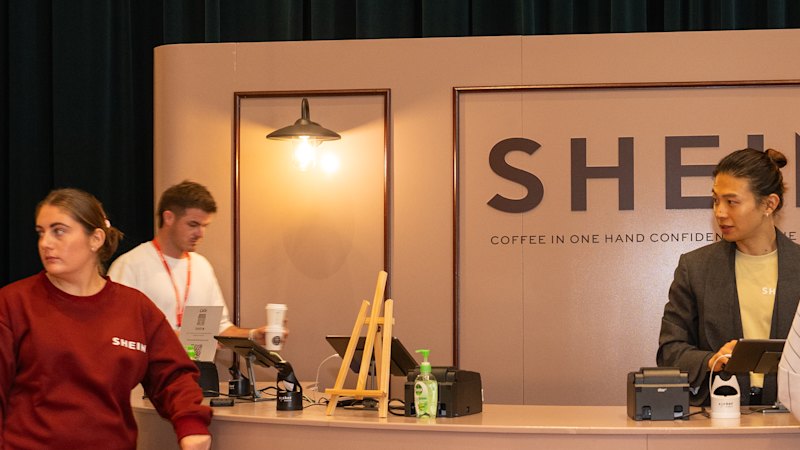

It’s a deal that ambitious fashion labels hoping to crack the global market can only dream of: access to half a billion customers across 160 countries; clothes made essentially to order; and relinquishing the burden of back-end operations and logistics to a sophisticated global operator that has spent 14 years perfecting its artificial intelligence-powered business model.
This is the pitch that ultra-fast fashion giant Shein is making to Australian fashion labels in the hope that they will be recruited as applicants to its Xcelerator program, which acts like a global launching pad.
“We’re looking for digitally savvy brands in Australia who provide different value, complementary value, to the Shein offering,” said Shein senior director Cui He. “I believe there are lots of them. So we’d really love to have conversations with them.”
Shein describes the Xcelerator program, first launched as a pilot in Britain in 2023, as a “global brand partnership platform” that serves as a springboard for emerging or established brands to scale rapidly by “plugging in” to Shein’s vast supply chain network of on-demand garment manufacturers, global logistics, fulfilment and distribution, and its ecommerce platform.
Since rolling out across China and France, Xcelerator now has 20 brands in its program. Most notable is UK label Missguided, relaunched through Xcelerator in 2023. Others include Dancing Leopard, Cosmina, Athiral, Jian Lasala, Arc by Sigmas, and Sumwon Studios.
It has undoubtedly helped them achieve international scale: together, revenue from the participants has exceeded $US400 million, a solid chunk of which has been contributed by Missguided.
The idea is simple: the brand designs the clothes, receives and tests samples, and retains control over the label’s intellectual property and creative direction. In turn, Shein offers its “supply chain as a service” to its industry peers, converting competitors into partners, and opening up new revenue streams in the process.
“The brand will develop the product, present the brand, they will set the pricing,” said He. “We would run anything sort of backstage – sampling, manufacturing and also our ecommerce platform management.”
If you’re a swimwear or menswear brand in particular, Shein would like to see you apply.
“We’re looking for brands who already have their own identity. They know who their customer is. They have a very strong brand identity, visual identity, also capabilities to develop commercial product,” said He, who leads the Xcelerator program. “Ecommerce understanding is very important.”
In Australia, the Singapore-headquartered clothing juggernaut – along with competitor Temu – is eating up a growing share of our wallets. About 2.9 million Australians spent nearly $2 billion at Shein last year, according to the latest Roy Morgan data. Through Xcelerator, Shein is asking Australian brands to join the same platform that has led to its own global success, which often came at the expense of smaller players.
The big, looming question is: would many Australian labels want to be part of this?
“Brand association is one of the most powerful and fragile assets a fashion business owns,” said fashion consultant Elizabeth Formosa.
“Partnering with Shein means your brand sits inside an ecosystem that has faced ongoing scrutiny around labour practices, intellectual property and environmental impact. That’s a reputational equation, not just an ethical one.”
The mechanics of the Shein machine
Founded in 2008 by Chinese-American entrepreneur Chris Xu, the entity now known as Shein was then called ZZKKO and focused on search engine optimisation and the sale of wedding dresses. In 2011, it operated largely as a drop-shipping company for women’s clothing, footwear and accessories, expanding across international markets like Europe and Russia. In 2015, it adopted the name Shein, which it said was easier for customers to remember.
The online shopping boom during COVID lockdowns turbocharged its growth in the 2020s, pushing up Shein’s valuation from $US30 billion to $US50 billion. But geopolitics has shifted Shein’s playing field: US President Donald Trump’s executive order to remove the de minimis “loophole” subjected small packages to steep tariffs that forced Shein to jack up the price of its products.
To diversify, Shein has decided to shift its focus to less hostile regulatory environments, such as France, Germany, Brazil and Australia.
“Australia is a very highly developed ecommerce market with lots of digitally native ecommerce brands,” said He. “It’s our top target market. We believe there [are] huge opportunities.”
But Shein’s greatest challenge is to shake off its reputation for fuelling overconsumption by producing poor-quality clothing to the masses. A 2025 Greenpeace study of 56 items found 18 items exceeded the European Union’s acceptable limit of hazardous chemicals. It has been repeatedly dogged by accusations of slave labour in its supply chain that Shein has tried to rectify by publishing a sustainability report and auditing suppliers more aggressively.
Common customer complaints include thin fabrics that tear after one wash; inconsistent sizing due to the thousands of suppliers it uses; and loose buttons or sequins that can become a choking hazard.
Shein director He acknowledged quality as one of the company’s biggest challenges and said addressing it was a top priority for leadership executives.
“There [are] different opinions, but actually there [are] a lot of people, a lot of loyal customers, [who] come back to Shein because of the quality and the value for money,” she said.
“I think there is more we need to do in terms of communication and local engagement to debunk this misunderstanding about Shein being not on the quality side.”
Moving to the more premium end of the market is one way Shein is trying to shore up its legitimacy. While it has been predominantly known for $9 tees, you can now find boutique-style labels flogging higher-end items for $80, said He, made with better quality materials, design and detailing.
But it is a widely held sentiment among Australian brands that they have felt pressured by global disruptors such as Shein and its associated “race to the bottom” on price, said Formosa.
“For those brands, partnering with Shein may feel like a significant compromise, not just strategically, but in terms of what their brand represents.”
Shein also says its “on-demand” business model does the opposite of adding to landfill: it makes batches of 100 or 200 items of clothing at any given time and only makes more if there is demand for it.
The nation’s leading advocacy body for the fashion industry is sceptical. “Shein’s business model creates a fundamentally uneven playing field for Australian brands and designers,” said Australian Fashion Council executive chair Marianne Perkovic.
“Australia is already the world’s biggest fashion consumer per capita, with over 200,000 tonnes of clothing going to landfill each year, and Shein’s model is built on accelerating exactly that cycle.”
Despite Shein’s claim that brands retain control of their intellectual property, Shein has amassed a string of legal disputes in several countries over the years, including Australia, often settled confidentially. Online-only fashion site The Iconic sued Shein over trademark infringement that was eventually and quietly settled.
An exit strategy should also be carefully scrutinised, said Perkovic, who warned long-term arrangements can be difficult to unwind. “The terms around exclusivity, pricing control, customer data and brand assets deserve as much attention as the revenue projections,” she said.
The Business Briefing newsletter delivers major stories, exclusive coverage and expert opinion. Sign up to get it every weekday morning.
 Jessica Yun is a business reporter covering retail and food for The Sydney Morning Herald and The Age.Connect via X or email.