Anyone who has ever done a HIIT class walks in with a certain set of expectations: loud music, burpees and muscles that will hurt a little afterwards.
What people might not anticipate is being encouraged to make as much noise as they can while doing sets of squats or told it’s OK to cry. But these are just a couple of things someone may be invited to try during a somatic exercise class, in which each workout is designed to help you look inward and release any pent-up emotions. (And yes, your thighs will still burn afterwards.)
Haven’t heard of somatic movement? According to some of Australia’s most popular fitness influencers and entrepreneurs, you’re about to start seeing it everywhere.
What is somatic movement?
“Somative movement, in its broadest term, is movement that brings your attention and awareness towards the internal landscape,” says Imogen Sist, physiotherapist and head trainer at KICStudio, the first bricks and mortar space from Australian wellness brand KIC.
To explain the difference between internal and external outcomes in exercise, Sist uses running as an example. “Running can be very external, if you’re only looking at your pace or distance,” she says. “Or if we run as a somatic experience, we ask how it feels while we’re running, what sensations come up in our body, physical and emotional.”
By this definition, Sist says all exercise can incorporate somatic movement.
Actions such as rubbing your temples during moments of rest, paying attention to tension in your face and asking yourself how you feel while doing typical exercise moves, like star jumps and leg pulses, are what Sist believes make her classes unique.
“In a general Pilates class, you might disassociate and think, ‘Oh just get through this’, but this [somatic exercise] is very focused on how you feel while you’re doing each movement,” she says.
How it differs to somatic therapy
The term “somatic” comes from the ancient Greek word soma, which roughly translates to “the living body and its wholeness”, says Jennifer Lalor, Byron Bay-based psychotherapist, EMDR practitioner and somatic therapist.
According to Lalor, somatic therapy differs from traditional talk therapies because it takes a body and mind approach to healing.
“Whether it’s somatic exercise or somatic therapy, we’re trying to help people bring their attention to the life of their body in a way that can be self-healing and self-educating,” says Lalor, citing a theoretical example of someone who has been in a car accident and is now holding trauma in their mind but also in their body.
While somatic therapy is often associated with trauma recovery, in which a mind-body approach can be uniquely healing, Lalor says it can also be very effective for high-performance people, such as executives and athletes, who need to show up mentally and physically in high-stress environments.
And though somatic movement is not to be confused with somatic therapy, Sist says elements of the mental health practice are sprinkled into the classes she and other trainers lead. “We take learnings from those kinds of practices.”
The next big fitness trend
Few workout classes have a celebrity following quite like The Class, a “music-driven somatic exercise method” combining body weight movements with cardiovascular training founded in New York by Taryn Toomey in 2011.
In a 2020 interview with Toomey for Goop, Gwyneth Paltrow referred to the workout as “pretty incredible and pretty unique”, admitting she felt embarrassed the first time she did it, making so much noise. Emma Stone, Naomi Watts and Alicia Keys are also fans.
While not the first studio to offer somatic movement classes in Australia, the April 18 opening of KICStudio in Melbourne’s Cremorne signals the trend’s move into the mainstream.
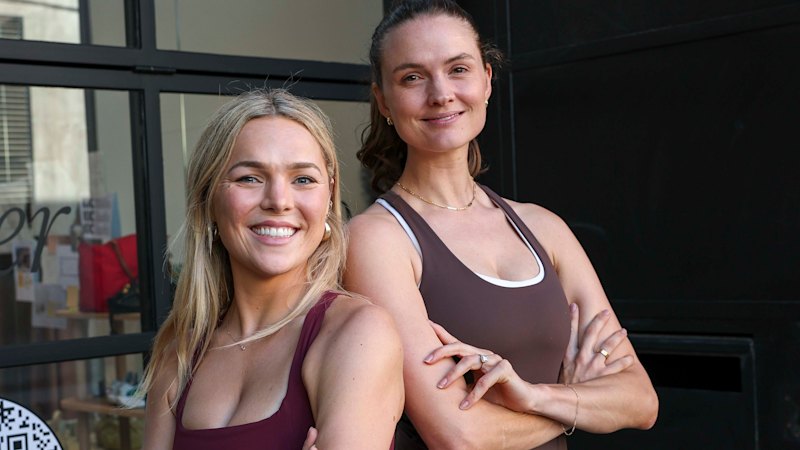
KIC co-founders Steph Claire Smith and Laura Henshaw are known for their holistic and inclusive approach to fitness, and this ethos will be reflected in the studio’s offering of four class types – all grounded in somatic movement – including HIIT, strength, yoga and breathwork.
According to Henshaw, the opening is the start of a national rollout program for KICStudio.
Trying it yourself
For visitors to KICStudio, classes may include using vocals during exercises (being loud is encouraged in the studio, which is mirror-free to help remove any feelings of self-consciousness), self-touch, breathwork and shaking – a movement Sist compares to birds resetting their feathers.
Once someone is familiar with the practice, Sist says, it’s easy for people to introduce these additions into their regular exercise routine, whether it’s while doing weights at home or on a walk.
“We’re always told as women we’re too loud and take up too much space, so we wanted to create a space where people can come and take up as much space as they want, be as loud as they want,” says Henshaw. “To find a practice that enables you to unlock that within yourself is electric.”
The writer travelled to Melbourne as a guest of KIC.
Make the most of your health, relationships, fitness and nutrition with our Live Well newsletter. Get it in your inbox every Monday.
 Gyan Yankovich is lifestyle editor at the Sydney Morning Herald and The Age.Connect via X.