
Those who chase fugitives use the expression: “You can run, but you can’t hide.”
For double police killer Dezi Freeman, the opposite was true – he could hide, but he couldn’t run.
Backed by a grab bag of loyalists and sovereign city conspiracy believers, Freeman was able to avoid police for seven months by living off the grid and moving as little as possible.
But lacking the network to be supported interstate and the resources to flee overseas, he was effectively trapped and waiting out time.
Freeman’s desperate hope was that he could outlast the police investigation, but Chief Commissioner Mike Bush made it clear that Taskforce Summit would continue until resolution.
Using multiple police sources, not authorised to be identified, we can reconstruct the final days of Australia’s most wanted man – one who police believed, until less than two weeks ago, had probably taken his own life in the bush.
The first tip was well-informed but vague. Freeman was hiding on a property somewhere near Walwa.
Using electronic resources and sources cultivated since Freeman shot and killed two police in August, investigators found his hideout near the Murray River at Thologolong.
Three ageing shipping containers and a cobbled-together campsite were discovered. On the roofs of the containers were apparently newly fitted spinning air ducts, fitted to make them habitable in the summer heat.

More than one person was likely needed to attach the additions. The crime scene shows that a new ladder was placed at the container near the ducts.
Detectives will be checking where the units were purchased and if there is CCTV of the buyers.
Police believe Freeman only recently moved to the remote bush site. Three camp chairs and an open box of beer are visual proof that the double killer had external support.
Once the hideout was discovered, the isolation that had protected Freeman became his enemy. He was trapped in his camp with the police having 360-degree access. If they could have chosen any place to find the dangerous offender, this was it.
So isolated he couldn’t take hostages and so open that he couldn’t slip away, he was a sitting duck.
The spot, near heavily wooded national park, provided ideal spots for police surveillance to conceal themselves, while the open camp dotted with trees could provide cover for the police arrest team.
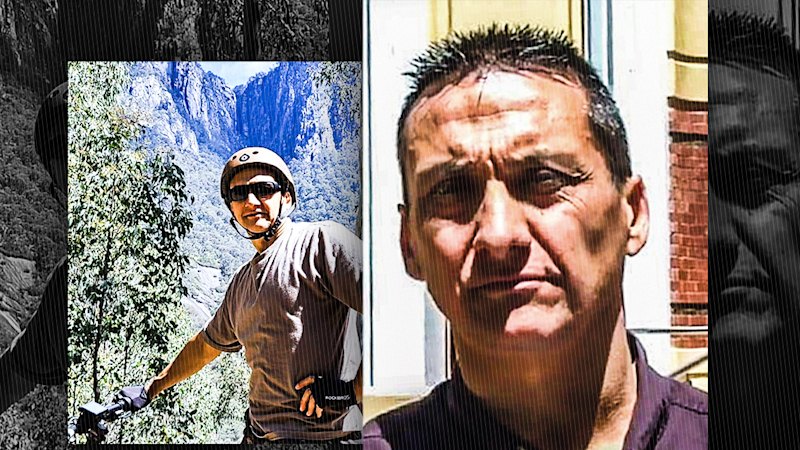
Freeman was living rough, surviving off dam water and supplies dropped in by supporters. He now had a beard and long hair.
Once police were satisfied that the man at the camp was Freeman and that he was alone, the Special Operations Group brought up a mobile team capable of making an intercept if he tried to move.
Then, more than 24 hours before they confronted Freeman early Monday, they moved into their preliminary locations. Some SOG officers remained hidden in their go positions for more than a day. It is believed that electronic surveillance was used to confirm Freeman was alone.
It is not known if the elite team had a chance to practice the raid at their indoor training headquarters, but they do routine arrest drills using one of six purpose-built containers.
Once they had mapped the arrest area, SOG commanders drew up an operational order covering all known contingencies.

Using darkness as cover, a team of eight – consisting of ground troops armed with military, heavy calibre semi-automatic weapons, and snipers with long range specialist rifles – moved in, all having a line of sight to the camp.
Another sniper was on board the police helicopter, lying on a purpose-built external platform protruding from the aircraft.
A police negotiator made contact with the man in the container about 5.30am, ordering him to surrender and telling him that he would not be harmed if he complied. In conversations, the man said things only Freeman would know – final confirmation to police that he was the fugitive.
Using an armoured vehicle, police cut an opening in the container, using a snorkel to deploy flash bang grenades and gas.
Freeman left the container using a doona to try and protect himself from the devices deployed by police.
Told to surrender, he instead raised the police-issue 15-shot Smith & Wesson semi-automatic pistol he had stolen from one of the police he murdered, and then fired. This time, he couldn’t ambush police as they all sheltered in pre-determined positions.
The ground troops and the snipers all returned fire. Freeman was shot more than 20 times.
A SOG dog was also unleashed.
The gun used by Freeman was found metres from his body, indicating it may have been shot from his hand.
Two burner phones found at the scene are being examined to try and establish who was assisting him.
The extent of the fatal injuries means DNA and/or fingerprint tests will be needed for confirmation of what is already know: that police found their man.
On August 26, 10 police went to Porepunkah to arrest Freeman over historical sex charges. Freeman had told friends and family it was over a skinny-dipping incident 20 years ago.
That is a lie. It was a serious child sex allegation.

Police knew Freeman was a difficult and obnoxious offender, but not necessarily dangerous. One of the arrest team, Detective Leading Senior Constable Neal Thompson, had dealt with Freeman previously, and it was hoped his presence would help prevent any escalation.
Instead, Freeman opened fire, killing Senior Constable Vadim de Waart-Hottart, 35, and Thompson, 59.
A combination of luck and good work kept the toll from being higher. The third policeman who was shot was at risk of dying before paramedics were cleared to treat him.
Freeman also pointed a gun at the head of a female sergeant and pulled the trigger several times. It failed to discharge.
Be the first to know when major news happens. Sign up for breaking news alerts on email or turn on notifications in the app.