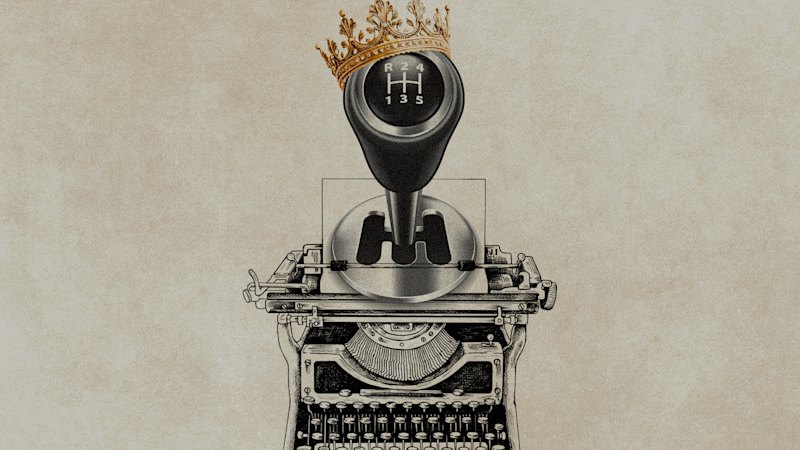

The passenger pigeon. The Tasmanian tiger. The dodo. The age of disco. All gone. Now something else seems to be heading towards the age of extinction: manual cars.
Plummeting sales, a lack of new learners, improvements in automatic transmission technology and the rise of electric vehicles mean that manuals may be an endangered species by the 2030s. In 2024, a mere 32,642 manual cars were sold in Australia, compared to 1.2 million automatic models. The ratio of automatic to manual driving tests in NSW is more than 10 to 1. Many big car companies are phasing out manual transmissions and going the EV route: good luck getting some of your preferred models in the manual option today.
If these trends continue – throw driverless cars into the mix, and it’s almost guaranteed that they will – then spotting a manual outside a regional town, used car lot, scrapyard or classic car convention in the not-so-distant future may become a rare event. Some 135 years since the unveiling of the Panhard et Levassor – the world’s first car to use a manual transmission – the manual’s legacy will grind to a halt like a learner driver destroying a clutch.
Corolla, Commodore or Falcon? The most popular cars in your postcode
“Automatic versus manual” is like the “Sydney versus Melbourne” debate of the -motoring world. And it’s a debate everyone must cast a vote on come registration season.
Another instructor asked me to imagine nuns holding on to the side of the car as I drove.
As someone who has had a 20-year love affair with manuals, I think the demise of the manual car is a damn shame. There’s something special about them – something hands-on, something engaging, something fun – that you just don’t get driving an automatic. Manual cars reward skilled driving with better fuel efficiency. They are generally cheaper to repair, less likely to be stolen (take that, thieves with automatic licences) and give you an exquisite feeling of smugness for owning a manual licence.
Indeed, having a manual licence allows you to experience decades of motoring in all its glory, when “driving stick” reigned supreme and automatic transmissions were derided as “slushboxes”. I can theoretically drive buses, trucks, 4WDs such as our current Subaru Forester, giant mining vehicles, certain super-cars, classic muscle cars … even the 1968 Ford Mustang GT Fastback Steve McQueen drove in Bullitt. Can you?
Besides, getting a manual licence is a challenge and an achievement all of its own. As a then-30-something, it wasn’t easy learning to drive on a manual. I remember when my instructor pulled the car over and lit up a cigarette because my driving was getting “pretty stressy”. I’m not a smoker, but I felt like reaching for a cigarette due to the stress, too, particularly when practising starts on hills that seemed as big as Swiss mountains.
Another instructor asked me to imagine nuns holding on to the side of the car as I drove. I could imagine those nuns taking off into the sky like Sally Field’s flying nun as I performed various high-speed moves. When, after a number of attempts, I finally got my licence, I never looked back. Or looked at another car that wasn’t a manual.
Driving a manual is a more intimate experience than driving an automatic. The connection is greater. Manuals demand your full focus: both feet and both hands. You learn to pay more attention, listen to the rev of the engine, feel the movement of the car on the road, find the sweet spot between clutch and gear, hear what the car is telling you. You learn to anticipate its needs: the need for a higher gear on the highway, a lower gear on the hills, the desire for a romantic country drive after the stop-start traffic-light chaos of the city. It’s a more satisfying experience all round. (For some reason I feel like asking my driving -instructor for that cigarette right now.)
Driving an automatic car feels like being a bystander in life’s journey. The idea of driverless cars also leaves me cold. Is anyone really ready for the ghostly sight of thousands of cars on the road with no one at the wheel?
Many car enthusiasts prefer manuals, too. Just look at the classic car collections of serious aficionados, from Jay Leno to Rowan Atkinson, and you’ll find them full of beautiful, expensive manuals: everything from head-turning 1928 Bugatti Type 37As and Jaguar E-Types to sleek 2004 Porsche Carrera GTs. It’s sad to imagine that one day people won’t have the skills necessary to drive these eminently collectible cars.