
Crossbench MPs will push back against Labor’s attempts to rein in spending on the NDIS in next month’s budget, warning that premature efforts to curb the $50 billion scheme’s growth will just move costs onto other areas such as health and aged care.
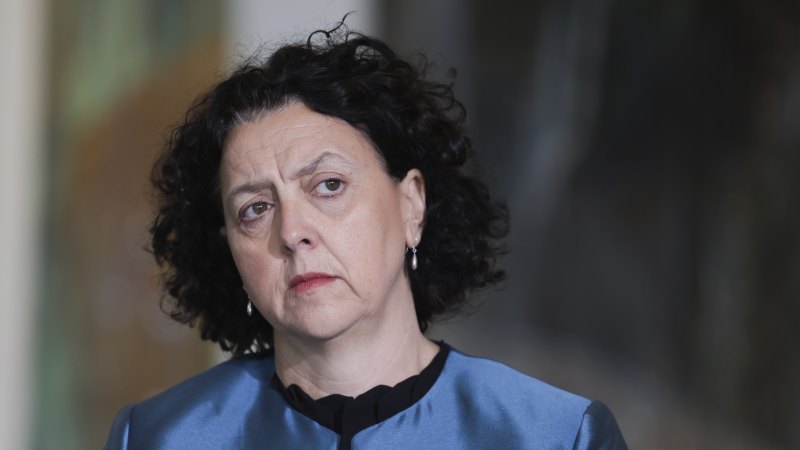
As NDIS participants cautioned against focusing on costs at the expense of the scheme’s many benefits, several independents, led by Monique Ryan, were on Tuesday writing to the scheme’s ministers, Mark Butler and Jenny McAllister, with their fears that the government was prioritising budget savings over vulnerable people.
They argued Labor should halt its ambitions to slow spending growth in the NDIS until it could prove that the new disability supports for children outside the scheme, Thriving Kids, was up and running.
“The most vulnerable in our community shouldn’t be penalised for flaws in its design structure as the government works to ensure the sustainability and integrity of the NDIS,” Ryan said.
Debate over the $50 billion scheme’s sustainability has lit up before next month’s budget as the government mulls major changes to curtail its annual growth – from 10 per cent today, to 5 to 6 per cent within the forward estimates – as a centrepiece of its savings plan, this masthead first reported on Monday.
Large disability providers are embracing the public conversation, hoping that Labor’s changes will restore the scheme’s focus on Australians with the most severe support needs, while Labor MPs Michelle Ananda-Rajah and Mike Freelander, who are both doctors, are also advocating a scheme overhaul.
But people with disabilities who use the NDIS say the budget-focused debate risks baking in a narrative that ignores the benefits of the scheme.
“The political focus on hitting what is, ostensibly, an arbitrary growth target risks people being pushed off the NDIS without there being an alternative in place,” said Megan Spindler-Smith, acting chief executive of the peak representative body, People With Disability Australia.
Spindler-Smith said the scheme’s sustainability should be evaluated on how it helps people with disability participate in the community, employment and services, and whether they were safe, independent, and less likely to be in hospitals or institutional settings.
“The issue we have is that the changes to the scheme are being felt faster than they’re being explained. Right now, we are seeing some fear, confusion and misinformation around what’s going on,” Spindler-Smith said.
“Focusing on short-term targets can put people into crisis mode or impact other systems. We know you don’t save money by just denying support – you transfer the cost to families, to hospitals or emergency systems.”
The crossbench MPs, who also included Kate Chaney, Zali Steggall and Nicolette Boele, were making similar arguments as they drafted their letter to Labor’s ministers on Tuesday, criticising poor transparency over how the government planned to achieve any of its growth targets.
They were also concerned that reducing NDIS funding to achieve short-term budget repair would not make needs disappear, but shift costs to health, aged care, housing and income support.
Ryan said Labor had not yet laid out its plan for structural reform by formally responding to the 2023 NDIS review, commissioned by former minister Bill Shorten.
“The government needs to be transparent and level with the community rather than increasing alarm and anxiety among NDIS participants, their families, partners, and carers,” she said.
“There is already real distress in the community because of a growing pattern of sudden and significant reductions of NDIS plans introduced without adequate explanation, particularly for children in the foundational supports pathway.”
The crossbenchers want to make sure foundational disability supports outside the NDIS are established before eligibility to the scheme is narrowed, and write into law a “no worse off” protection for children who will be moved onto the Thriving Kids scheme.
They said any reduction in NDIS growth below 8 per cent a year should be deferred until Thriving Kids is operational – at this point scheduled for 2028.
Catherine McAlpine, the chief executive of Inclusion Australia, said there were definitely parts of the scheme that could run better, and use resources in a more targeted and evidence-based way.
“We do need to care about scheme sustainability. But the reason the NDIS got up is because state supports were broken and people were getting hurt. And we don’t talk about how that has changed. We are not measuring the decrease in people being hurt; the quality of life outcomes,” she said.
“Part of the problem with the focus on sustainability, is it doesn’t allow other benefits to be counted. The promise of the scheme was inclusive life, free from violence and abuse, choice and control. We need to measure those things, too, in defining its success.”
Cut through the noise of federal politics with news, views and expert analysis. Subscribers can sign up to our weekly Inside Politics newsletter.
 Natassia Chrysanthos is Federal Political Correspondent. She has previously reported on immigration, health, social issues and the NDIS from Parliament House in Canberra.Connect via X or email.