Beijing: As the world waits to see whether the shaky US-Iran ceasefire holds, China is being credited with playing a role in bringing Tehran to the negotiating table.
The exact details of Beijing’s involvement remain unclear, but the United States and Iran have signalled that China helped promote the Pakistan-mediated truce.
“I hear yes,” US President Donald Trump told news agency AFP on Wednesday (Washington time) when asked if Beijing had helped persuade Tehran to negotiate.
White House press secretary Karoline Leavitt also confirmed that the Trump administration had spoken to their Chinese counterparts about the Iran conflict, saying “there were conversations that took place between top levels of our government and China’s government”.
Separately, The New York Times, citing three unidentified Iranian officials, reported that Tehran accepted the ceasefire proposal after a last-minute push by Beijing, which asked it to show flexibility and defuse tensions.
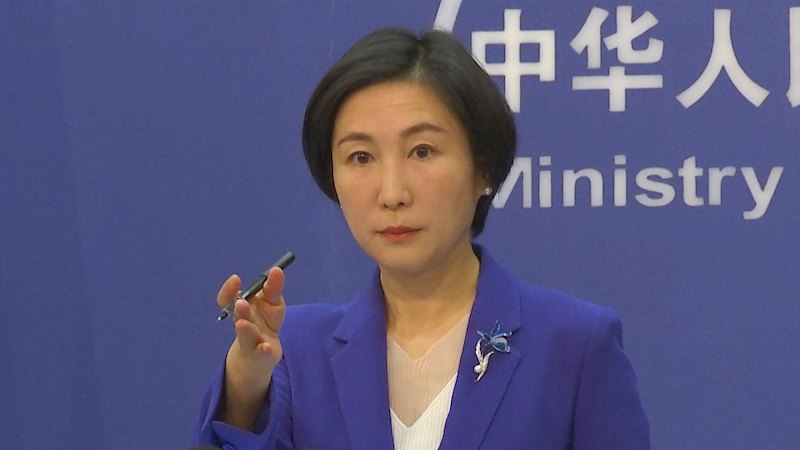
Pressed by reporters on Wednesday to detail China’s role, Foreign Ministry spokeswoman Mao Ning remained vague about the country’s actions, but said Beijing had made an “active effort” to encourage the parties to end the hostilities.
“Since the fighting began, China has worked actively to help bring about an end to the conflict,” she said. “Foreign Minister Wang Yi made 26 phone calls with his counterparts from relevant countries.”
China’s envoy to the Middle East had travelled through the Gulf region promoting mediation efforts, she said.
It is unclear how these efforts dovetail with Iran’s 10-point peace plan conveyed to the White House via Pakistani intermediaries.
Pakistan has emerged as the key mediator in the Iran war, and will host the first round of peace talks in Islamabad on Saturday. But during the conflict, it has also engaged closely with China, potentially helping bring Beijing into the mediation process.
Beijing and Iran have tight economic ties, and China buys more than 80 per cent of the country’s oil exports. But this relationship has been largely transactional, and as the war has dragged on, analysts have been sceptical about whether China had the influence or desire to leverage its ties with the Islamic Republic to help end it.
Its role in the ceasefire push will bolster Beijing’s efforts to project itself as a responsible global power and peace broker. Experts have noted that China has also been mediating talks between Pakistan and Afghanistan after weeks of cross-border fighting.
“[China’s] self-portrayal as a peacemaker and a more stabilising force in the present geopolitical flux could gain some credence, especially when compared to the tendency of Trump’s United States to ignite conflicts in many parts of the world and with no clear strategy to resolve them,” Dr Shanthie Mariet D’Souza, of the University of Massachusetts Amherst, wrote in an analysis published by The Diplomat.
As part of these efforts, China and Pakistan last week released a five-point plan for restoring peace in the Middle East, which called for securing shipping lanes through the Strait of Hormuz and starting peace talks as soon as possible, but contained no detail about how this should be achieved.
In the past, similar efforts by China to promote peace – such as its 12-point plan to end Russia’s war in Ukraine – have been criticised as paper-only proposals that lacked detail and follow-through.
Speaking in Beijing on Wednesday, Iranian envoy Abdolreza Rahmani Fazli said his country wanted China to act as a security guarantor in the region, ensuring Iran was not attacked again.
“We hope different sides could guarantee that the US would not resume the war, we hope the UN Security Council, big countries like China and Russia, as well as mediating countries like Pakistan and Turkey [will] work together to guarantee peace in the region,” he said.
China’s foreign ministry did not directly respond to questions about whether it was considering providing this guarantee when asked during Wednesday’s press conference.
Get a note directly from our foreign correspondents on what’s making headlines around the world. Sign up for our weekly What in the World newsletter.
 Lisa Visentin is the North Asia correspondent for The Sydney Morning Herald and The Age based in Beijing. She was previously a federal political correspondent based in Canberra.Connect via X or email.