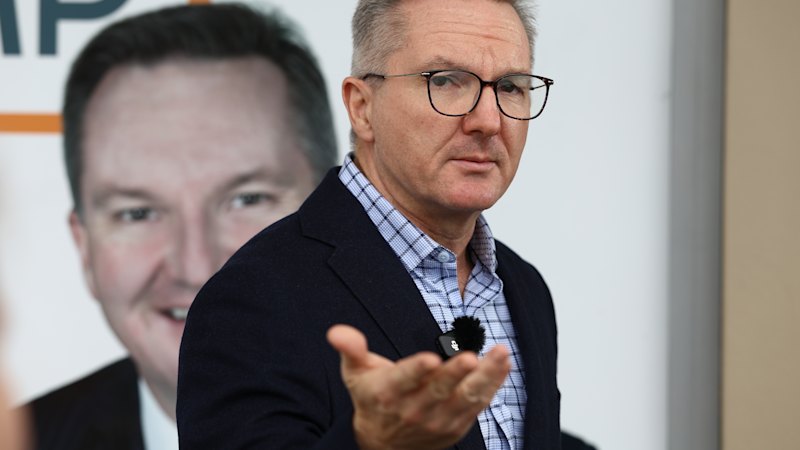

Fuel supply into the country remains stable and there is no need to trigger further steps under Australia’s fuel security plan, Energy Minister Chris Bowen says.
Australia remains under intense pressure from fuel shortages in coming months due to Iran’s blockade of oil exports from the Persian Gulf via the Strait of Hormuz.
Prime Minister Anthony Albanese is in Singapore on Friday, seeking to boost long-term fuel security. He will meet Prime Minister Lawrence Wong and the heads of fuel suppliers as he embarks on a mission throughout the region.
But Bowen said the government had secured additional fuel imports, and there was no need to escalate measures under the national fuel security plan.
The government said the nation was in the second stage of its four-stage fuel security plan. Under stage two, the government released some stockpiled fuel to deal with panic buying and has been helping importers to buy more fuel.
Stage three would include voluntary fuel use measures, such as carpooling.
Stage four would trigger rationing, including restrictions on motorists to prioritise supply for essential industries such as emergency services.
“But we are a long way from that. I’m pleased with the supply into Australia at this point,” Bowen said.
He said stage three would be triggered only if there’s an interruption to supply – “which we have not yet experienced”.
“Work continues on prudent contingency of planning. Should the international situation get worse [the fuel security plan] makes clear prioritisation for emergency services,” Bowen said.
As part of stage two of its fuel plan, the government announced on Thursday that it had secured the support of the nation’s biggest fuel importers, Viva Energy and Ampol, to participate in a scheme to urgently boost shipments to Australia.
In this scheme, taxpayers guarantee fuel companies’ losses if they bought expensive shipments before sudden oil price falls in an increasingly volatile market.
Australia buys most of its fuel from Asian refineries, which are running down their storage tanks and may have just weeks of supply left.
The Middle East supplies more than 50 per cent of the crude oil that Asian refineries import to produce petrol and diesel fuels.
However, they are scrambling to source new lines of supply from a long list of oil-producing nations such as the US, Canada and Brazil.
Around Australia, 2.4 per cent of service stations are without diesel, or 192 out of 7940 outlets.
The shortages have been driven by panic buying and stockpiling by major industrial users.
Bowen said that on Friday in NSW, 97 service stations out of the 2400 service stations were without diesel, and 19 had run out of fuel entirely.
In Victoria, 41 had no diesel and 27 had no unleaded petrol. In Queensland, 28 had no diesel and 19 lacked regular unleaded.
The number of outages had fallen since Thursday, when in NSW 112 service stations were out of diesel and 24 had no fuel at all, and in Victoria 43 were without diesel and 26 had no unleaded.
Cut through the noise of federal politics with news, views and expert analysis. Subscribers can sign up to our weekly Inside Politics newsletter.
 Mike Foley is the climate and energy correspondent for The Age and The Sydney Morning Herald.Connect via email.
 Brittany Busch is a federal politics reporter for The Age and Sydney Morning Herald.Connect via email.

