Five years ago, a crowd of 61,880 turned up to watch the A-League’s Sydney derby at Accor Stadium. Back then, this rivalry had the city abuzz. Every edition felt like an event.
On Saturday night, just over a quarter of that number – 16,135 – were on hand for the third and final derby of the season at CommBank Stadium in Parramatta. That’s if we believe the number; it looked like a lot less. If we accept it as true, it was the worst turnout in four years, and the third-worst in history, not counting matches played under pandemic-era crowd restrictions. And it came on a perfect night for football, during school holidays. Yes, there’s a cost-of-living crisis, but other codes aren’t suffering like this; most people still do the things that they like.
Fans would usually turn up for this match no matter what, even if their team was having a bad season, because a win in the derby would help wash that pain away. The derby was a night out, in and of itself. Not anymore. What was once the A-League’s trump card, the game it could rely on to boost vibes and metrics and reach new audiences, has deteriorated beyond recognition.
Most, but not all, of the fault falls at the feet of the Western Sydney Wanderers. For most of the last decade, they have been a terribly run football club – and they’re careening towards an all-time low, their first wooden spoon in the A-League Men. There’s only so much that the good people of the western suburbs can put up with. Clearly, they’ve reached the end of their tether.
Not even interim Wanderers coach Gary van Egmond could blame those who chose to stay at home.
“It’s a team that’s not winning. I mean, it’s a pretty easy solution to understand that,” he said.
“You’ve got to earn the right to ensure that you have support and you have fans. And that’s a big thing that this club has to ensure in the oncoming season and seasons after that as well.”
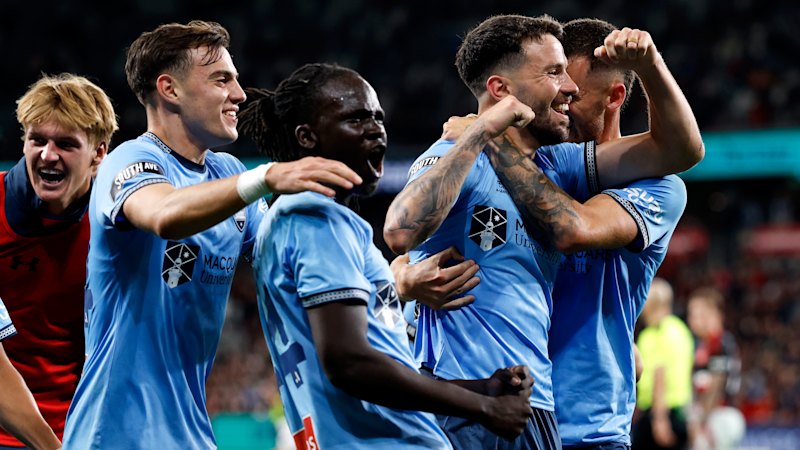
The contest on the field was decent. Sydney FC were the better side and deserved the victory. There are good players in both squads, worthy of watching. But this felt like an empty shell of a derby, a pale imitation of how it once was.
These were two teams, both with caretaker coaches. Van Egmond will be replaced next season by former Sydney FC boss Ufuk Talay, who it’s clear Wanderers fans do not want. In the other dugout, there’s Patrick Kisnorbo, who used to coach Sydney’s arch-rivals, Melbourne Victory – and before that, their arch-rivals, Melbourne City. At some point, when so many key figures keep crossing divides that they’re not supposed to, the tribalism gets diluted.
You can see the impact in real time. Only one bay to the northern end of the ground was filled by the Red and Black Block; it used to be three, minimum. There was no pre-match tifo. But there was a flare, ripped by The Cove in celebration of Sydney’s first goal – and then, after that, reports on social media of overbearing police conduct in both camps. Same as it ever was. What is the incentive for these fans to keep showing up and making noise? How can the A-League return to its old glory when there are so many structural challenges that it can’t control?
At the full-time whistle, most of the home supporters had already emptied, and the match MC was almost pleading with them to get their tickets for the Wanderers’ next game in Parramatta. They might come back – but it will take the one-time pride of the A-League becoming a functional organisation again, and they’re done waiting for that to happen.