
Updated ,first published
The federal government is war-gaming a series of budget initiatives to boost the amount of petrol and diesel in the country to protect the nation’s long-term fuel security as Prime Minister Anthony Albanese heads to two more key Asian suppliers of oil.
As Albanese flies out to Brunei and then Malaysia on Tuesday to shore up supplies of diesel and fertiliser, senior ministers have revealed “nothing is off the table” within the government as they discuss ways to protect the Australian economy from the fallout of the war against Iran, which some analysts have said could drive the nation into a recession.
Climate and Energy Minister Chris Bowen on Monday said the government would consider “everything” to beef up Australia’s fuel supplies, including speeding up the electrification of Australia’s light vehicle fleet, extracting more natural resources and increasing Australia’s fuel storage capacity.
Australia can hold about 30 days worth of diesel and about 40 days worth of petrol, but it is a signatory to the International Energy Agency’s “agreement on an international energy program” treaty, which requires countries to store 90 days of oil onshore.
Bowen said it would cost an estimated $20 billion over four years to reach that 90-day target.
“That’s a medium- to longer-term priority for the government. At the moment, we’re focused on ensuring we get through this uncertain international environment,” he said.
“We’re not making further announcements today, but obviously … we’ll always look at sensible things in due course to ensure our ongoing resilience.”
He said the fuel crisis was spurring the uptake of electric vehicles and that the growing number of EVs on Australian roads had meant about 15 million litres of fuel had not had to be used. EVs made up a record 15 per cent of cars sold in March.
At present, there are 205 service stations across the country, or about 2.6 per cent, without any diesel. About half of that, 106 stations, are in NSW.
Three government sources played down the prospect of Labor announcing an increase in fuel storage in the May 12 budget but they confirmed there were discussions under way about increasing storage in the medium term, in response to the fuel crisis.
One senior source, speaking on condition of confidentiality, said no matter what the government did, the key issue would remain the supply of crude oil.
“From a refinery to new tanks, you still need supply and that’s the problem for everyone,” they said.
Rehabilitating previously closed refineries is considered extremely difficult, if not impossible. But there is scope for the federal government to financially support the expansion of the two existing refineries at Brisbane and Geelong.
The government has a number of existing programs including its National Reconstruction Fund that could be tapped to provide support.
Another senior source said the government was examining all options to boost supply.
“Nothing is off the table,” they said.
On the day the government announced it would halve excise on petrol and diesel, it also revealed that Finance Minister Katy Gallagher would have up to $2 billion through Export Finance Australia to finance the purchase of tankers of fuel on the global spot market.
This type of unusual action has been highlighted as an example of the government’s resolve to look at all alternatives to protect the fuel supply.
The cost of building a new refinery is seen as prohibitive.
Prime Minister Anthony Albanese has cited support for biofuels, such as those made from agricultural oils such as canola, as another way to provide long-term fuel security.
Last week, HAMR Energy, a company that aims to turn biomass into liquid fuels, was one of just four companies to get support under the government’s Investor Front Door program, which streamlines government approval processes.
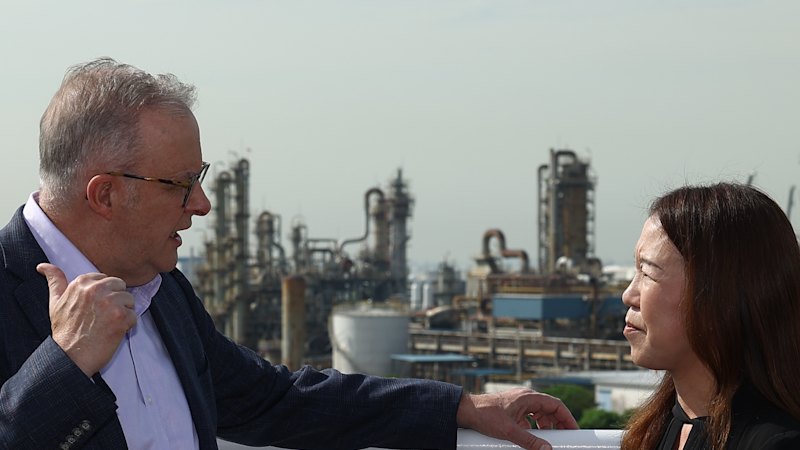
Albanese’s trip to Malaysia and Brunei continues his “crude oil diplomacy” after last week’s visit to Singapore, which promised to do everything it could to keep supplying Australia with petrol. Brunei supplies about 9 per cent of Australia’s diesel, plus much of the nation’s fertiliser. Malaysia provides more than 10 per cent of the nation’s diesel and petrol.
“The trip this week will be very significant, and the impacts that are happening on a day-to-day basis, with announcements, just reinforce the fact that we are living in very uncertain times,” he said.
“And when you have that, what you have to do is to act with certainty. We are acting with certainty … to maximise Australia’s opportunities to secure supply.”
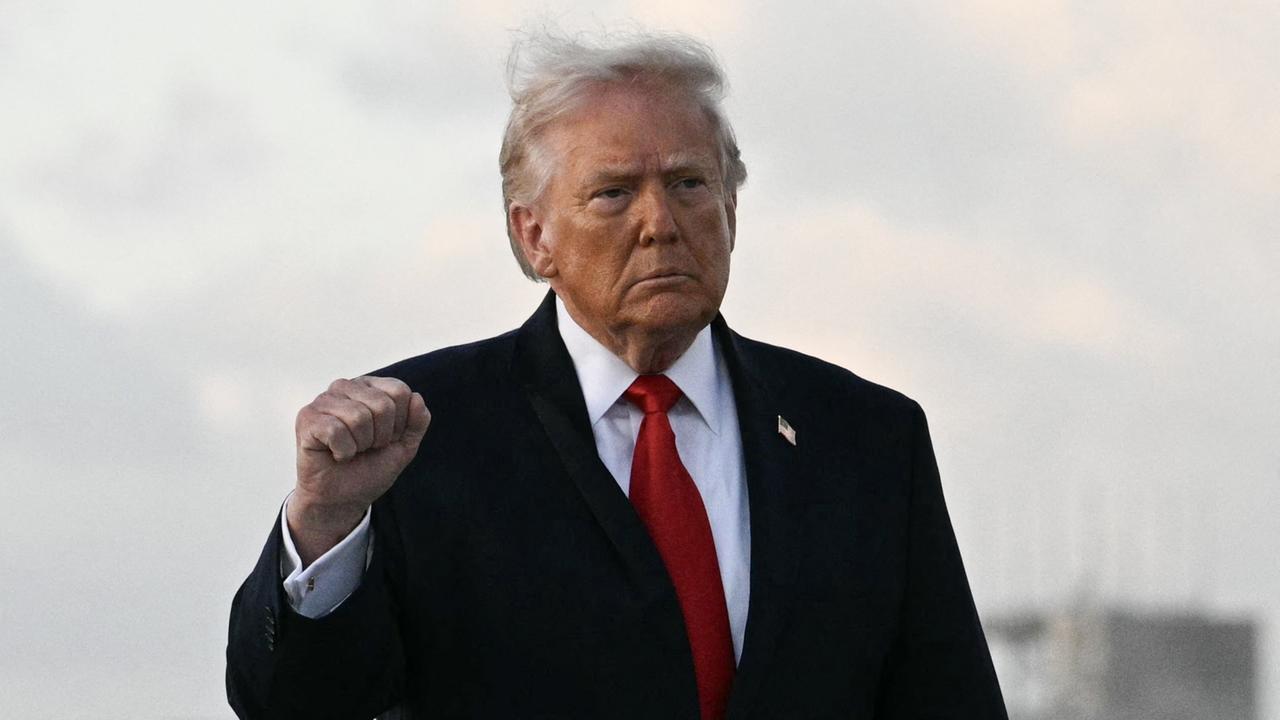
The cost of oil on Monday climbed back over the $US100 a barrel mark after US President Donald Trump said he would blockade the Strait of Hormuz.
Both West Texas and Brent crude jumped by more than 7 per cent, erasing the drop that occurred last week when Trump revealed a two-week ceasefire with Iran.
Anxiety among investors spread to currency markets. The Australian dollar, which approached US71¢ last week, dipped below US70¢ on Monday morning.
The ASX200 continued its rollercoaster ride, losing 0.4 per cent in value despite a lift in the price of shares in a string of energy companies including Woodside, Beach and Santos.
Cut through the noise of federal politics with news, views and expert analysis. Subscribers can sign up to our weekly Inside Politics newsletter.
 Shane Wright is a senior economics correspondent for The Age and The Sydney Morning Herald.Connect via X or email.
 James Massola is chief political commentator. He was previously national affairs editor and South-East Asia correspondent. He has won Quill and Kennedy awards and been a Walkley finalist. Connect securely on Signal @jamesmassola.01Connect via X or email.
 Brittany Busch is a federal politics reporter for The Age and Sydney Morning Herald.Connect via email.