Updated ,first published
Australia is calling on Iran and the United States to intensify efforts to negotiate an end to their war after the Iranian regime again closed off the Strait of Hormuz and began firing at ships, just a day after reopening the critical waterway.
The Islamic Revolutionary Guards Corps (IRGC) announced on Sunday that it would prevent ships passing through the strait while a US blockade on Iranian ports remains in place, a move Iran says violates the terms of a ceasefire agreement.
As the regime claimed victory in the war, Iranian state media confirmed reports that two Indian ships came under fire and had to turn around after trying to pass through the strait over the weekend, underlining the precarious situation in an area crucial to the global oil trade.
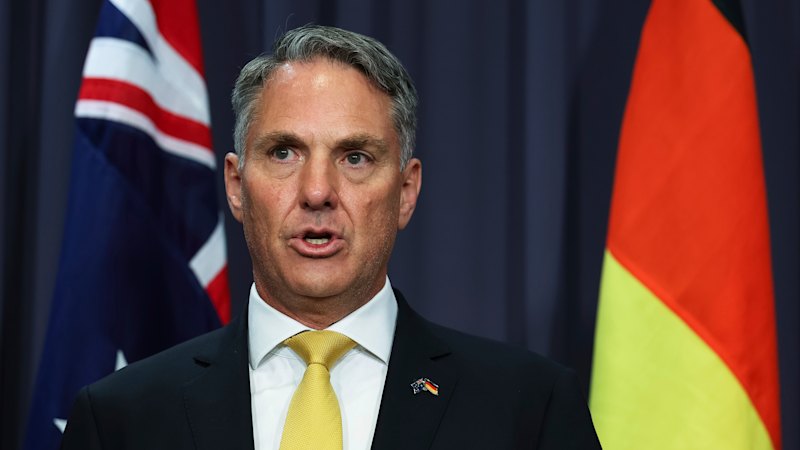
The Australian government will on Monday open an emergency loan program to help businesses hit by the fuel crisis, as Defence Minister Richard Marles said on Sunday the closure of the strait was “a disappointing development” that highlighted the fragile nature of the ceasefire agreement struck this month.
“I think what we need to see now is every diplomatic avenue being pursued to turn this temporary ceasefire into one that is permanent, to obviously open the Strait of Hormuz, to return the global fuel supply chain to normality and to put events on a pathway to peace,” Marles told the ABC’s Insiders.
“That’s certainly what’s in Australia’s interest. It’s obviously what’s in the world’s interests, and that that’s really the direction that we need to see events take.”
The current ceasefire is set to expire within days, heaping pressure on Iran and the US to make progress to prevent a return to full-scale combat.
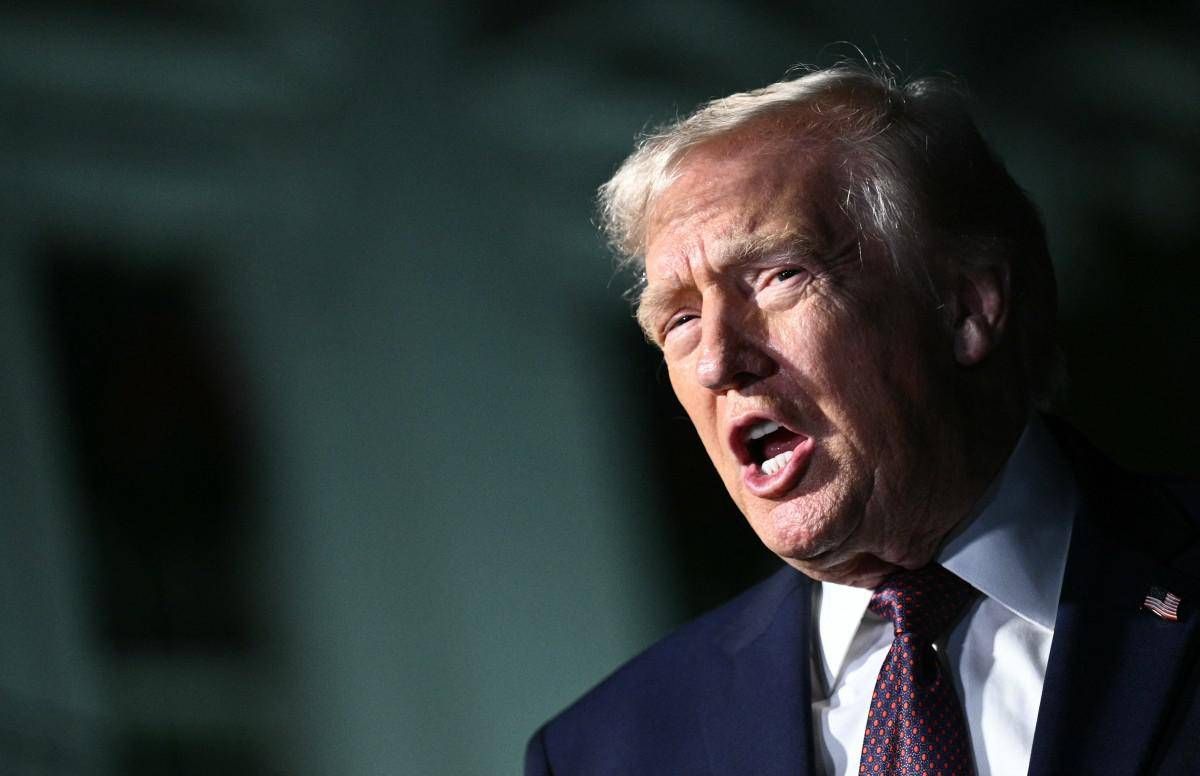
US President Donald Trump said that American negotiators will be in Pakistan on Monday for talks with Iran.
Trump, in a post on social media Sunday, didn’t detail which officials the US would send to a second round of in-person talks with Iran in Islamabad. The White House and office of US Vice President JD Vance, who led the first round of talks, didn’t immediately respond to messages Sunday morning.
In his post, Trump accused Iran of violating the ceasefire agreement by firing bullets on Saturday in the Strait of Hormuz and threatened to destroy civilian infrastructure in Iran if it doesn’t take the deal that the US is offering.
“If they don’t, the United States is going to knock out every single Power Plant, and every single Bridge, in Iran,” Trump wrote.
Marles said he would not “second guess” the US decision to block ships from leaving Iranian ports, describing it as “a reaction to the fundamental decision that Iran has made to block the Strait of Hormuz”.
“I can understand the American reaction to that,” he said.
“They are the ones who are in the midst of whatever negotiations are happening right now, and ultimately what we want to see is the Strait of Hormuz open.”
As the government prepares for another meeting this week to co-ordinate global efforts to safeguard the strait, Marles said that “we are clearly going to help”.
Australia will join a military planning conference to be held in London this week after Prime Minister Anthony Albanese joined dozens of world leaders on a phone hook-up on Friday night to begin co-ordinating efforts to allow safe passage through the strait when the conflict ends.
Marles declined to comment on exactly what assistance Australia would provide.
“There is a lot of thought going on about what kind of operation there might be when circumstances allow,” he said.
British Prime Minister Keir Starmer said dozens of countries had agreed to contribute to a “strictly peaceful and defensive” multinational coalition to protect the strait when the war ends.
Trump again lashed out at US allies and partners on Sunday, declaring in a social media post that while Israel “knows how to WIN” others had “shown their true colours” by not joining in the fight in the Middle East.
Trump berated Australia last Friday for failing to help the US reopen the Strait of Hormuz, even as Albanese insisted no formal request for assistance had been made.
“I’m not happy with Australia because they were not there when we asked them to be there,” Trump told reporters outside the White House.
Pressed on whether Australia had rebuffed any informal US requests for Australian assistance during the war, Marles said: “I’m not about to go into a whole lot of conversations that have happened.”
The latest flare-up between the US and Iran came as the federal government opens applications on Monday for a $1 billion emergency loan program for companies affected by the fuel crisis.
The economic resilience program, announced by Prime Minister Anthony Albanese in a speech to the National Press Club earlier this month, will provide zero-interest loans to businesses impacted by disruptions to fuel supplies, fertilisers and chemicals.
The government will also fast-track applications for a separate $5 billion net zero fund to encourage low-emissions manufacturing and a $150 million forestry growth fund.
Industry Minister Tim Ayres said the zero-interest loans would help ease pressures on businesses in sectors such as fuels, plastics, fertiliser and other critical supply chains”.
“In an increasingly volatile global environment, strong domestic supply chains matter more than ever, and this funding is about backing the industries Australia relies on, from farming and manufacturing to housing and heavy industry,” he said.
Earlier, the IRGC navy warned in a statement that “no vessel is to move from its anchorage in the Persian Gulf or the Sea of Oman” and declared “approaching the Strait of Hormuz will be considered co-operation with the enemy, and the offending vessel will be targeted”.
India said it had called in the Iranian ambassador in New Delhi and flagged its “deep concern” over the attack on two Indian-flagged ships attempting to cross the Strait of Hormuz over the weekend.
A distress message from one of the tankers was released, capturing the confusion that ensued during the firing.
A crew member on board the crude oil tanker Sanmar Herald can be heard trying to communicate with the Iranian navy in the 30-second audio clip, saying: “Sepah [IRGC] Navy. Sepah Navy. This is motor tanker Sanmar Herald. You gave me clearance to go. My name is second on your list. You are firing now. Let me turn back.”
Iran’s powerful Speaker, Mohammad Bagher Ghalibaf, claimed in a televised address on Sunday that Iran had been “victorious in the field” during the war and had only agreed to a temporary ceasefire because the US submitted to its negotiating demands.
Ghalibaf said Iran had resolved some points of contention with the US through talks, but that “there are still major gaps on others, and we are far from a final agreement”.
Iran was ready to resume the war if the negotiations collapsed, he said.
“If they make even the slightest mistake, we will respond with force,” he said.
 Matthew Knott is the foreign affairs and national security correspondent for The Sydney Morning Herald and The Age.Connect via X, Facebook or email.