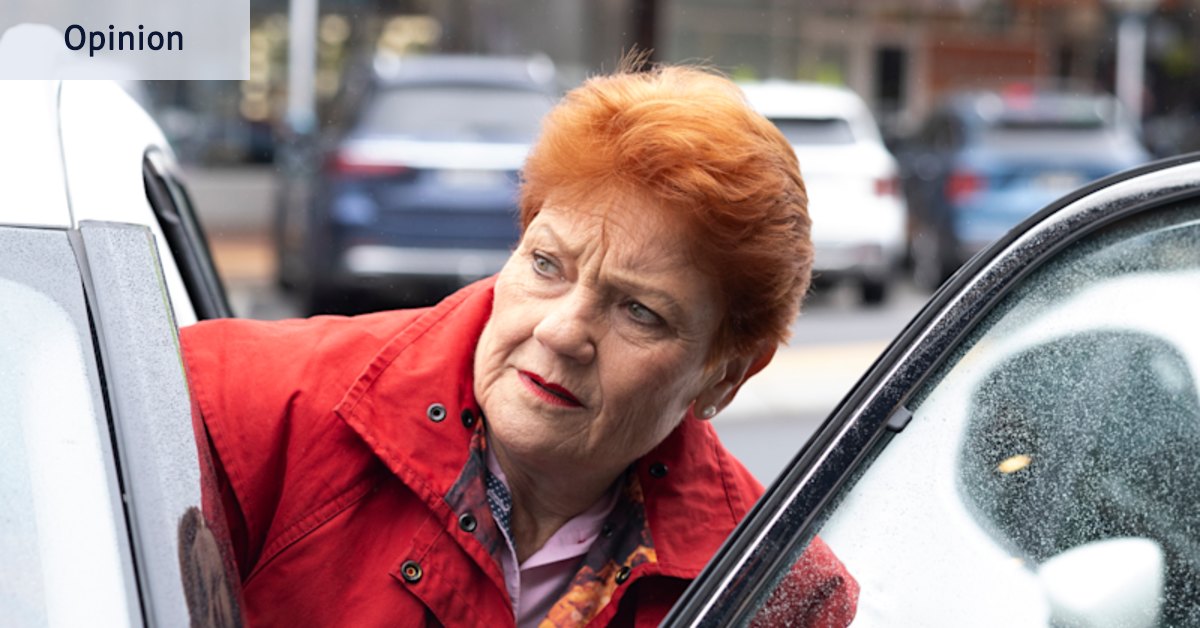
Barnaby Joyce has declared western Sydney the “next stop” for One Nation following its win in the Farrer byelection last weekend. Big talk, but can Pauline Hanson’s party back it up?
The temptation for One Nation will be to treat the result as a blueprint for conservative politics nationally. But that would be a serious political misreading of western Sydney.
The politics that resonate in parts of regional NSW do not automatically translate to the ’burbs. So what would it take for the orange wave to break on western Sydney’s shores?
Western Sydney is not just another region on the national political map. It is younger, more multicultural and more economically dynamic, with voters focused heavily on opportunity, stability and long-term security.
The region has long been the centre of gravity in Australian elections. Governments are won and lost here. For decades, western Sydney offered conservatives a pathway into metropolitan NSW, built on a message of economic management and aspiration that resonated with mortgage holders, small business owners and growing families.
In 2010 and 2013, that approach delivered. Coalition seats such as Bennelong, Macquarie and Banks were won on the strength of a pitch that spoke to the region’s desire for opportunity. But that pathway has narrowed. From 2016 onwards, the Coalition began to lose ground. By 2022, Labor had reclaimed Bennelong and Reid. By 2025, it had expanded further, picking up Banks and Hughes.
Importantly, the shift is not simply from one major party to another. Where voters have moved away from Labor, they have not necessarily returned to the Coalition. The result in Fowler, where a community independent secured strong support, reflected a broader political shift. Voters are increasingly open to alternatives when they feel neither major party fully reflects their perspectives.
Could One Nation be the beneficiary of that restlessness?
There are reasons to be sceptical. Pauline Hanson remains deeply unpopular across large sections of a region where more than 10 per cent identify as Muslim. Communities have not forgotten her comments about Islam or statements targeting suburbs such as Lakemba.
Anti-immigration messaging should also be treated carefully in western Sydney. Nearly three-quarters of residents have at least one parent born overseas. More than 100 languages are spoken across the region and communities trace their origins to more than 170 countries.
Migration is not an abstract political issue in western Sydney. It is deeply personal.
This does not mean western Sydney voters oppose discussions about migration, border security or infrastructure pressures. Many residents are concerned about congestion, housing affordability and strained public services. But western Sydney voters tend to distinguish between practical policy discussions and rhetoric that feels divisive or exclusionary, especially if they suspect that they may be the target of that derision.
This is where One Nation faces a political ceiling in western Sydney. The region is not driven by grievance politics alone. It is driven by aspiration.
What people often overlook is just how young western Sydney really is. It is one of the youngest regions in the country, with about a third of residents under 25. While One Nation may be picking up some younger voters nationally, its support base still skews older. That creates a real challenge in western Sydney, where younger voters make up such a significant and influential part of the population.
They will also struggle with voters who are far more focused on everyday pressures than political grievance. People come to western Sydney to build better lives, buy homes, raise families and create opportunities for the next generation. That sense of aspiration still runs deep across the region.
Right now, though, many families feel under strain. Housing affordability is pushing people further from jobs and services. Long commutes, congested roads and overcrowded public transport are part of daily life. Cost-of-living pressures are real and voters are looking for practical answers that make life easier, more stable and more secure.
Despite this, western Sydney remains one of the most ambitious parts of the country. Educational attainment rates are outstripping the national average. Western Sydney’s economy is booming.
Many residents are first- or second-generation Australians who came seeking economic opportunity and stability. Small businesses are everywhere. Historically, this is where the Coalition performed strongly in western Sydney. And that is precisely where One Nation’s ceiling becomes visible.
Major parties have won support in western Sydney, not through grievance politics, but by sounding economically competent, stable and focused on opportunity.
Western Sydney has always rewarded ambition over anger. One Nation may pick up votes, but that’s not the same as winning seats. Only those who can speak to aspiration and opportunity will be able to do that.
Professor Azadeh Dastyari is the director of the Centre for Western Sydney at WSU.
 Professor Azadeh Dastyari is the director of the Centre for Western Sydney.