Updated ,first published
The Coalition has pledged a “generational” $22 billion tax back guarantee and one of the biggest migration cut in Australian history, as details emerge about Anthony Albanese’s personal insistence that current landlords’ negative gearing rights were protected from tax hikes.
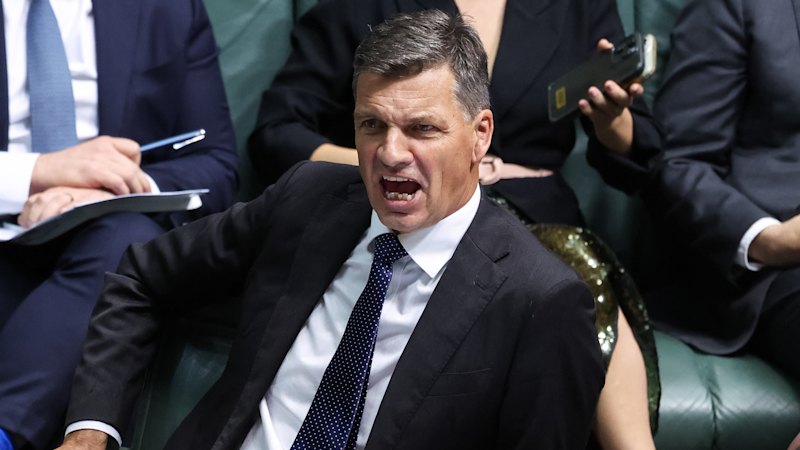
Opposition Leader Angus Taylor upped the ante on his campaign against “mass migration” in his budget reply speech that sought to pitch bigger personal tax cuts than Labor and differentiate the Coalition from One Nation after its crushing loss in the Farrer byelection.
Taylor promised substantial migration cuts and claimed he would deport 75,000 people who overstay visas in another plank of his hardline immigration plan. He did not nominate a migration target, prompting taunts from Labor MPs watching the speech in parliament, and telling the ABC only that it would be below 200,000.
“This much I promise: the Coalition will deliver one of the biggest cuts to immigration in Australian history. Our immigration cut will complement our plan to lift immigration standards,” he said.
Taylor will also announce that the Coalition would make Australian citizenship a condition of receiving welfare payments.
In question time earlier on Thursday, the opposition’s questions on the provisions to let landlords, including many cabinet ministers, keep negatively gearing existing properties sparked furore in parliament on Thursday.
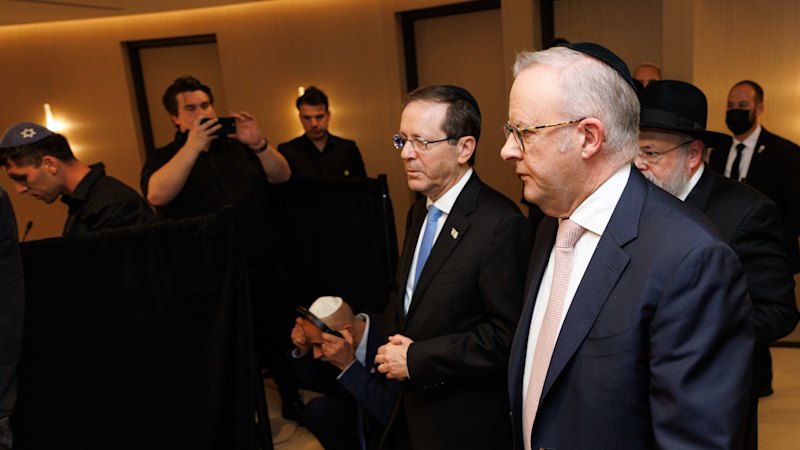
Albanese, dubbed Pinocchio by the Coalition for breaking promises, was forced to withdraw his own comments after calling a backbencher a “moron” in a brawl over his property holdings.
A day earlier, Albanese warned Taylor in a one-on-one conversation on the floor of parliament that personal and family arrangements should be off limits and Labor could flip the script to Taylor’s trusts and wealth. It set off a heated argument between the pair when the opposition returned to the line of questioning.
In Thursday’s question time, Albanese brushed off questions about whether Labor would consider an inheritance tax and warned Taylor that he was on borrowed time, saying: “Clock’s ticking.”
That barb came hours before Taylor’s budget reply speech in which the opposition leader promised to peg the lowest two tax brackets to inflation from 2028, delivering $250 for an average taxpayer in the first year, then $1000 by year four. The plan would cost $22.5 billion over four years, the opposition said.
It’s not clear how the opposition will fund the tax cut, given Taylor confirmed he would aim to repeal Labor’s $100 billion tax hikes on investors and trust holders.
Indexation was endorsed by Labor luminary Bill Kelty in an interview with this masthead on Thursday before Taylor’s proposal was made public. Kelty said Treasurer Jim Chalmers’ $250 per year Working Australians Tax Offset announced in Tuesday’s budget was “small”.
Nevertheless, Kelty welcomed Labor’s policy as a positive step that opened the door to “real reform” to fix the “fundamental problem for the tax system, which is that it’s not indexed for working people”.
Chalmers has rejected indexation, favouring an expansion of the tax offset introduced in Tuesday’s budget.
Labor and Treasury weighed options on negative gearing that would have been less generous to existing owners, according to government sources familiar with policy development. But despite the mixed views, Albanese was adamant that changes would not affect the approximately 50 per cent of property investors who already deduct rental losses from income.
Albanese said in question time: “Every one of those police or teachers, fire brigade people, whoever they are, can keep their existing arrangements in place.” He added that the current tax system was “screwing over young Australians”.
Albanese and his ministers have been buoyed by the public reaction to Labor’s reversal of its election pledge not to touch property concessions, which the opposition has called a brazen lie.
The prime minister conducted a round of FM radio interviews on Thursday and ministers were surprised at the lack of hostility directed towards him from callers. Labor Party research also shows many voters in favour of the changes, though entrepreneurs including Seek founder Paul Bassat are leading a campaign against what they describe as a stifling tax policy.
In his budget reply speech, Taylor said the prime minister had benefited from negative gearing and was now “locking out young Australians” and “pulling up the ladder of opportunity”.
His speech contains more policy announcements than a normal budget reply speech, particularly so early in the term and three months into his leadership, as the new Coalition leader lays big bets on cutting through following the Farrer byelection defeat by One Nation.
Shadow ministers were not brought into the loop on most of the changes.
The opposition, unlikely to win the next election on current polling, is also promising to bank upgrades to tax receipts based on commodity price upgrades. The savings will be funnelled into a “Future Generations Fund”.
After Labor announced a permanent $20,000 instant asset write-off for businesses, Taylor said he would offer up to $50,000.
Taylor was blocked by former opposition leader Peter Dutton last term from pursuing a version of his Tax Back Guarantee, designed to ensure income tax brackets rose each year in line with inflation. In his new pledge, after targeting the bulk of voters in the lower and middle tax brackets, the Coalition would apply indexation to higher income earners from 2031.
“That will fully protect all taxpayers from inflation,” Taylor said. “This is generational tax reform.”
Leading economists Chris Richardson and Saul Eslake said they opposed grandfathering in principle. However, Richardson said it appeared to be the “political cost of getting change accepted”.
Eslake said grandfathering amounted to “privileging people on the basis of birth order”, but noted that the negatively geared properties would eventually phase out over about eight years. The government believed grandfathering was the cleanest approach that avoided changing the goalposts and creating distortions.
Cut through the noise of federal politics with news, views and expert analysis. Subscribers can sign up to our weekly Inside Politics newsletter.
 Paul Sakkal is Chief Political Correspondent. He previously covered Victorian politics and won a Walkley award and the 2025 Press Gallery Journalist of the Year. Contact him securely on Signal @paulsakkal.14.Connect via X or email.