
Anthony Albanese has long admired the success story that is Singapore, the city-state that transformed from an impoverished island into one of the wealthiest societies on earth in a single generation.
The driving force behind Singapore’s rise was Lee Kuan Yew. The nation’s founding father was known as the “sage of Singapore” for his forthright views on world affairs sought out by American and Chinese presidents alike.
Albanese has spoken about his appreciation for Singapore’s feats since visiting in 2017 as part of a fellowship program named after Lee. Preoccupied with turning Labor into the natural party of government, Albanese might be a bit jealous of the type of one-party dominance enjoyed by Lee’s successors in what analysts have described as a benevolent autocracy.
Lee got lots right on economic development. But, as Albanese’s fuel diplomacy blitz in Asia has proved, the Singaporean’s predictions on the battle for hegemony between the US and China are being tested.
In 2011, four years before his death, Lee said that “America will remain the sole superpower” for decades because of its ingenuity and resilience. He warned, though, that America’s much-vaunted “pivot” to Asia would fail if the US treated foreign relations like a movie, hitting pause on Asia when its focus was elsewhere and pressing play at other times. “It cannot come and go,” Lee said.
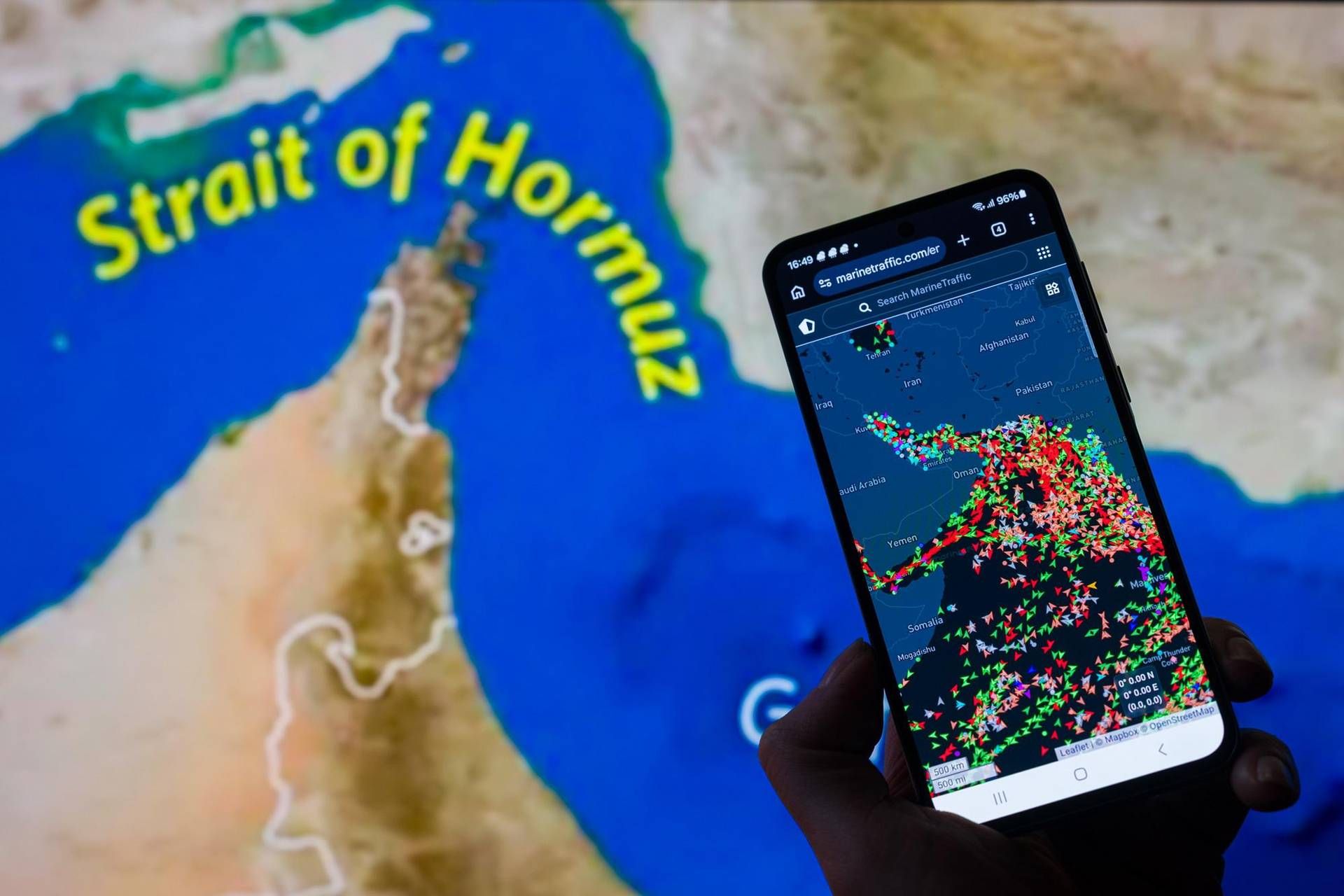
The US, still Australia’s top security and cultural partner, has rarely felt so distant. And with Donald Trump punishing allies and failing to consult them on a major war in the Middle East, the pivot to Asia seems like a faint memory.
On Tuesday, Albanese held a phone call with Chinese Premier Li Qiang as Australia lobbies Asian neighbours to keep supplying oil to mask its paltry fuel reserves.
Albanese has not spoken to Trump about de-escalation. He has relied instead on public statements urging the US to wind up the war, the overall aim of which he supported due to Iran’s malign influence and antisemitic attacks on Australian soil.
“It was striking that Albanese spoke to Premier Li Qiang,” said Richard McGregor, a senior fellow and China watcher at the Lowy Institute. “I can’t remember a time when the US was involved in a war, and the Australian prime minister didn’t call Washington but instead called Beijing. That’s the world we are living in.”
Few would have predicted the extent to which the US might itself encourage such a move when Paul Keating famously said Australia must find its security in Asia rather than from it. Deepening ties in the Indo-Pacific has been a feature of Albanese’s term. Labor has repeatedly, and controversially, declined to send ships to the Middle East.
After weeks of argument from his political opponents saying that he had been slow to respond to the oil shock, Albanese charged into Asia this week desperate to secure more fuel should Trump’s war drag on.
“This is about cashing in on the investment that we’ve made in relationships, to put it simply,” Albanese told this masthead when asked about using Australia’s position as a major gas exporter to secure oil.
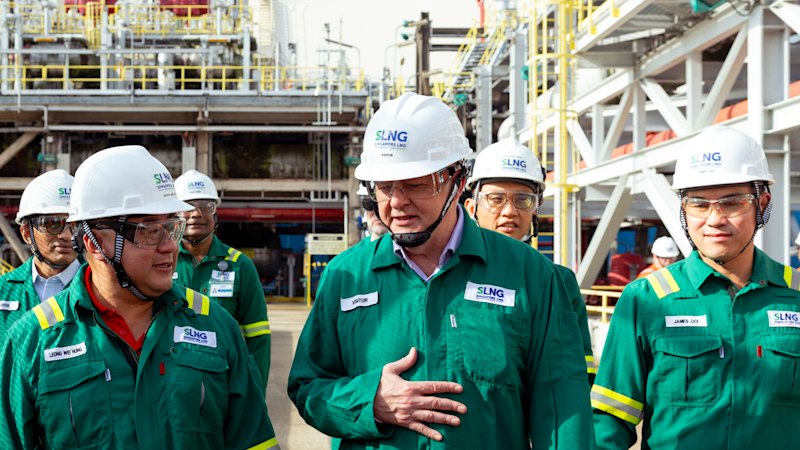
In Singapore, which provides Australia with more than half its petrol, Albanese announced a non-binding deal with Prime Minister Lawrence Wong that talked up “maximum effort” to continue trading.
Australian officials have interpreted this as effectively a confirmation that, should the refining superpower need to wind down exports in coming months, Australia will be given preference.
The opposition questioned if the deal had any tangible effect, suggesting it was a PR move more than anything as the prime minister tries to project urgency and avoid the brutal judgments he received during his indecisive response to the Bondi massacre.
Albanese met Singapore’s foreign minister in 2017 through the Lee fellowship and has met Wong several times. The government has focused on tighter ties in Asia for years. On Friday, Albanese said that it was valuable to be able to pick up the phone to lock in an unscheduled meeting with Wong, who is in demand among world leaders due to Singapore’s fuel exports.
McGregor, the China expert, said the Singapore deal made sense because the nations shared a solid relationship, but it was “not a magic bullet”.
“They don’t produce oil; they import and refine it, so they will be sweating on supplies too,” McGregor said, adding that more and more fuel would be coming from the US. “China will be more of a benchmark – whether they go out of their way to honour contracts with Australian importers of everything from aviation fuel to fertiliser, and let us hang.”
Similarly, Albanese has tried to use Australia’s improved relationship with China to his benefit. Reuters has reported that China has banned exports of refined fuels. But sources familiar with Albanese’s talks with China said it was clear that the ban, in typically opaque Chinese style, was not hard and fast, and that Australia was still receiving at least some tankers.
Critics, including some national security hardheads within Labor, believe Albanese is soft on China, but the prime minister would argue that his approach gets economic results and avoids China’s wrath.
Next week, Albanese is expected to travel to Malaysia and Brunei, also key oil exporters. Brunei is a big supplier of fertiliser, too, whose elevated prices are already hurting Australian farmers.
Upending his schedule at such an important moment domestically, with a key budget just weeks away, underlines Albanese’s fears about political damage from an inflation shock that has put a spotlight on Labor’s response to the supply chain problems during the pandemic.
Initially flat-footed, Albanese and Energy Minister Chris Bowen have turned into action men. Bowen has also softened his aggressive tone in press conferences, which was causing frustration among Labor MPs who wanted the government to project calm.
Albanese, said people familiar with his thinking, has been slightly surprised that the fuel supply picture has not turned ugly. After releasing fuel stockpiles and announcing $2 billion to help companies buy expensive cargoes, the government has been able to steadily push out the date at which Australia’s fuel stocks are in doubt. The government’s latest estimate is “several weeks” into May. The public debate about rationing has simmered down, at least for now.
Times of conflict tend to dull the message of opposition parties, who struggle to get their criticisms into the public conversation when voters are worried about prices and supply shocks and what the government is doing to fix the problems.
Another Labor source, speaking anonymously to detail internal deliberations, said the war had taken attention away from a tricky debate about tax reform and record government spending ahead of next month’s budget, allowing ministers to prepare the fiscal document without being asked about leaks and speculation.
Budget watchers and the opposition will be waiting to see if Albanese succumbs to pressure to provide relief to households, as the government did when it announced a halving of the fuel excise last month. His cabinet felt the marginal inflationary effect was outweighed by the need to use one of the few levers at its disposal to limit petrol price spikes and win voters’ trust.
Opposition Leader Angus Taylor rebuked Albanese for his April Fool’s Day nationally televised address, which did not include any new information and was arguably contradictory. Albanese’s private view is that the message was a success that allowed him to display the government’s methodical approach to a large audience at a time when digital media has made it much harder to reach many people at once.
Despite Taylor’s criticisms, Albanese is not alone in appreciating the shifting currents.
“The United States is our greatest friend,” Nationals leader Matt Canavan said on the Inside Politics podcast last week. “But we can’t just rely on another country to solve [our] problems, whether it’s the US or anybody else.”
Cut through the noise of federal politics with news, views and expert analysis. Subscribers can sign up to our weekly Inside Politics newsletter.
 Paul Sakkal is Chief Political Correspondent. He previously covered Victorian politics and won a Walkley award and the 2025 Press Gallery Journalist of the Year. Contact him securely on Signal @paulsakkal.14.Connect via X or email.