
Maayan Lubell and Jon Gambrell
Updated ,first published
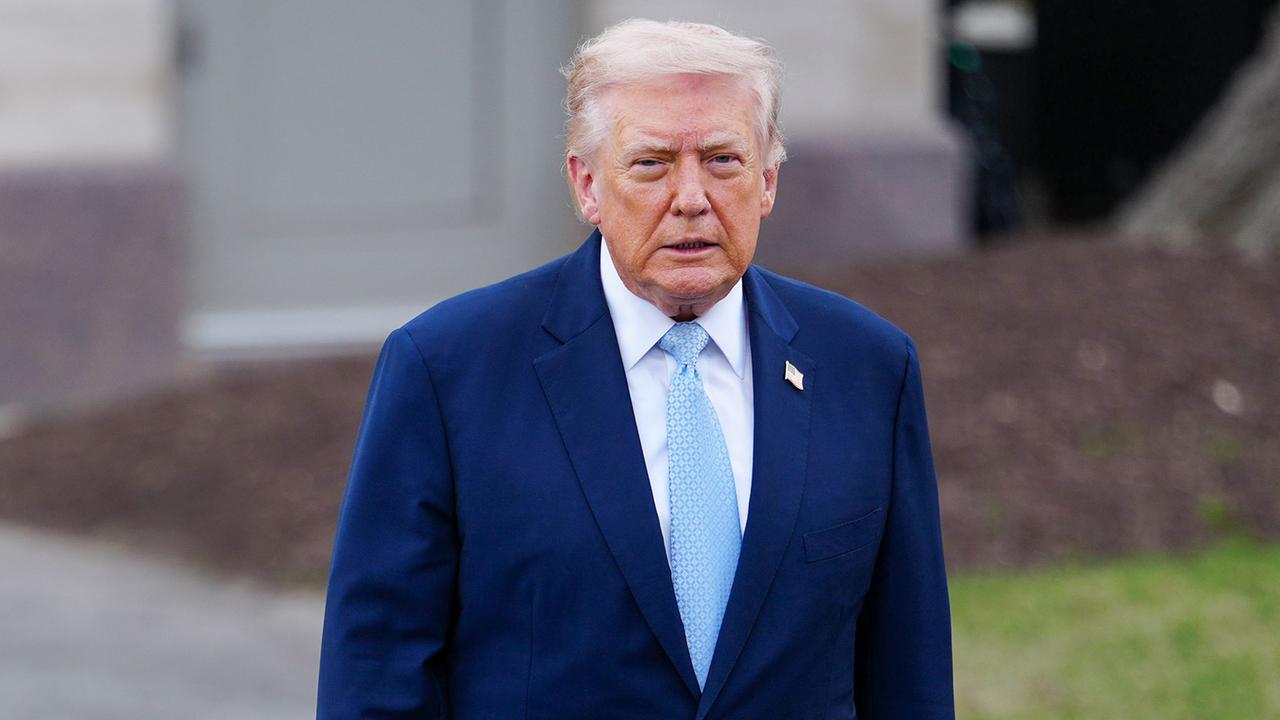
Tel Aviv/Jerusalem/Dubai/Washington: US President Donald Trump has postponed threatened strikes against Iranian energy infrastructure and power plants for five days, pending the outcome of what he said were “productive” talks with Iran to end the 24-day war.
Trump’s statement early on Monday (Washington time) came after Iran said it would strike electrical and desalination plants across the Middle East if the US followed through on Saturday’s threat to “obliterate” power stations in the Islamic Republic unless Tehran reopened the Strait of Hormuz within 48 hours. Iran had also vowed to mine the “entire Persian Gulf” if the US invaded.
Conversations with Iran would continue throughout the week, Trump said in a social media post, which came just hours before his self-imposed deadline was due to expire.
The reaction from markets was swift and marked: Brent crude oil futures plunged more than 14 per cent to below $US100 a barrel, the US dollar fell against other major currencies, stock markets rallied and US government borrowing costs fell back.
However, oil pared about half those losses when Iran’s semi-official Fars news agency, citing an anonymous source, said there are no direct or indirect communications with the US. Iran’s semi-official Tasnim News Agency cast the president’s Truth Social announcement as a retreat, writing on X: “Trump backs down.”
In his post, written entirely in capital letters, Trump said the US and Iran “have had, over the last two days, very good and productive conversations regarding a complete and total resolution of our hostilities in the Middle East”.
“I have instructed the Department of War to postpone any and all military strikes against Iranian power plants and energy infrastructure for a five-day period, subject to the success of the ongoing meetings and discussions.”
A reporter for US news outlet Axios said Turkey, Egypt and Pakistan had met White House envoy Steve Witkoff and, separately, Iranian Foreign Minister Abbas Araghchi. The reporter, Barak Ravid, cited an unnamed US source as saying the discussion was about ending the war and resolving all outstanding issues.
Araghchi’s ministry said there were “initiatives” to reduce tensions, the Mehr news agency reported, adding that Tehran wanted Washington, as the party that began the war, to be a direct participant.
Trump told Fox Business Network that talks between Witkoff and fellow envoy Jared Kushner and their counterparts had taken place on Sunday night (Washington time). Iran wanted to make a deal badly and that could come within five days or less, he said in a phone interview, according to the host of the Mornings with Maria program.
A source briefed on Israel’s war plans said Washington had kept it informed of its talks with Tehran, and that Israel was likely to follow Washington in suspending any targeting of Iranian power plants and energy infrastructure.
Monday’s threats by Tehran put at risk both electrical supplies and water in the Gulf Arab states, particularly as the desert nations commingle their power stations with desalination plants crucial for supplying drinking water.
Fars, which is close to the Revolutionary Guard, published a list of such sites in what appeared to be a veiled threat, including desalination plants as well as the United Arab Emirates’ Barakah nuclear power plant, which has four reactors out in the western deserts of the country near its border with Saudi Arabia.
Over the weekend, Iran launched missiles targeting Dimona in Israel, near a facility key to its long-suspected atomic weapons program. The Israeli facility wasn’t damaged in the barrage.
As concerns grew in Tehran about the potential arrival of US Marines in the region, Iran’s Defence Council also warned against the idea of an invasion.
“Any attempt by the enemy to target Iran’s coasts or islands will, naturally and in accordance with established military practice, lead to the mining of all access routes … in the Persian Gulf and along the coasts,” it said in a statement.
The US has been trying to reopen the Strait of Hormuz, the narrow mouth of the Persian Gulf, to energy shipments. Iran has shut the strait, through which a fifth of the world’s oil is shipped, along with other important commodities, in response to US and Israeli strikes. A trickle of ships has been getting through the strait and Iran insists it remains open – just not to the US, Israel or their allies.
The Marines could come ashore to seize either islands or territory in Iran to support that mission. Israel has also suggested that a ground operation could take part in the war.
Iran’s paramilitary Revolutionary Guard said earlier on Monday that if the US followed through on its threat to attack its power plants, Iran would respond by hitting power plants in all areas that supplied electricity to American bases, “as well as the economic, industrial and energy infrastructures in which Americans have shares”.
“Do not doubt that we will do this,” the Guard said in a statement read on Iranian state television.
Iranian parliament speaker Mohammad Bagher Qalibaf said Iran would consider vital infrastructure across the region – including energy and desalination facilities critical for drinking water in Gulf nations – legitimate targets.
Fatih Birol, the head of the Paris-based International Energy Agency, warned earlier on Monday that “no country will be immune to the effects of this crisis if it continues to go in this direction”.
He told Australia’s National Press Club in Canberra on Monday that the crisis in the Middle East had had a worse impact on energy markets than the two oil shocks of the 1970s and the Russia-Ukraine war combined.
Jorge Moreira da Silva, a senior United Nations official, said the world had already seen a ripple effect, including “exponential price hikes in oil, fuel and gas”, having a far-reaching impact on millions, primarily in Asian and African developing countries.
“There is no military solution,” he said.
US Central Command chief Admiral Brad Cooper had claimed in an interview aired early on Monday that Iran was launching missiles and drones from populated areas, and suggested those areas would be targeted.
“You need to stay inside for right now,” Cooper told Iranian civilians in the interview with the Farsi-language satellite network Iran International.
“There will be a clear signal at some point, as the president has indicated, for you to be able to come out.”
Israel launched new attacks on Monday on the Iranian capital, saying it had “begun a wide-scale wave of strikes” on infrastructure targets in Tehran without immediately elaborating.
In his first one-on-one interview since the war started, Cooper said the campaign against Iran was “ahead or on plan” and that the US and Israel were targeting infrastructure and manufacturing facilities to destroy Iran’s capabilities to rebuild its military.
“It’s not just about the threat today,” he said. “We’re eliminating the threat of the future, both in terms of the drones, the missiles as well as the navy.”
He suggested Iran could bring a quick end to the war if it stopped firing back, though he did not say whether that would prompt Israel and the US to relent before all infrastructure targets had been destroyed.
“They could stop this war right now, absolutely, if they chose to do so,” he said of Iran. “They need to stop putting the wonderful Iranian people at risk by firing missiles and drones from inside populated areas … They need to stop immediately attacking civilians throughout the Middle East region.”
Iran’s death toll in the war has surpassed 1500, its health ministry has said. In Israel, 15 people have been killed by Iranian strikes. More than a dozen civilians in the occupied West Bank and Gulf Arab states have been killed in strikes.
In Lebanon, authorities say Israeli strikes targeting Iran-linked militia Hezbollah have killed more than 1000 people and displaced more than 1 million. Meanwhile, Hezbollah has fired hundreds of rockets into Israel.
AP, Reuters, Bloomberg
Get a note directly from our foreign correspondents on what’s making headlines around the world. Sign up for our weekly What in the World newsletter.