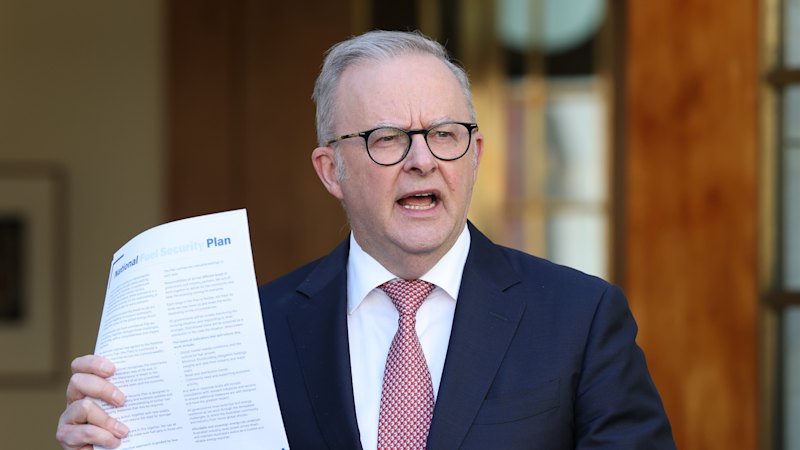

Prime Minister Anthony Albanese has announced he will halve the fuel excise, reducing petrol prices by 26¢ per litre, as the Australian government ramps up its response to the global oil shock and rising domestic costs.
Federal, state and territory leaders met at an urgent national cabinet meeting on Monday, where they adopted a national fuel security plan.
The war has put pressure on global oil supply and, more than four weeks into the conflict, governments around the world are being forced to escalate their responses.
International Energy Agency chief Fatih Birol has described the fuel crisis as worse than the combined impacts of the three biggest energy shocks in modern history.
The prime minister said on Monday: “While Australia’s fuel supply outlook remains secure in the near term, we need to be very clear as well with Australians that the longer this war goes on, the worse the impacts will be.
“And I and the government understand that people are really worried, but we have a plan to get through this.”
What was announced today?
The federal government announced three key measures on Monday: halving the fuel excise for three months, axing the heavy vehicle road user charge for three months, and creating a national fuel security plan.
The fuel excise – 52.6¢ for each litre of petrol and diesel – will be halved from Wednesday for three months, reducing the cost at the bowser by 26¢ per litre.
The heavy vehicle road user charge, about 32¢ per litre, has also been cut for three months, “to help truckies continue their vital work for our nation”, Albanese said.
“We’re making fuel cheaper today because we understand that Australians are under serious pressure,” Albanese said.
“We really also want to encourage Australians who can to take public transport to help save fuel for the areas and industries that need it.”
Treasurer Jim Chalmers said the cuts would cost the budget an estimated $2.55 billion, and expected a cut to headline inflation “by about half of a percentage point through the year to the June quarter of 2026”.
What is the national fuel security plan?
The fuel security plan, agreed to by all state, territory and the federal government, sets out the national response to a global energy shock in four stages.
The first stage is called “plan and prepare”. Australia is already past this first level, in which fuel supply operates as normal. At this stage, the government works with fuel suppliers and distributors to gather supply chain information, such as by establishing a fuel supply co-ordinator in the first national cabinet meeting following the outbreak of the war in Iran.
Albanese said Australia was at the second stage, “keeping Australia moving”, where there were localised disruptions to fuel supply. At this stage, the government will take precautionary measures to shore up fuel supply – such as negotiating with Australia’s Indo-Pacific neighbours to leverage the nation’s reputation as a reliable gas exporter in exchange for oil.
Motorists will also be urged to only buy the fuel they need, but won’t be asked to reduce their normal consumption.
The third stage, “taking targeted action”, would include looking for ways to reduce Australians’ fuel consumption, including through voluntary lifestyle changes such as working from home. The government would also consider releasing more of the country’s oil reserves, the plan says.
At the fourth level, “protecting critical services for all Australians”, the government would prioritise fuel for certain sectors and ensure the economy continued operating.
NSW Premier Chris Minns confirmed on Friday that level four would include rationing, and that diesel shortages would be closely watched.
Governments of all levels would work together on “stronger demand measures, making sure fuel is available for critical users, such as life supporting services, utilities or emergency services”, the plan states.
How did we get here?
The United States and Israel launched an assault on Iran on February 28, killing its supreme leader, Ayatollah Ali Khamenei. Iran retaliated by striking US military bases and embassies in neighbouring countries across the Gulf, and effectively closing the Strait of Hormuz – a narrow shipping corridor through which about 20 per cent of the world’s oil travels.
Iran’s stranglehold on the thoroughfare has sent the price of oil soaring, hitting $US112 a barrel over the weekend. Before the war, it was about $US70 a barrel.
That cost has been passed on to the consumer at the petrol pump. In Australia, the average price for diesel in major cities hit $3.03 per litre last week, up more than 61¢ in a fortnight. Petrol prices also reached a record high of an average of $2.38 a litre.
Energy Minister Chris Bowen reported last week that more than 600 petrol stations had run out of at least one type of fuel, and said demand for fuel had more than doubled in some areas amid fears the oil supply chain would be disrupted. Fuel theft has also spiked.
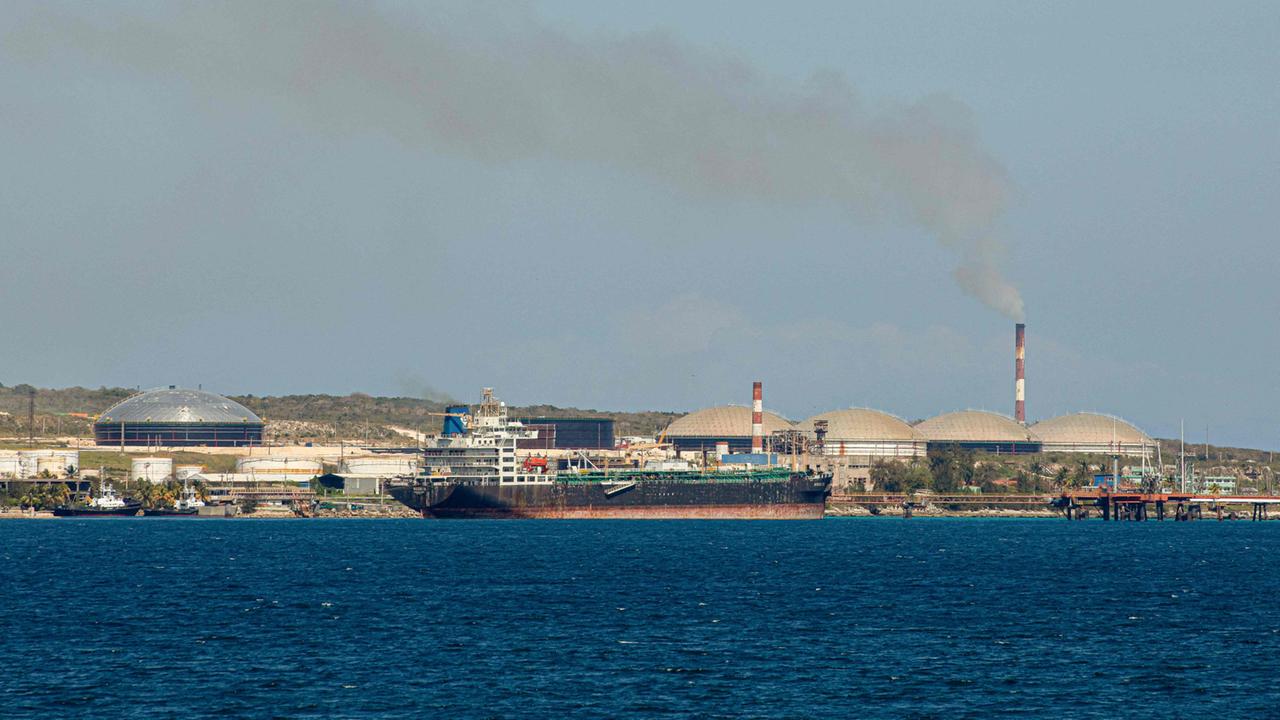
The government has assured Australians that shipments of oil have been arriving onshore as planned, and that six oil tankers that had been cancelled had been replaced. But the industry has sounded the alarm that the nation’s fuel supplies are heading for a cliff by the end of April.
The deployment of thousands of American service members – and Iran’s warning that it would set them “on fire” if they put boots on the ground – have done nothing to alleviate fears the conflict will continue to drag on.
The war has upended Labor’s preparations for a critical budget in May, widely seen as an opportunity for the government to usher in tax reforms, and state governments have called on the prime minister to lead a national response to avoid a repeat of the fragmented COVID-19 pandemic strategy.
What measures have already been taken?
Emergency laws were rushed through parliament on Monday to boost Australia’s fuel stocks, giving importers unprecedented government backing to scour the globe for increasingly rare and expensive shipments of petrol, diesel, crude oil and fertiliser.
The scheme is designed to send a signal to importers to buy up whatever supply they can and bring it to Australia, without worrying about suffering a loss.
It is the latest attempt from the Albanese government to seize control of the unfolding crisis after releasing about 20 per cent of Australia’s fuel reserves to boost domestic supply about two weeks into the conflict.
 Brittany Busch is a federal politics reporter for The Age and Sydney Morning Herald.Connect via email.