
The black SUV carrying Prime Minister Benjamin Netanyahu arrived at the White House just before 11am on February 11. The Israeli leader, who had been pressing for months for the United States to agree to a major assault on Iran, was whisked inside with little ceremony, out of view of reporters, primed for one of the most high-stakes moments in his long career.
US and Israeli officials gathered first in the Cabinet Room, adjacent to the Oval Office. Then Netanyahu headed downstairs for the main event: a highly classified presentation on Iran for President Donald Trump and his team in the White House Situation Room, which was rarely used for in-person meetings with foreign leaders.
Trump sat down, but not in his usual position at the head of the room’s mahogany conference table. Instead, the president took a seat on one side, facing the large screens mounted along the wall. Netanyahu sat on the other side, directly opposite the president.
Appearing on the screen behind the prime minister was David Barnea, director of Mossad, Israel’s foreign intelligence agency, as well as Israeli military officials. Arrayed visually behind Netanyahu, they created the image of a wartime leader surrounded by his team.
Susie Wiles, White House chief of staff, sat at the far end of the table. Secretary of State Marco Rubio, who doubled as the national security adviser, had taken his regular seat. Defence Secretary Pete Hegseth and General Dan Caine, chair of the Joint Chiefs of Staff, who generally sat together in such settings, were on one side; joining them was John Ratcliffe, the CIA director. Jared Kushner, the president’s son-in-law, and Steve Witkoff, Trump’s special envoy, who had been negotiating with the Iranians, rounded out the main group.
The gathering had been kept deliberately small to guard against leaks. Other top cabinet secretaries had no idea it was happening. Also absent was the vice president. JD Vance was in Azerbaijan, and the meeting had been scheduled on such short notice that he was unable to make it back in time.
The presentation that Netanyahu would make over the next hour would be pivotal in setting the United States and Israel on the path toward a major armed conflict in the middle of one of the world’s most volatile regions. And it would lead to a series of discussions inside the White House over the following days and weeks, the details of which have not been previously reported, in which Trump weighed his options and the risks before giving the go-ahead to join Israel in attacking Iran.
This account of how Trump took the United States into war is drawn from reporting for a forthcoming book, Regime Change: Inside the Imperial Presidency of Donald Trump. It reveals how the deliberations inside the administration highlighted the president’s instincts, his inner circle’s fractures and the way he runs the White House. It draws on extensive interviews conducted on the condition of anonymity to recount internal discussions and sensitive issues.
The reporting underscores how closely Trump’s hawkish thinking aligned with Netanyahu’s over many months, more so than even some of the president’s key advisers recognised. Their close association has been an enduring feature across two administrations, and that dynamic – however fraught at times – has fuelled intense criticism and suspicion on both the left and the right of American politics.
And it shows how, in the end, even the more sceptical members of Trump’s war cabinet – with the stark exception of Vance, the figure inside the White House most opposed to a full-scale war – deferred to the president’s instincts, including his abundant confidence that the war would be quick and decisive. The White House declined to comment.
In the Situation Room on February 11, Netanyahu made a hard sell, suggesting that Iran was ripe for regime change and expressing the belief that a joint US-Israeli mission could finally bring an end to the Islamic Republic.
At one point, the Israelis played Trump a brief video that included a montage of potential new leaders who could take over the country if the hard-line government fell. Among those featured was Reza Pahlavi, the exiled son of Iran’s last shah, now a Washington-based dissident who had tried to position himself as a secular leader who could shepherd Iran toward a post-theocratic government.
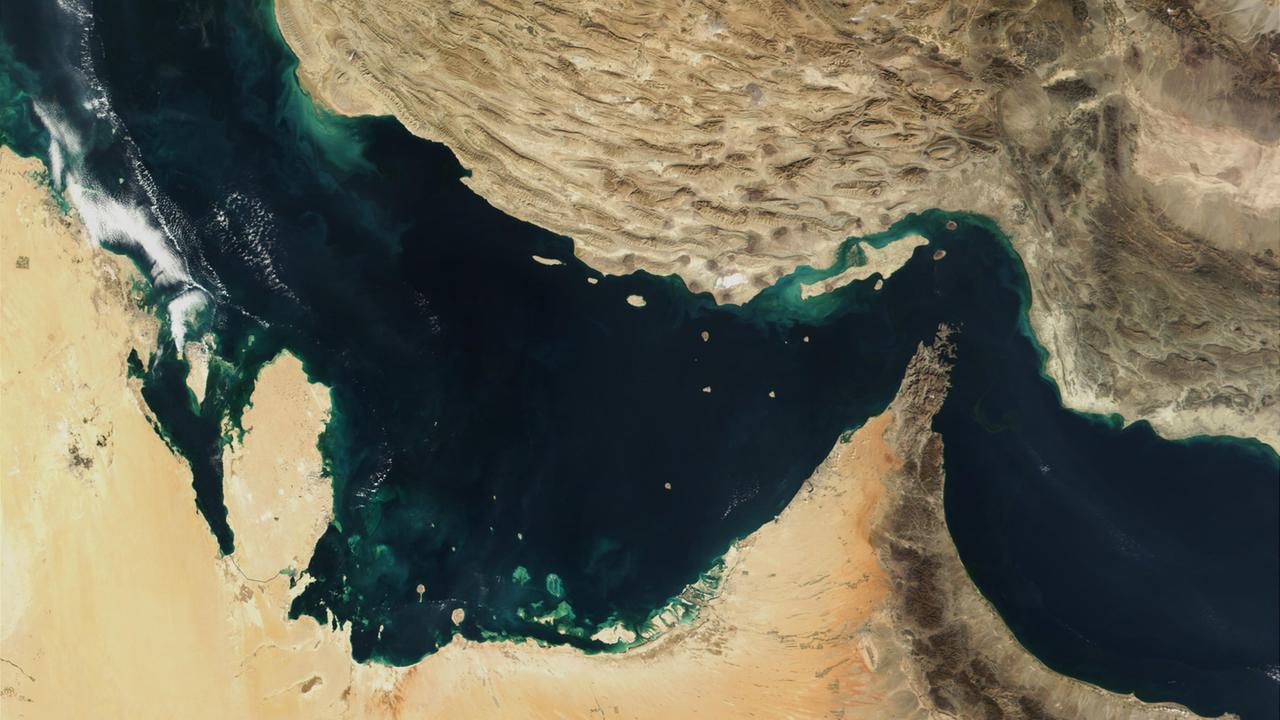
Netanyahu and his team outlined conditions they portrayed as pointing to almost certain victory: Iran’s ballistic missile program could be destroyed in a few weeks. The regime would be so weakened that it could not choke off the Strait of Hormuz, and the likelihood that Iran would land blows against US interests in neighbouring countries was assessed as minimal.
Besides, Mossad’s intelligence indicated that street protests inside Iran would begin again, and – with the impetus of the Israeli spy agency helping to foment riots and rebellion – an intense bombing campaign could foster the conditions for the Iranian opposition to overthrow the regime. The Israelis also raised the prospect of Iranian Kurdish fighters crossing the border from Iraq to open a ground front in the north-west, further stretching the regime’s forces and accelerating its collapse.
Netanyahu delivered his presentation in a confident monotone. It seemed to land well with the most important person in the room, the American president.
Sounds good to me, Trump told the prime minister. To Netanyahu, this signalled a likely green light for a joint US-Israeli operation.
Netanyahu was not the only one who came away from the meeting with the impression that Trump had all but made up his mind. The president’s advisers could see that he had been deeply impressed by the promise of what Netanyahu’s military and intelligence services could do, just as he had been when the two men spoke before the 12-day war with Iran in June.
Earlier in his White House visit on February 11, Netanyahu had tried to focus the minds of the Americans assembled in the Cabinet Room on the existential threat posed by Iran’s 86-year-old supreme leader, Ayatollah Ali Khamenei.
When others in the room asked the prime minister about possible risks in the operation, Netanyahu acknowledged these but made one central point: in his view, the risks of inaction were greater than the risks of action. He argued that the price of action would only grow if they delayed striking and allowed Iran more time to accelerate its missile production and create a shield of immunity around its nuclear program.
Everyone in the room understood that Iran had the capacity to build up its missile and drone stockpiles at a far lower cost and much more quickly than the United States could build and supply the much more expensive interceptors to protect US interests and allies in the region.
Netanyahu’s presentations – and Trump’s positive response to them – created an urgent task for the US intelligence community. Overnight, analysts worked to assess the viability of what the Israeli team had told the president.
‘Farcical’
The results of the US intelligence analysis were shared the following day, February 12, in another meeting for only US officials in the Situation Room. Before Trump arrived, two senior intelligence officials briefed the president’s inner circle.
The intelligence officials had deep expertise in US military capabilities, and they knew the Iranian system and its players inside out. They had broken down Netanyahu’s presentation into four parts. First was decapitation – killing the ayatollah. Second was crippling Iran’s capacity to project power and threaten its neighbours. Third was a popular uprising inside Iran. And fourth was regime change, with a secular leader installed to govern the country.
The US officials assessed that the first two objectives were achievable with US intelligence and military power. They assessed that the third and fourth parts of Netanyahu’s pitch, which included the possibility of the Kurds mounting a ground invasion of Iran, were detached from reality.
When Trump joined the meeting, Ratcliffe briefed him on the assessment. The CIA director used one word to describe the Israeli prime minister’s regime change scenarios: “farcical.”
At that point, Rubio cut in. “In other words, it’s bullshit,” he said.
Ratcliffe added that given the unpredictability of events in any conflict, regime change could happen, but it should not be considered an achievable objective.
Several others jumped in, including Vance, just back from Azerbaijan, who also expressed strong scepticism about the prospect of regime change.
The president then turned to Caine. “General, what do you think?”
Caine replied, “Sir, this is, in my experience, standard operating procedure for the Israelis. They oversell, and their plans are not always well-developed. They know they need us, and that’s why they’re hard-selling.”
Trump quickly weighed the assessment. Regime change, he said, would be “their problem.” It was unclear whether he was referring to the Israelis or the Iranian people. But the bottom line was that his decision on whether to go to war against Iran would not hinge on whether Parts 3 and 4 of Netanyahu’s presentation were achievable.
Trump appeared to remain very interested in accomplishing Parts 1 and 2: killing the ayatollah and Iran’s top leaders and dismantling the Iranian military.

Caine – the man Trump liked to refer to as “Razin’ Caine”– had impressed the president years earlier by telling him the Islamic State group could be defeated far more quickly than others had projected. Trump rewarded that confidence by elevating the general, who had been an Air Force fighter pilot, to be his top military adviser. Caine was not a political loyalist, and he had serious concerns about a war with Iran. But he was very cautious in the way he presented his views to the president.
As the small team of advisers who were looped into the plans deliberated over the following days, Caine shared with Trump and others the alarming military assessment that a major campaign against Iran would drastically deplete stockpiles of US weaponry, including missile interceptors, whose supply had been strained after years of support for Ukraine and Israel. Caine saw no clear path to quickly replenishing these stockpiles.
He also flagged the enormous difficulty of securing the Strait of Hormuz and the risks of Iran blocking it. Trump had dismissed that possibility on the assumption that the regime would capitulate before it came to that. The president appeared to think it would be a very quick war — an impression that had been reinforced by the tepid response to the U.S. bombing of Iran’s nuclear facilities in June.
Caine’s role in the lead-up to the war captured a classic tension between military counsel and presidential decision-making. So persistent was Caine in not taking a stand — repeating that it was not his role to tell the president what to do, but rather to present options along with potential risks and possible second- and third-order consequences — that he could appear to some of those listening to be arguing all sides of an issue simultaneously.
He would constantly ask, “And then what?” But Trump would often seem to hear only what he wanted to hear.
Caine differed in almost every way from a prior chair of the Joint Chiefs of Staff, General Mark A. Milley, who had argued vociferously with Trump during his first administration and who saw his role as stopping the president from taking dangerous or reckless actions.
One person familiar with their interactions noted that Trump had a habit of confusing tactical advice from Caine with strategic counsel. In practice, that meant the general might warn in one breath about the difficulties of one aspect of the operation, then in the next note that the United States had an essentially unlimited supply of cheap, precision-guided bombs and could strike Iran for weeks once it achieved air superiority.
To Caine, these were separate observations. But Trump appeared to think that the second most likely cancelled out the first.
At no point during the deliberations did Caine directly tell the president that war with Iran was a terrible idea – though some of Caine’s colleagues believed that was exactly what he thought.
Trump the hawk
Distrusted as Netanyahu was by many of the president’s advisers, the prime minister’s view of the situation was far closer to Trump’s opinion than the anti-interventionists on the Trump team or in the broader “America First” movement liked to admit. This had been true for many years.
Of all the foreign policy challenges Trump had confronted across two presidencies, Iran stood apart.

He regarded it as a uniquely dangerous adversary and was willing to take great risks to hinder the regime’s ability to wage war or to acquire a nuclear weapon. Furthermore, Netanyahu’s pitch had dovetailed with Trump’s desire to dismantle the Iranian theocracy, which had seized power in 1979, when Trump was 32. It had been a thorn in the side of the United States ever since.
Now he could become the first president since the clerical leadership took over 47 years ago to pull off regime change in Iran. Usually unmentioned but always in the background was the added motivation that Iran had plotted to kill Trump as revenge over the assassination in January 2020 of General Qassem Soleimani, who was seen in the United States as a driving force behind an Iranian campaign of international terrorism.
Back in office for a second term, Trump’s confidence in the US military’s abilities had only grown. He was especially emboldened by the spectacular commando raid to capture Venezuelan leader Nicolás Maduro from his compound on January 3. No American lives were lost in the operation – yet more evidence to the president of the unmatched prowess of US forces.
Within the cabinet, Hegseth was the biggest proponent of a military campaign against Iran.
Rubio indicated to colleagues that he was much more ambivalent. He did not believe the Iranians would agree to a negotiated deal, but his preference was to continue a campaign of maximum pressure rather than start a full-scale war. Rubio, however, did not try to talk Trump out of the operation, and after the war began, he delivered the administration’s justification with full conviction.
Wiles had concerns about what a new conflict overseas could entail, but she did not tend to weigh in hard on military matters in larger meetings; rather, she encouraged advisers to share their views and concerns with the president in those settings. Wiles would exert influence on many other issues, but in the room with Trump and the generals, she sat back. Those close to her said she did not view it as her role to share her concerns with the president on a military decision in front of others. And she believed that the expertise of advisers like Caine, Ratcliffe and Rubio was more significant for the president to hear.

Still, Wiles had told colleagues that she worried about the United States being dragged into another war in the Middle East. An attack on Iran carried with it the potential to set off soaring gas prices months before midterm elections that could help decide whether the final two years of Trump’s second term would be years of accomplishment or subpoenas from House Democrats. But in the end, Wiles was on board with the operation.
Vance the sceptic
Nobody in Trump’s inner circle was more worried about the prospect of war with Iran, or did more to try to stop it, than the vice president.
Vance had built his political career opposing precisely the kind of military adventurism that was now under serious consideration. He had described a war with Iran as “a huge distraction of resources” and “massively expensive.”
He was not, however, a dove across the board. In January, when Trump publicly warned Iran to stop killing protesters and promised that help was on its way, Vance had privately encouraged the president to enforce his red line. But what the vice president pushed for was a limited, punitive strike, something closer to the model of Trump’s missile attack against Syria in 2017 over the use of chemical weapons against civilians.
The vice president thought a regime-change war with Iran would be a disaster. His preference was for no strikes at all. But knowing that Trump was likely to intervene in some fashion, he tried to steer toward more limited action. Later, when it seemed certain that the president was set on a large-scale campaign, Vance argued that he should do so with overwhelming force, in the hope of achieving his objectives quickly.
In front of his colleagues, Vance warned Trump that a war against Iran could cause regional chaos and untold numbers of casualties. It could also break apart Trump’s political coalition and would be seen as a betrayal by many voters who had bought into the promise of no new wars.
Vance raised other concerns, too. As vice president, he was aware of the scope of America’s munitions problem. A war against a regime with enormous will for survival could leave the United States in a far worse position to fight conflicts for some years.
The vice president told associates that no amount of military insight could truly gauge what Iran would do in retaliation when survival of the regime was at stake. A war could easily go in unpredictable directions. Moreover, he thought there seemed to be little chance of building a peaceful Iran in the aftermath.
Beyond all of this was perhaps the biggest risk of all: Iran held the advantage when it came to the Strait of Hormuz. If this narrow waterway carrying vast quantities of oil and natural gas was choked off, the domestic consequences in the United States would be severe, starting with higher gasoline prices.
Tucker Carlson, the commentator who had emerged as another prominent sceptic of intervention on the right, had come to the Oval Office several times over the previous year to warn Trump that a war with Iran would destroy his presidency. A couple of weeks before the war began, Trump, who had known Carlson for years, tried to reassure him over the phone. “I know you’re worried about it, but it’s going to be OK,” the president said. Carlson asked how he knew. “Because it always is,” Trump replied.
In the final days of February, the Americans and the Israelis discussed a piece of new intelligence that would significantly accelerate their timeline. The ayatollah would be meeting above ground with other top officials of the regime, in broad daylight and wide open for an air attack. It was a fleeting chance to strike at the heart of Iran’s leadership, the kind of target that might not present itself again.

Trump gave Iran another chance to come to a deal that would block its path to nuclear weapons. The diplomacy also gave the United States extra time to move military assets to the Middle East.
The president had effectively made up his mind weeks earlier, several of his advisers said. But he had not yet decided exactly when. Now Netanyahu urged him to move fast.
That same week, Kushner and Witkoff called from Geneva after the latest talks with Iranian officials. Over three rounds of negotiations in Oman and Switzerland, the two had tested Iran’s willingness to make a deal. At one point, they offered the Iranians free nuclear fuel for the life of their program — a test of whether Tehran’s insistence on enrichment was truly about civilian energy or about preserving the ability to build a bomb.
The Iranians rejected the offer, calling it an assault on their dignity.
Kushner and Witkoff laid out the picture for the president. They could probably negotiate something, but it would take months, they said. If Trump was asking whether they could look him in the eye and tell him they could solve the problem, it was going to take a lot to get there, Kushner told him, because the Iranians were playing games.
‘I think we need to do it’
On Thursday, February 26, around 5pm, a final Situation Room meeting got under way. By now, the positions of everyone in the room were clear. Everything had been discussed in previous meetings; everyone knew everyone else’s stance. The discussion would last about an hour and a half.
Trump was in his usual place at the head of the table. To his right sat the vice president. Next to Vance was Wiles; then Ratcliffe; then the White House counsel, David Warrington; then Steven Cheung, the White House communications director. Across from Cheung was Karoline Leavitt, the White House press secretary; to her right was Caine, then Hegseth and Rubio.
The war-planning group had been kept so tight that the two key officials who would need to manage the largest supply disruption in the history of the global oil market, Treasury Secretary Scott Bessent and Energy Secretary Chris Wright, were excluded, as was Tulsi Gabbard, director of national intelligence.
The president opened the meeting, asking, OK, what have we got?
Hegseth and Caine ran through the sequencing of the attacks. Then Trump said he wanted to go around the table and hear everyone’s views.
Vance, whose disagreement with the whole premise was well established, addressed the president: You know I think this is a bad idea, but if you want to do it, I’ll support you.
Wiles told Trump that if he felt he needed to proceed for America’s national security, then he should go ahead.
Ratcliffe offered no opinion on whether to proceed, but he discussed the stunning new intelligence that the Iranian leadership was about to gather in the ayatollah’s compound in Tehran. The CIA director told the president that regime change was possible depending on how the term was defined. “If we just mean killing the supreme leader, we can probably do that,” he said.
When called on, Warrington, the White House counsel, said it was a legally permissible option in terms of how the plan had been conceived by US officials and presented to the president. He did not offer a personal opinion, but when pressed by the president to provide one, he said that as a Marine veteran, he had known an American service member killed by Iran years earlier. This issue remained deeply personal. He told the president that if Israel intended to proceed regardless, the United States should do so as well.
Cheung laid out the likely public relations fallout: Trump had run for office opposed to further wars. People had not voted for conflict overseas. The plans ran contrary, too, to everything the administration had said after the bombing campaign against Iran in June. How would they explain away eight months of insisting that Iranian nuclear facilities had been totally obliterated? Cheung gave neither a yes nor a no, but he said that whatever decision Trump made would be the right one.
Leavitt told the president that this was his decision and that the press team would manage it as best they could.
Hegseth adopted a narrow position: they would have to take care of the Iranians eventually, so they might as well do it now. He offered technical assessments: they could run the campaign in a certain amount of time with a given level of forces.
Caine was sober, laying out the risks and what the campaign would mean for munitions depletion. He offered no opinion; his position was that if Trump ordered the operation, the military would execute. Both of the president’s top military leaders previewed how the campaign would unfold and the US capacity to degrade Iran’s military capabilities.
When it was his turn to speak, Rubio offered more clarity: if our goal is regime change or an uprising, we shouldn’t do it. But if the goal is to destroy Iran’s missile program, that’s a goal we can achieve.
Everyone deferred to the president’s instincts. They had seen him make bold decisions, take on unfathomable risks and somehow come out on top. No one would impede him now.
“I think we need to do it,” the president told the room. He said they had to make sure Iran could not have a nuclear weapon, and they had to ensure that Iran could not just shoot missiles at Israel or throughout the region.
Caine told Trump that he had some time; he did not need to give the go-ahead until 4pm the following day.
Aboard Air Force One the next afternoon, 22 minutes before Caine’s deadline, Trump sent the following order: “Operation Epic Fury is approved. No aborts. Good luck.”
This article originally appeared in The New York Times.
Get a note directly from our foreign correspondents on what’s making headlines around the world. Sign up for our weekly What in the World newsletter.