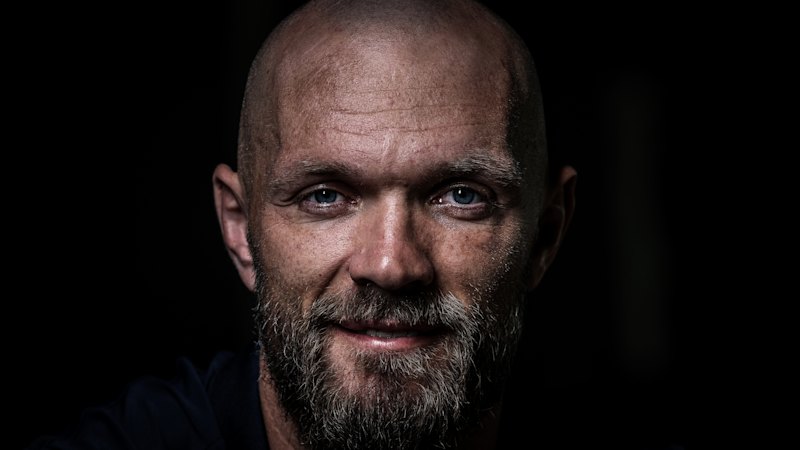

Max Gawn will walk into the MCG for his 250th game on Sunday as the defining figure in Melbourne’s modern era – and, for many, the most influential ruckman of his generation.
It’s a milestone that speaks not just to Gawn’s longevity, but to his dominance, durability and reinvention across one of the most volatile periods in the Demons’ history.
Gawn has no interest in becoming one of those veterans who linger beyond their used-by date.
As he approaches the milestone, the Melbourne captain is not measuring his career in seasons survived, but in standards maintained – a philosophy he underlined in round one when he overpowered St Kilda ruckman Tom De Koning in a decisive final-quarter performance that swung the game.
It’s why Gawn finds himself drawn to sporting outliers such as LeBron James, Novak Djokovic and Lewis Hamilton – not simply for their longevity, but for their refusal to fade.
“The best thing about those guys is they’re still performing,” Gawn said.
“So I don’t want to be just on the list for longevity.
“If I’m ever, and I don’t want to name players because that would be rude, but if I’m ever playing like one of those guys who just held on for a bit too long, I would like to be tapped on the shoulder and told, ‘hey, you don’t want to be that guy.’”
For Gawn, the milestone is not a marker of endurance. It is a test of relevance.
That mindset contrasts with that of his fellow 250-gamer and close mate Tom McDonald, whose journey to the same number has been defined by sheer persistence.
For Gawn, footy has “given me the world”. For McDonald, 250 games have been constructed on something far less glamorous: an ability to continually find a way.
McDonald does not speak of his career as a linear rise. It sounds more like a negotiation – at times an uneasy one – with the game itself.
Even in his 15th year, he wasn’t selected for the opening two rounds. His milestone comes about because of a hand injury to young defender Daniel Turner.
McDonald has played key back, key forward (he kicked 53 goals in 2018) and back-up ruck to Gawn, but he’s only once had a contract lasting more than two years.
“So I’ve always been like on the two-year deals … and then it was a bad 2020, wasn’t playing well, and it was, well, look for a trade.”
He remembers sitting down with then Collingwood coach Nathan Buckley at the end of that season, but a move to the Magpies never eventuated.
“We couldn’t get a trade done, so I had to find a way to play well again, and then I came back in 2021 and we won the flag.”
McDonald speaks in terms of survival. “It’s always been an internal competition for me,” he said.
“Whenever I’ve had the attitude of, ‘Oh, f— them, like, they should be picking me’, it never goes well. But when I go, ‘All right, there is going to be an opportunity … be ready’, that’s when it works.”
Gawn admires McDonald’s resilience, and his candour.
“He’ll openly talk about how he’s going, his feelings,” Gawn said. “And that’s why it’s so captivating to be on his journey.”
Gawn, even as a premiership captain and one of the most recognisable figures in the game, is still searching for what he regards as success.
“I think success in the end is happiness, and I’m not happy,” he said.
It is not dissatisfaction so much as incompleteness – the sense that, even at 250 games, there is something unfinished.
He has been the face of the club in good times and in bad.
He was the physical and spiritual leader of the 2021 finals series that broke the premiership drought.
He was the glue holding the playing group together when fights, factions and friction broke out across multiple seasons.
He was the one fronting the media when premiership players, including Clayton Oliver and Christian Petracca and Steven May, left the club.
But he’s never complained. He chooses not to.
“When I have a press conference at an Auskick launch the same day as Joel Smith’s [drug suspension] gets released, yeah, it’s a tough 10 minutes,” he says.
“Straight after, I went into a dark corner and said to myself; ‘Geez, that was f—ing hard.’ But at the same time, there are 10 journos standing there all interested in what I’m saying. What a great job that is.”
That perspective extends beyond football.
“Footy’s given me the world,” Gawn said. “So when someone asked me … what’s it taken away? Well, there’s a really simple answer. It’s taken away f—ing nothing. I’ve lived one of, if not the, life that the majority of young boys want to live. And I’ve loved every minute of it.
“Yes, I’ve worked on that mindset, but … football has given me a unique chance to get into a community that I deeply love.
“There are some good things in there and some bad things in there, but the bad things are things I’d still rather be doing than working at a Domino’s Pizza like I was when I was 16.”
Gawn and McDonald did not immediately connect when they arrived at Melbourne – Gawn a self-described “lad” and McDonald more reserved, almost studious. They were operating on entirely different wavelengths.
“I thought Tom was a nerd,” Gawn laughed.
“In fairness, I was,” McDonald admitted.
“We both needed to come into the centre a little bit,” Gawn said.
Any distance between them was compounded by the environment they walked into. McDonald still shakes his head at the state of the club in those early years.
“I don’t think people remember how bad it was in that 2011-2013 period,” he said.
“They forget really quickly how bad financially the club was, how much of a shitshow, just everything was.
“Trying to get people to come to the game and play here in front of 9000; it was diabolical, really.”
That context matters. Both careers were forged in instability – shaped as much by what Melbourne was then as what it has become.
Keep up to date with the best AFL coverage in the country. Sign up for the Real Footy newsletter.
 Sam McClure is an award-winning AFL journalist and broadcaster.Connect via X or email.