
easyTime:< 30 minsServes:4
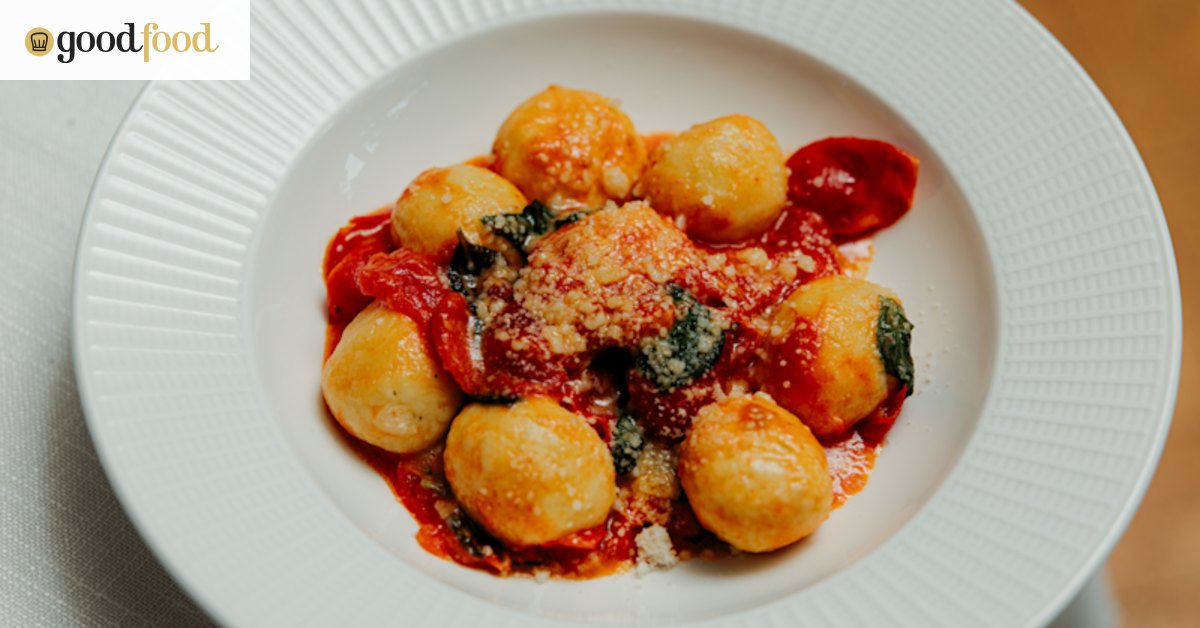
At Gran Torino, Neil Perry’s Italian outpost in Sydney, the menu is strictly dictated by the seasons. This is most evident in his ricotta gnocchi – known in Tuscany as gnudi. These “naked” pasta dumplings offer the delicate heart of a ravioli without the dough, and are paired simply with the best tomatoes Perry can source.
The dish is a study in balance. “We love the richness of fresh buffalo ricotta paired with the sweetness and acidity of perfectly ripe tomatoes,” Perry says. “We only serve this dish when there are perfect tomatoes available. If the tomatoes aren’t great that season, we don’t serve it at all.”
He specifically chooses sugar plum tomatoes for their intensity. “They are consistently the best-tasting tomatoes we can find, with a great balance of sweet, sour, and umami that larger varieties rarely match.”
The secret to the light, pillowy texture of the gnocchi is restraint. Because the recipe uses very little flour, there is no risk of a rubbery finish. “The trade-off is that they are very delicate,” Perry notes. “You have to handle them carefully.”
The best recipes from Australia’s leading chefs straight to your inbox.
Sign up
The key to pillowy gnocchi – whether potato, spinach or ricotta – is restraint, says Perry. Use only as much flour as needed to bind the ingredients. The more flour you add, and the more you work the dough, the more rubbery the result. For the best texture, mix the dough gently and stop as soon as it comes together.
For the base, Perry prefers buffalo ricotta over cow’s milk versions. “Ricotta is a pure expression of the milk it’s made from,” he says. “Buffalo ricotta gives a clean, sweet, milky flavour. Cow’s milk ricotta will work the same way, but it won’t be quite as sweet or milky in flavour.”


