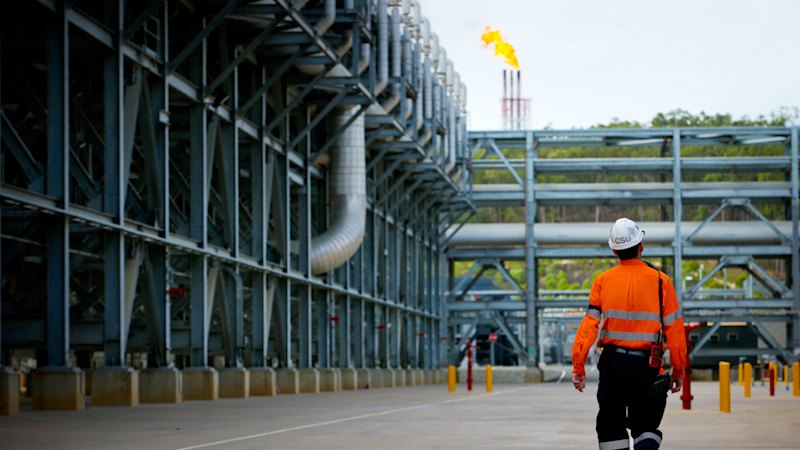

Global energy giant Shell is cautioning Australia against taxing gas exporters’ windfall profits, declaring it would destabilise vital trade ties with Asian partners and make it harder for the government to secure increasingly scarce deliveries of petrol, diesel and jet fuel from the region.
Labor has asked Treasury to model a new tax on Australian energy companies that stand to reap huge profits from selling liquefied natural gas (LNG) overseas, as the war in the Middle East chokes a fifth of the world’s supply and sends prices rocketing to multi-year highs.
It comes as crossbench MPs, unions, environmentalists and some energy experts have been advocating for a 25 per cent tax on gas giants’ windfall profits, which they say could deliver billions of dollars of revenue and be used to help households deal with worsening cost-of-living strains and energy price shocks. The price of petrol in Australia has jumped again this week to the unprecedented average of $2.53 a litre for regular unleaded.
The push has gained the support of some of the country’s most prominent musicians, including Jimmy Barnes, Missy Higgins, Amyl and the Sniffers, Angie McMahon, John Butler, and King Gizzard and the Lizard Wizard, who have added their names to an open letter to the federal government.
“A 25 per cent tax could raise more than $17 billion each year to invest in climate solutions and help Australians with the rising cost of living,” said the letter, co-signed by more than 100 Australian artists.
Opposition frontbencher Andrew Hastie, meanwhile, has called on his Coalition colleagues to keep an open mind about increasing taxes on gas companies.
In a speech to be delivered at an industry conference on Tuesday, the head of one of the country’s largest gas producers, Shell Australia chair Cecile Wake, issued a plea for the government to beware of short-term “easy solutions” – such as the proposed windfall tax – that could “fundamentally erode” the investment case for the development of critical new energy supplies in the future.
“I understand why governments look for additional levers when cost-of-living pressures are real and immediate, as they are now,” she says in a draft copy of the speech.
“Increasing the fiscal burden on gas exports is not the answer.”
Shell, one of the world’s largest energy companies, produces gas for domestic use and export markets from projects in Western Australia and Queensland. Wake is expected to tell delegates on Tuesday that a 25 per cent windfall tax on LNG would “send a strong negative signal” to key Asian trading partners, which depend on Australian LNG deliveries for their energy security, and could jeopardise reciprocal trade arrangements “right when we are dependent upon those partners to continue to provide secure supplies of liquid fuels”.
With just two domestic oil refineries still operating, Australia relies on imports, mostly from larger refineries in Asia, to supply more than 80 per cent of its petrol, diesel and jet fuel. The government and Australia’s fuel industry are in talks with fuel suppliers in Asia and worldwide to lock in additional cargoes amid growing alarm that refiners’ inventories are depleting. The Strait of Hormuz, a vital shipping channel that usually carries a fifth of the world’s crude oil supply and LNG supply, remains effectively shut.
Prime Minister Anthony Albanese is seeking to leverage Australia’s role as a major LNG supplier to ensure the nation isn’t left behind in the global oil supply crunch triggered by the war in the Middle East.
Last week, he struck an agreement with Singaporean Prime Minister Lawrence Wong to support the flow of LNG and oil products, including diesel, between the two countries. Singapore’s refineries are a major liquid fuel supplier to Australia.
Australia is the world’s third-largest exporter of LNG – natural gas that has been super-chilled until it turns into a liquid so it can be shipped around the world. Australia sold $65 billion worth of LNG in the year to December.
Major economies in Asia, including Japan and Korea, are particularly reliant on Qatari LNG shipped through the strait to power their heaters and electric grids. They are increasingly looking to Australia to make up for the drop-off in shipments due to the fall in supply caused by the Strait of Hormuz closure and drone strikes on key Qatari production assets.
Since the war on Iran began on February 28, one-off LNG cargoes from Australian projects are said to have sold for more than double their pre-conflict prices, fetching up to $US25 ($35) per million British thermal units.
Analysts say Australian oil and gas exporters stand to benefit significantly. During the last global gas crunch, caused by Russia’s invasion of Ukraine, Australia’s LNG export earnings almost doubled, from $50 billion in 2021 to $90 billion in 2022, sparking accusations that the industry was reaping war profits.
The Greens on Monday said the push for a 25 per cent gas tax was “gaining momentum” after parliament approved a motion for an inquiry into the industry’s taxation, which is set to report back before the May federal budget.
“While people are struggling to pay bills and seeing the cost of living go through the roof, gas corporations shouldn’t get a free ride,” Greens leader Senator Larissa Waters said.
The oil and gas sector says higher global LNG prices will already flow through to Australians via higher tax receipts under the existing profit-based tax regime, the Petroleum Resources Rent Tax. Australian Energy Producers, an industry group, argues the push for a 25 per cent tax would push effective tax rates to “around 80 or 90 per cent for some companies, destroying Australia’s ability to compete for global investment”.
“The facts are that the oil and gas industry is already Australia’s second-largest corporate taxpayer, contributing $21.9 billion in taxes and royalties last year alone,” Australian Energy Producers chief executive Samantha McCulloch said.
The Business Briefing newsletter delivers major stories, exclusive coverage and expert opinion. Sign up to get it every weekday morning.
 Nick Toscano is a business reporter for The Age and Sydney Morning Herald.Connect via X or email.