
“Can’t park there, mate.”
It’s the classic online quip to any driver of a vehicle found in a ditch, dodgy car space, or – in the case of Friday afternoon on the Mornington Peninsula – the outbound lane of Point Nepean Road.
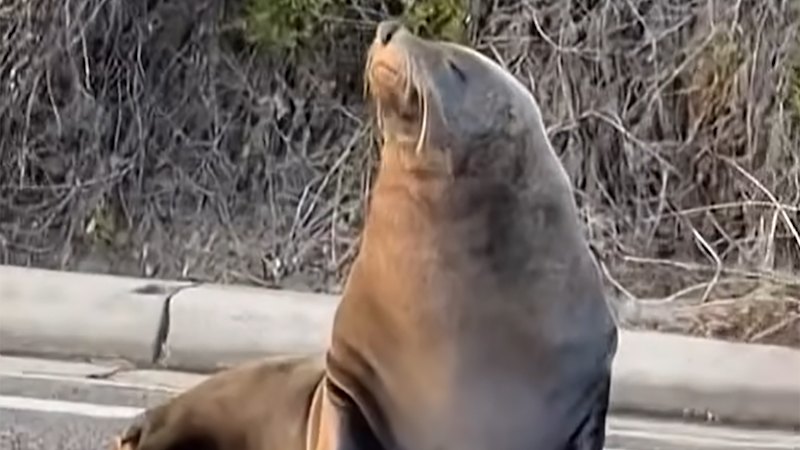
Except the driver was not a driver at all. As red and blue lights flashed from a nearby divisional van, a seal, believed by locals to be a regular they have named Sammy, basked peacefully.
“Oh look at him, he’s having a rest,” said one commuter, giggling as they passed the animal in footage later posted to social media.
“Can’t park there,” appeared to be the obligatory quip in the comments. And a plethora of painful cliches. “It’s taken months but [they] finally sealed the road,” joked another.
By all accounts, Sammy appeared unaware of the low-level chaos he caused. The lazy afternoon forced the closure of the outbound lane of Point Nepean Road in the area of Anthony’s Nose, near Dromana, for four hours.
The Department of Transport reported delays of up to seven minutes as the road was reduced to one lane.
The roadway where Sammy chose to start his weekend early is right next to the ocean, where there is a gap in the guardrails separating the bitumen from the sand.
He either climbed a small flight of steps or waddled up a few hundred metres to get up the small rise between the beach and the road.
Officers and witches hats formed a cordon around the seal while waiting for Zoos Victoria’s Marine Response Unit to safely shepherd Sammy back to sea.
A Zoos Victoria spokesperson said Sammy had been seen around southern peninsula beaches for the past month or so.
“He is becoming a serial pest! Obstructing paths, now roads!,” wrote another person on Facebook.
Dr Allyson O’Brien, a marine biologist at the University of Melbourne, said seals had become much more common in Port Phillip Bay since they became a protected species in the 1980s.
“It’s a really uncommon thing for an individual seal to find its way onto land, [mostly] they are sunbathing in groups,” she said.
“As we modify our coastal habitats, coastal erosion occurs, and [seals] are not going to have their usual land habitat available, so I think that’s potentially a reason why we might come into contact with seals more often moving forward.”
Dr O’Brien warned people not to approach seals, as they would likely become aggressive if anyone became too close.
Sammy was finally moved along by authorities just after midday. This masthead reached out to the Marine Response Unit for comment, but were too busy managing Sammy at the time.