
Labor’s sweeping overhaul of the National Disability Insurance Scheme will boot 160,000 people from the program and cut participants’ plan budgets as the government clamps down on the program’s runaway costs within the next four years.
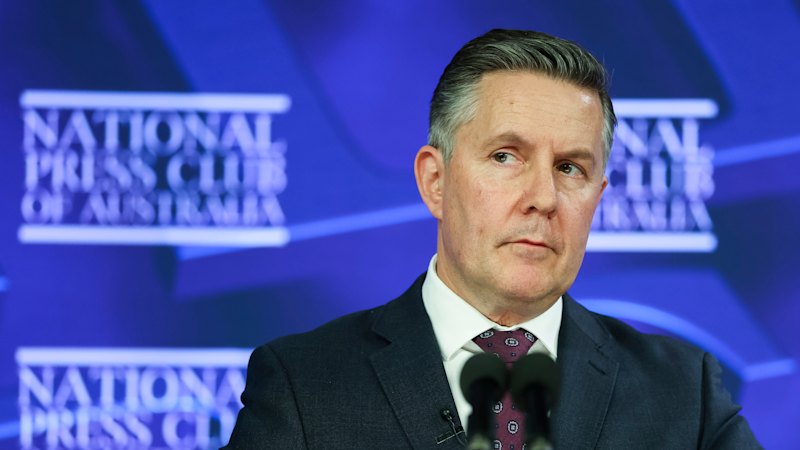
Health and Disability Minister Mark Butler, in a major speech on Wednesday, revealed significant cuts to the $50 billion NDIS that would effectively stall the scheme’s growth in real terms over the four-year forward estimates, delivering Labor major savings in next month’s budget.
Emphasising the urgency of reforms, Butler said his mission was to reset the NDIS by 2030 by bringing spending under control and returning the scheme to its original purpose of serving disabled Australians with significant functional impairments.
The NDIS has become the federal government’s third-largest budget item as wide eligibility criteria and loose guardrails have led it to evolve beyond its original design. Broad state-based supports outside the scheme dried up, and it became the only option for thousands of disabled Australians and their families.
This has meant that a scheme that was forecast in 2017 to service about 550,000 people by 2030, at a cost of $40 billion, is already serving 760,000 people and costing $50 billion. Crucially, the NDIS has not stabilised, and was still growing at 10 per cent a year in the latest quarter.
Butler wants to slash that growth rate to 2 per cent on average across the next four years – a figure below inflation – before lifting to 5 per cent again from 2030, in line with other social programs such as health.
“We want to have an honest conversation with people about this … we need to recognise this four-year period as a reset period. It really is going to change the nature of the scheme in some areas of expenditure, and also in terms of coverage,” Butler said on Wednesday.
“Once that reset is done – and it’s absolutely the right reset, I’m convinced of that, of course – the scheme will continue to grow in an appropriate way, like other social programs.”
Labor will make changes to eligibility, cuts to plans
Many of these changes will be enabled by new laws that Butler will introduce next month.
He will act on a major recommendation from the 2023 NDIS review, which said eligibility to the NDIS should be determined by a functional assessment rather than a firm diagnosis list.
“I want to get away from the diagnosis list, the diagnosis gateway. We need to return the scheme back to a question of functional capacity. That’s what it was built on, the idea of people with significantly reduced functional capacity that impacts their day-to-day living needs,” Butler said.
“What it will mean, though, is that Australians with lower support needs or higher functional capacity, depending on your perspective, will be moved out of the scheme.”
The new assessment tool to determine NDIS eligibility will be designed over the next 18 months, and roll out from January 2028. Existing participants will then be reassessed, and new participants will gain entry based on the updated criteria.
This is expected to reduce the number of scheme participants to 600,000 – removing at least 160,000 people based on today’s figures. This is likely to capture many autistic participants, including thousands of children, who have lower support needs and qualified for the scheme through the diagnosis list.
Young children would likely move to the Thriving Kids program while others would use “foundational supports” that are yet to be designed with the states. About $10 billion has been allocated to these services.
Butler will also cut back on funding allocated to people through the “social and community participation” category of supports, which range from helping people build social skills to support workers taking them to the movies.
It cost $12 billion this year, having tripled in five years. “While many support workers provide valuable supports, too many participants tell us their support workers are spending more time on their phones than engaging with them,” the minister said.
Butler said these plan cuts – to start this October and continue over the next two years – will reset people’s allocations to their 2023 levels. “This will have a material impact on participant plans,” he said.
Other structural changes will go to the scheme’s integrity and markets, such as by expanding the requirements of providers to register, introducing a new digital payment system and starting work on a new pricing regime.
The government will also move towards a “commissioning approach” for people with the highest support needs. This section of the scheme, known as supported independent living, is the most expensive: about 37,000 people on the scheme receive these services, and their payments have grown from $12.9 billion to $16.2 billion in two years.
“Our government will identify a short list of accountable quality providers, which people can then choose from,” Butler said.
“What I have announced today … is a move away from the ‘let it rip’ market that I think has built up over the last 10 years, where there’s very little oversight or line of sight about the quality and the qualifications of providers of … taxpayer-funded services.”
More to come
Cut through the noise of federal politics with news, views and expert analysis. Subscribers can sign up to our weekly Inside Politics newsletter.
 Natassia Chrysanthos is Federal Political Correspondent. She has previously reported on immigration, health, social issues and the NDIS from Parliament House in Canberra.Connect via X or email.