Adrian Black
Updated ,first published
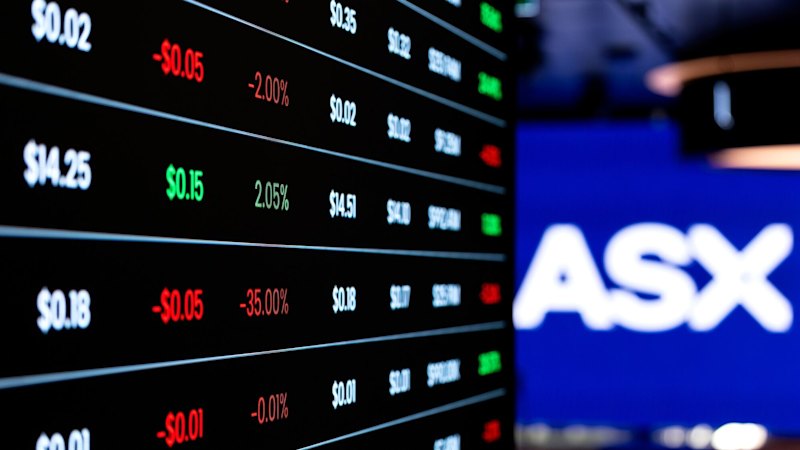
Australia’s sharemarket has fallen to a seven-week low, as the ongoing conflict in Iran bolsters oil prices and inflation fears darken the global economic outlook.
The S&P/ASX200 fell 125.5 points on Monday, down 1.5 per cent, to 8505.3, as the broader All Ordinaries tumbled 135.2 points, or 1.5 per cent, to 8735.4.
Local shares followed a weak finish from global equities on Friday, after bond yields surged on inflation concerns, and as oil prices surged after fresh attacks in the Middle East and modest results from US meetings with key Iran ally China.
“While last week’s Trump-Xi meeting offered a glimmer of optimism, China has since shown little appetite for helping to reopen the Strait of Hormuz,” IG market analyst Tony Sycamore said.
“And why would it? President [Donald] Trump has been Beijing’s chief antagonist for over a decade, and with ample strategic reserves on hand, China can afford to let the US sit in an uncomfortable spot of its own making for a little longer.”
Energy stocks were the only sector to carve out a gain for the session, while basic materials, industrials stocks and real estate trusts weighed heavily as traders mulled a sustained high fuel cost and interest rate environment.
Brent crude oil advanced above $US110 a barrel, after adding almost 8 per cent last week, while West Texas Intermediate rose above $US107.
Trump made clear his patience is wearing thin, posting on social media on Sunday that: “For Iran, the Clock is Ticking, and they better get moving, FAST, or there won’t be anything left of them. TIME IS OF THE ESSENCE!”
Woodside and Santos each charged more than 2.6 per cent higher, as Brent crude hovered near $US111 a barrel and as Santos delivered first oil from its Pikka project in Alaska.
Refinery owners Viva and Ampol advanced, while coal producers were mixed and uranium stocks continued to sell off.
Industrials stocks fell 4 per cent after Brambles’ value plummeted by more than a fifth after a shock profit guidance downgrade, which cut its expected 2026 financial year profit range roughly in half.
Miners were also under pressure, with basic materials down 2.8 per cent as iron ore and copper futures retreated, taking BHP, Rio Tinto and Fortescue with them. This came after China’s year-to-April industrial production fell to 4.1 per cent, missing forecasts of 6 per cent.
Gold has fallen to $US4544 ($6362) an ounce, dragging on ASX-listed miners and taking the gold sub-index 4 per cent lower.
Lynas Rare Earths offered a rare glimmer of optimism for the segment, advancing 5.5 per cent to $18.93.
Financials were sluggish, falling 0.3 per cent as CommBank shares continued their modest recovery from the previous week’s $30 billion sell-down, while NAB, Westpac and ANZ lost ground.
Consumer-facing stocks lost 0.9 per cent amid broad-based weakness, while real estate and healthcare stocks were under particular pressure.
In company news, shares in agribusiness group Elders plummeted by almost 23 per cent after costs from its cloud-based migration weighed on its first-half earnings.
The Australian dollar was buying 71.48 US cents on Monday afternoon, down from 71.59 US cents on Friday at 5pm.
On Friday on Wall Street, the S&P 500 fell 1.2 per cent from its all-time high set the day before. The Dow Jones dropped 537 points, or 1.1 per cent, and the Nasdaq composite sank 1.5 per cent from its own record.
Technology stocks tumbled in a sharp turnaround from their meteoric rises for much of the year, which had carried markets worldwide to records but also raised criticism that they had gone too far.
Nvidia, the stock that quickly became the face of the AI revolution, dropped 4.4 per cent and was the heaviest weight on the S&P 500. It had come into the day with a gain of more than 26 per cent for the year so far.
AAP with AP, Bloomberg
The Market Recap newsletter is a wrap of the day’s trading. Get it each weekday afternoon.