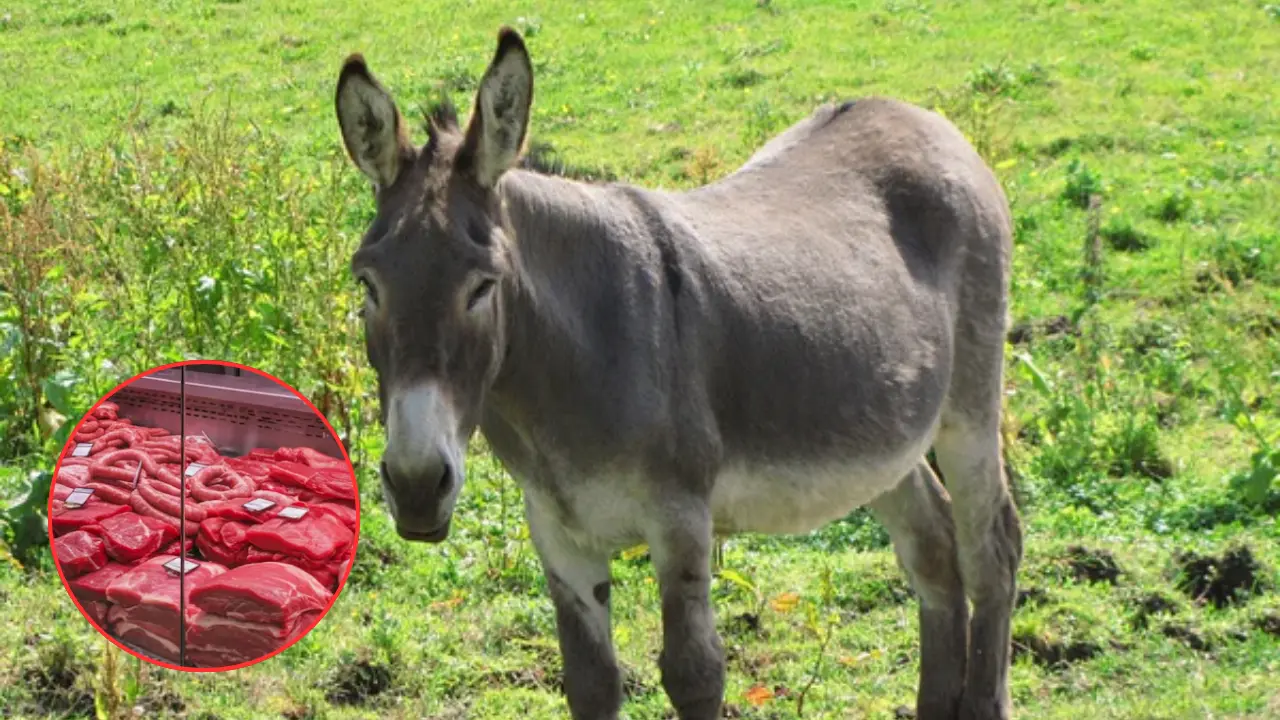
Argentina , historically recognized as one of the countries with the highest consumption of high-value beef, is facing an unprecedented transformation in its eating habits due to the economic crisis the country is going through.
In the province of Chubut, this reality is reflected in the recent commercialization of donkey meat.
Under President Javier Milei ‘s administration , the decline in purchasing power has led many families to seek more affordable options, including those previously considered marginal.
The project, driven by producer Julio Cittadini, began in April 2026 in the city of Trelew, where this product began to be sold to the public as an alternative to the high cost of beef.
With a price of 7,500 Argentine pesos (approximately 140 or 145 lempiras) per kilo, donkey meat is positioned as a more accessible option for sectors that can no longer afford traditional cuts.
This situation highlights the impact of the crisis in a country that has historically been a world leader in the production and consumption of beef.
Donkey meat: a productive solution
In an interview, Cittadini defended the initiative, asserting that it is not about taking advantage of the crisis, but about a productive solution.
“In the group you will be able to have any of the cuts you mentioned because they are practically the same cuts as a cow,” he explained, detailing that they offer pieces such as flank steak, skirt steak, ribs and loin.
The producer also noted that the project arises amidst the decline in sheep production in the Patagonian region, where much land is no longer suitable for traditional livestock farming. In this context, donkeys appear as a viable alternative due to their resilience to the conditions of the steppe.
The product was an immediate success. According to the spokesperson, the first batch “sold out in a day, and within a day and a half there was nothing left,” reflecting the population’s need for more affordable options.
However, the initiative also faces cultural barriers in a country where beef consumption is part of the national identity.
“Beyond the image of the barbecue, the image of the donkey as food seems to me to be a barrier that Argentinians have to overcome,” he acknowledged.
The transition to these types of alternatives marks a milestone in the country’s recent history, reflecting how the economic situation is forcing a change in even one of the most deeply rooted traditions of Argentine culture. Video