Washington: Twelve years after Australia first rocked Eurovision with Guy Sebastian’s poppy Tonight Again, the famous song contest is gaining another surprise new entrant: Canada.
The English and French-speaking Commonwealth nation will make its Eurovision debut in Bulgaria next year, competing in the semi-finals, the European Broadcasting Union announced.
The announcement was made on Canada’s national day – Canada Day – with Prime Minister Mark Carney saying: “The Eurovision Song Contest just got a lot tougher. Because next year, Canada is in.”
It is the first new Eurovision entrant since Australia in 2015, and follows the Canadian Broadcasting Corporation becoming a member of the EBU last month.
The EBU said Canadians had demonstrated strong interest in and enthusiasm for Eurovision, with the country ranking within the top three voting blocs from the “rest of the world” at this year’s contest in May. They were also among the largest ticket buyers outside Europe.
Australia, where Eurovision long enjoyed a mass following and ratings success, entered Eurovision as part of an option deal it inked with broadcaster SBS to establish an Asian version of the contest, which never eventuated.
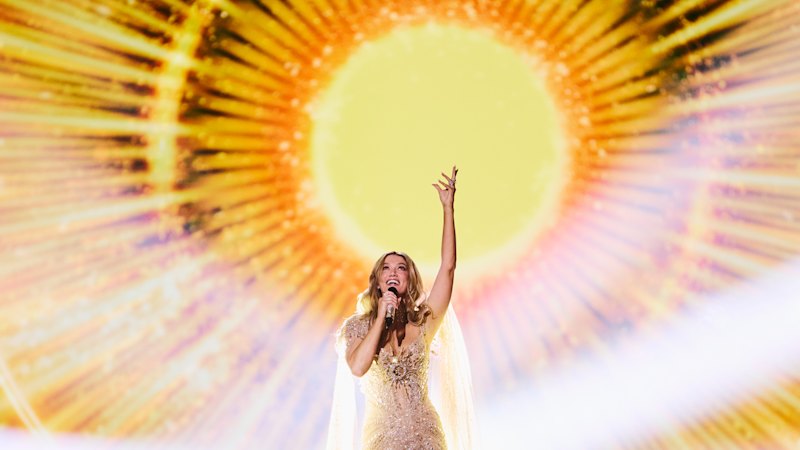
But Australia has continued to take part beyond the initial contract, with songstress Delta Goodrem doing particularly well this year with her fourth-placed entry, Eclipse. Australia’s inclusion in the contest has at times mystified commentators in North America and other parts of the world.
Carney, who became prime minister after taking over from Justin Trudeau and turning his party’s fortunes around to win an election, had asked the CBC to get Canada into Eurovision as part of a budget boost last year.
On Wednesday (Ottawa time), he delivered an upbeat message for Canada Day that also touched upon threats to the country – without mentioning US President Donald Trump or his trade wars.
“Together, we can give ourselves far more than anyone can take away,” Carney said in a video.
“There will always be forces that want to divide us. But they forget a founding insight of our country – that unity is not uniformity. That our differences are strengths to be nurtured, not risks to be managed. That our values serve as our unshakeable foundation that no one can take away.”
Meanwhile, the Trump administration used a scheduled trade meeting to confirm that it would not renew the USMCA, the free trade agreement between the US, Mexico and Canada that was signed in Trump’s previous term.
The agreement – which governs more than $US1.5 trillion ($2.2 trillion) worth of annual trade, according to bank J.P. Morgan – will remain in force while negotiations are held, or until it is terminated.
Mexico and Canada wanted to extend the deal, but the Trump administration had foreshadowed it was likely to reject that option.
Get a note directly from our foreign correspondents on what’s making headlines around the world. Sign up for our weekly What in the World newsletter.
 Michael Koziol is the North America correspondent for The Age and Sydney Morning Herald. He is a former Sydney editor, Sun-Herald deputy editor and a federal political reporter in Canberra.Connect via X or email.