
Helen Perrottet
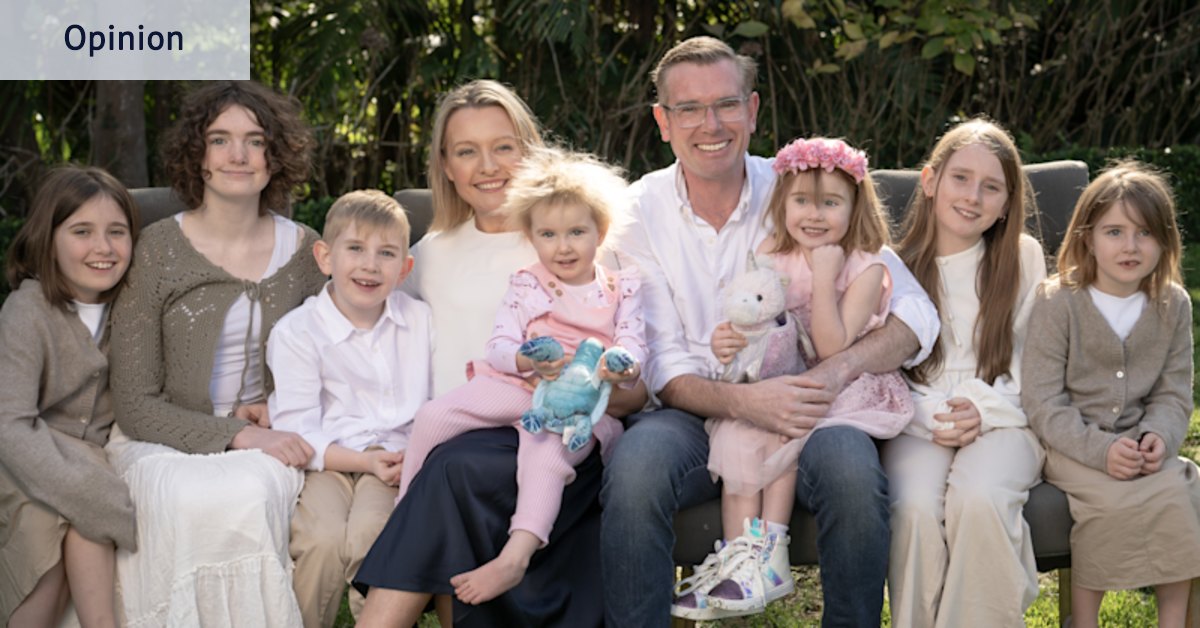
Why would anyone choose to have eight children? The falling birth rate suggests many are asking why have any at all, a problem fast becoming a headache for Australia’s policymakers.
I want to share why I made that choice, because until we understand why people welcome children, we cannot understand why many are choosing not to.
Fixing the dropping birth rate is not as simple as handing out financial incentives, because the decision to become a parent runs deeper than the dollars. People are motivated by meaning as much as money, relationships as much as resources, and hopes for the future as much as present-day costs. Any serious conversation about Australia’s demographic future must make room for those factors too.
It would be remiss of me not to acknowledge that, for some of us, having many children, or any children at all, is not a choice. It is profoundly unfair that those who long for a family can face obstacles beyond their control.
I am grateful for having experienced the joys of a large family, but there is no honest way to discuss this choice without acknowledging the sacrifices involved.
Raising children affects nearly every area of life. The physical demands are significant, particularly for mothers. There are the interrupted nights, endless responsibilities, and seasons when personal interests must take a back seat. Career progression slows. Social lives change. Spontaneity becomes rare, and privacy limited. Then you add the practical pressures, financial considerations, and the countless daily challenges often invisible to people outside the home.
So why would I willingly choose this path?
Put simply, the preciousness of life makes every sacrifice worth it.
The purpose and meaning that come from raising children outweigh the difficulties. That does not mean every day is easy or that I enjoy every moment. Some days are exhausting. Some seasons, overwhelming. Yet when I look at the bigger picture, I see something that matters. As CS Lewis put it: “Children are not a distraction from more important work. They are the most important work.”
In a culture that measures success through status, income, recognition, or professional achievement, I have discovered the joy of investing in little people. Helping shape the character, values, and futures of my children feels like a contribution that extends far beyond myself.
I have enjoyed real professional opportunities outside the home, and I won’t pretend I haven’t wondered, and at times mourned, what a different life might have looked like. But reading economist Catherine Pakaluk’s book, Hannah’s Children, recently reminded me why I have no regrets.
Pakaluk set out to study a question that many people ask of large families: why would anyone choose this? To answer that, she interviewed dozens of highly educated women who had five or more children. Many openly discussed the real toll on their bodies, careers, and freedoms. Yet all consistently returned to the same themes: meaning, purpose, love, and the conviction that family was not an obstacle to a meaningful life but the source of one.
I recognised my own experience in their stories. They reminded me that while the sacrifices are real, there are rewards that cannot easily be measured.
Faith has certainly shaped how I view family, but having a large family is not a requirement of my faith, nor do I believe family size determines a person’s virtue or worth.
My reasons also run deeper than religion. I genuinely love the joys of a full house. There is nothing quite like watching your children develop distinct personalities, the relationships growing between siblings, the older ones encouraging younger ones. I love the sense of belonging that comes from a busy, connected household, where each new child feels like a gift to the family. And my hope is that the children will form life-long friendships and be a lasting source of support and love to each other long after I’m gone.
My purpose in sharing this is not to convince others to have eight children, or even to have children at all. Family decisions are deeply personal and deserve to be respected. But if Australia wants to understand falling birth rates, we need to realise people are driven by more than money: love, belonging, hope, faith, purpose, and a desire to invest in the next generation all matter too. We will only understand why so many are saying no when we start taking seriously why some of us are saying yes.
Helen Perrottet is a mother of eight and lawyer who has worked with the Australian Federal Police and in military roles. She is married to Dom, the former premier of New South Wales.
Start the day with a summary of the day’s most important and interesting stories, analysis and insights. Sign up for our Morning Edition newsletter.