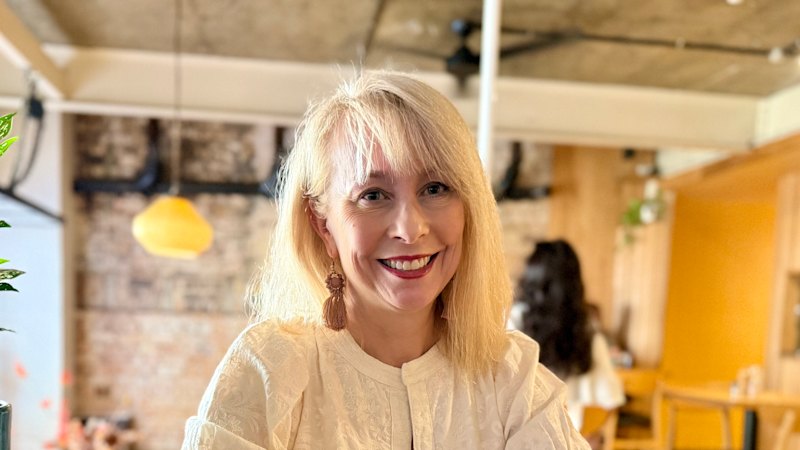
For Brisbane mother Bridget Cullen, the years after her autistic son GC* finished school were harder than any that had come before.
GC has level 3 autism and an intellectual impairment. He’s non-verbal and requires constant high-level care.
School, Cullen says, offered her son purpose and structure. Without it, she discovered “an absence of anything”; from meaningful activity to adequately qualified carers.
“I obviously appreciate that school can’t go on forever,” she says.
“It’s just there is a change. And like many people with autism, change is not always a great thing because it’s at transitions where there’s difficulty.”
Cullen is speaking out to highlight the ongoing challenges that many families of high-need neurodivergent children face. It comes at a time when the disability care sector is under national scrutiny, with cuts to the NDIS and the frameworks that support autistic children announced last month.
“I was surprised at how hard it was to fill the hours that were once occupied with that purposeful, school-based activity,” Cullen, a law lecturer, says.
“When a person living with level 3 autism reaches adulthood, finding care to cover those hours and enable the continued employment of parents is extraordinarily challenging, even when they have the funds available.”
Cullen’s son was in one of the first intakes for the AEIOU Foundation, an intensive early intervention learning program launched in 2005 for young children with autism.
“It made my life so much easier because he was getting therapy and attending prep … and it meant that I could keep working,” she says.
He moved from there to Western Suburbs State Special School in Durack where Cullen says he thrived: “The school understood his needs, and he developed a really high level of familiarity with that environment.
“He knew his teacher, and she knew his quirks … and it made me feel good knowing that he was somewhere safe, somewhere where he had community.”
People with autism face significant barriers to employment and higher education after school, with data from the Australian Bureau of Statistics showing about 50 per cent of autistic people of working age participating in the labour workforce.
The same data shows the unemployment rate for people with autism of working age is 18.2 per cent – more than double the rate for people with disability – and almost six times the rate of people without disability.
Day programs are popular for young adults with autism who are unable to work. Cullen says she tried a range of different programs for GC when school ended, but found none were a good fit.
As his behaviours became more difficult to manage, she was forced to move him into supported living with round-the-clock care.
Cullen estimates only about 8 per cent of NDIS providers are qualified to provide the high level, and highly regulated, care her son needs.
“I hate to say it, but if a worker is choosing between assisting my son, who will pinch, slap, bang his head on the walls and floors, and throw objects, and caring for a higher functioning person without challenging behaviour, for the same hourly wage, it’s clear what most workers would choose,” she says.
Psychiatrist and director of the Queensland Centre of Excellence in Intellectual Disability and Autism Health Dr Cathy Franklin says the transition from school is a “universally challenging time” for neurodiverse and disabled children.
“When school finishes, that person might be home all of the time. It’s a very drastic change [for families],” she says.

“We do see people developing mental illness and deteriorating behaviours.”
Unchecked, this process forces many families to, like Cullen, move children into costly supported living.
“The saddest thing about that is it’s not what the family ever wanted, but really they get completely burnt out,” Franklin says.
“And once someone develops more severe, challenging behaviours, it can be really hard to find carers and for them to have a quality of life.”
Brisbane mother Kathy Harris looked at a range of day programs for her son Rory when he finished highschool but describes many as “adult minding”.
“The good day programs do try and do more than just exist and babysit,” she says, “but after a while [the same activities] get boring.”
Worried that Rory, who has level 3 autism, would regress, Harris set up her own program in 2021 called Campus Life.
“The idea behind it was that [neurodivergent adults aged 17 to 25] would go to a university campus where there are other young people their own age and have an experience that was part day program, part extended learning,” she explains.
Now in its fifth year, the program has found a home at the Australian Catholic University’s Nudgee campus, and is supported by university students on placement.
“We get paramedic students, exercise physiology, occupational therapy – you name it,” Harris says.
“We give them tasks to do. Often it’s to observe and get to know [the people in the program] and see if there’s something that they could offer that could help that person engage more.”
The model has been a success, but against ongoing cuts to the NDIS, Harris says keeping the program afloat has been a constant battle.
“We’re already seeing the difference with our young people coming in from school now.
“People are getting much smaller packages than the young people who used to come to our program.”
*Not his real name
Start the day with a summary of the day’s most important and interesting stories, analysis and insights. Sign up for our Morning Edition newsletter.