
Amid cost-of-living pressures and global turmoil, heavy music is soaring in popularity.
Over the past few years, Lily Wilson has endured COVID-induced upheavals, a redundancy and the unexpected death of her father. Throughout these difficulties, she found solace in what some might consider an unlikely source: metalcore music, a genre that combines heavy metal and hardcore punk.
As a teen, Wilson immersed herself in the “hardcore screamo” scene before gravitating towards “calmer” styles of music. But since the pandemic, she’s spent much time listening to Australian metalcore groups such as Polaris and Windwaker, and international heavy metal acts including Spiritbox and Bad Omens.
“I find it therapeutic,” says Wilson, 30, an IT product and development manager. “You feel the music in your chest and it’s a bit aggro, but not in a bad way. It can be nice to listen to something that’s angry and feel that sense of release.
“Sometimes the lyrics are about burning it all down, but often they’re about how to overcome things and move forward, or how to deal with grief and a world that’s falling apart.”
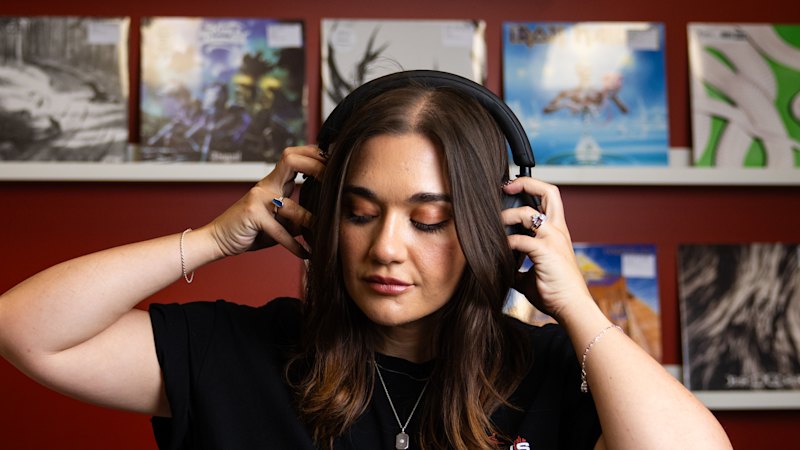
Wilson confesses she was anxious before our interview, so she blasted some metalcore to settle her nerves.
“Then you take your headphones off, you’ve experienced the contrast between loud and quiet – and you’ve got peace,” she says.
Spotify’s top Australian heavy music acts of 2025
Data provided to this masthead by music streaming giant Spotify suggests that Wilson’s experience is not unusual. Between 2020 and 2025, the number of metal songs streamed on the platform more than doubled, while punk and rock each grew by 80 per cent.
The increase in these heavier genres has outpaced pop (up 61 per cent) and hip-hop (up 31 per cent). Indeed, the number of playlists containing metalcore tracks soared by 234 per cent.
Joe Khan, Spotify’s senior editor in Australia and New Zealand, believes economic and political conditions are driving this trend.
“It’s about release and catharsis, and finding outlets for these immense pressures … no other genres satisfy these primal human needs in the same way,” Khan says.
“The vital energy they contain, paired with the very real communities that exist within these scenes, are hugely appealing. As people navigate post-pandemic realities, cost-of-living pressures and geopolitical tensions, rock, punk and metal are cutting through again in a big way because they mirror those emotions.”
This is no surprise to Anna Ryan, vocalist of acclaimed Australian group Teen Jesus and the Jean Teasers, whose music fuses rock, punk and grunge. “For me, punk and rock feels like it has a lot more grit and substance to it,” Ryan says. “It does feel like therapy to just dance it out or get really into it if you’re on a walk or a run.”
On Friday, the band kicked off their Australian tour in Adelaide. Later this year, they’ll head to Europe and North America, where they will perform some shows with US rock band Jimmy Eat World.
Ryan recalls listening to Jimmy Eat World’s biggest hit, The Middle – a song about social unease, alienation and self-acceptance – in primary school.
“I remember belting it out [and feeling that it reflected] the problems I had as a 10-year-old,” Ryan says, laughing. “But it really connected with me then, and it still does.”
Of course, harder styles of music have long been the subject of moral panics. In the 1970s and ’80s, some American conservatives drew a straight line from heavy metal to the worship of Satan, while others fretted that punk would turn their children into drug-addled layabouts.
For Dr Kelly Gough, president of the Australian Psychological Society, this misses the point.
“Punk came out of a desire to resist the machine and push back against authority,” he says.
“We’re now in an era where a lot of people believe that authority should not be trusted and we can’t rely on governments or big industry to look out for our best interests. You can see where punk would fit in among younger people who feel disenfranchised and disconnected from any levers of power.”
Gough said that many studies show music can reduce physiological and psychological stress, although this depends upon personal taste. When different styles of music are played to a broadly representative group, most will feel uplifted by pop, calmed by classical and unsettled or angered by heavy metal.
“But for fans of heavy metal, it’s the complete opposite,” he says.
“There are some studies that say if you’re already in a bad mood, you’re more likely to feel energised or engaged when listening to heavy metal.”
Gough, who was born in 1971, often turns to the music that was popular on Triple J in the 1990s, when rock and grunge were prominent.
“There are sociological theories too,” he says, “like the 27-year cycle that suggests some current cultural trends reflect what was cool 27 years ago, which you can also see in the resurgence of late ’90s fashion.”
Or as Khan puts it: “Rock is alive and kicking. People have been saying that rock is dead for a long time now, but if the data is anything to go by, it’s just warming up.”
Spotify’s popular heavy music playlist, Wire:
Must-see movies, interviews and all the latest from the world of film delivered to your inbox. Sign up for our Screening Room newsletter.
 Michael Lallo is a senior culture writer at The Age and The Sydney Morning Herald.Connect via X or email.