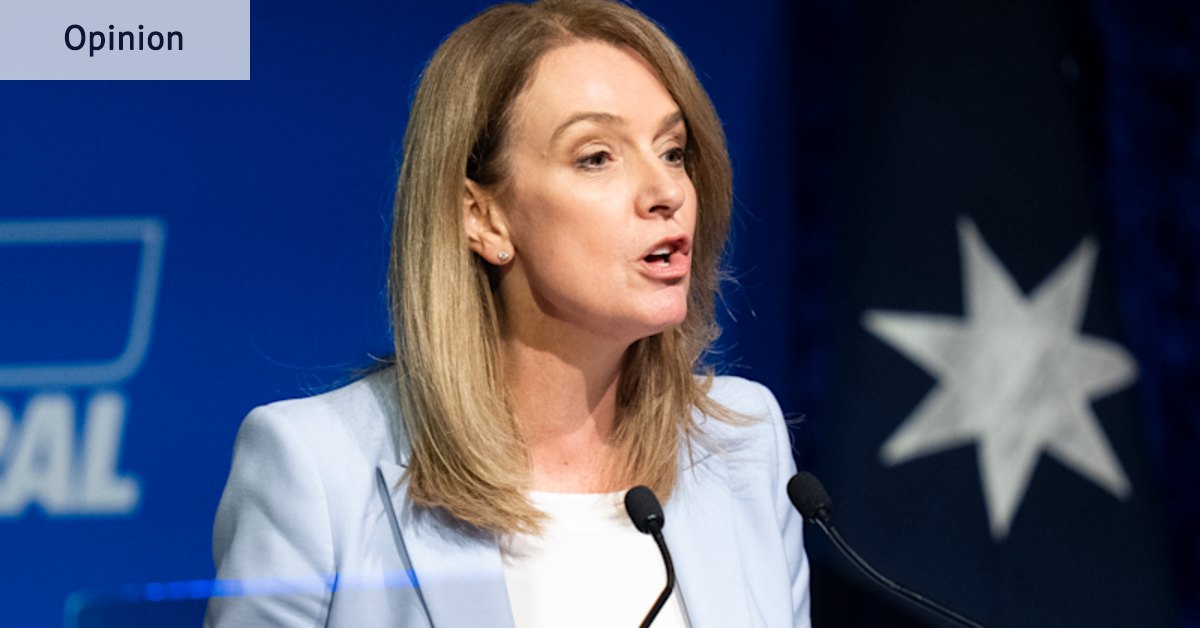
Has NSW Opposition Leader Kellie Sloane smashed a mirror recently? Walked under a ladder? Is there a vengeful witch doctor somewhere who has it in for her?
Since Sloane took over in November, the Doomsday Clock on the Liberal brand been stuck uncomfortably close to midnight. Support for the Liberal Party has tanked in the reordering of politics following the Bondi massacre which has helped accelerate the consequent rise of One Nation.
With the Liberals already behind in the polls and facing a mammoth task to hang onto the furniture next March, the Independent Commission Against Corruption’s announcement it will run eight weeks of hearings probing allegations that party figures were involved in corrupt donation schemes is the latest in a long run of bad luck.
That she learnt of the inquiry while touring a western Sydney dog food factory feels emblematic, somehow. There are days you just shouldn’t get out of bed.
Not that everything was sunshine and roses before she took over – otherwise Mark Speakman would still be the leader – but it’s reasonable to say until now, the party’s struggles in NSW have to some extent been a byproduct of voter anger at the Liberal brand more generally.
No longer. Operation Rosny, as ICAC has dubbed its probe, will focus squarely on the troubled NSW division of the party. The inquiry into whether fugitive Sydney property developer Jean Nassif and Liberal apparatchiks and lobbyists Christian Ellis, Jeremy Greenwood, Robert Assaf and Jean-Claude Perrottet were all involved in corrupt donation schemes threatens to put a spotlight on years of factional bloodletting within the NSW Liberals.
While ICAC may be focused on allegedly dodgy donations, it is the enmity between the rival hard right and centre right of the party which underpins it all. The decades-old dispute dates back to a schism in the right between the former NSW upper house member David Clarke, a leader of the ultra-conservative Catholic wing, and his one-time staff member and protege Alex Hawke, the federal MP for Mitchell. One Liberal insider this week described the split as “a Henry VIII-level cleave in the church”.
Ellis and co were all members of the hard-right faction linked to a group called the NSW Reformers. There is little doubt the ground to be covered by ICAC relates to their attempts to challenge Hawke’s powerbase in Sydney’s north-west.
Voters are about to get a close-up look at how the sausage is made, exactly the kind of attention a party with an already beleaguered brand needs like a hole in the head.
The person charged with holding the whole show together while all this happens is Sloane, a first-term MP thrust into the leadership before her choosing.
As a relative newcomer and outsider, Sloane will benefit from not carrying any of this baggage herself. She can make a credible case for being a new broom in much the same way former Labor leader Jodi McKay did (though that did not work out well for her in the end).
But riding through a minefield on training wheels is tricky work, and a novice leader facing challenges of the kind confronting the Liberals would expect to be able to rely on the guidance of seasoned elders. This latest crisis threatens to thin their ranks considerably.
The sudden resignation last week of Damien Tudehope, the party’s former leader in the upper house, due to his close ties to figures now in ICAC’s sights suggests some of the hard-headed veterans in the party room may find themselves in difficult positions.
These big ICAC inquiries have a habit of throwing up unexpected twists (just ask Gladys Berejiklian or Barry O’Farrell) and there’s no telling where the next casualty may come from. Macquarie Street is full of whispers about who else might be in the firing line.
Last week offered a glimpse at how difficult the next few months will be to manage. Sloane was initially criticised for declining to insist Liberal members named by ICAC be suspended before changing course. She then pushed behind the scenes for Tudehope to step aside. Given he does not face any accusations, it could create an interesting precedent.
The other difficulty for Sloane is how Rosny ends up reflecting on the former government.
That figures such as David Elliott – a former police minister with a habit for generating headlines, good and otherwise – are likely to loom so large (ICAC will probe whether Ellis, Greenwood and another Perrottet brother, Charles, solicited or accepted illegal donations from Nassif in exchange for damaging Elliott’s career) bodes poorly.
Elliott will know where the bodies are buried and seems disinclined by temperament to keep them there. If he gets in the witness stand, it will not be boring. Nor will the inevitable cross-examination from lawyers representing his political enemies.
Sloane wasn’t there and doesn’t own its sins but as we edge closer to election season, she may have to stop spruiking her team’s links with the former Coalition government.
A few weeks ago, it seemed a decent strategy to point to the number of former ministers in her team and to contrast their big infrastructure agenda with the Minns’ government’s fiscal conservatism. A few weeks from now, it may not.
Michael McGowan is the NSW state political editor.