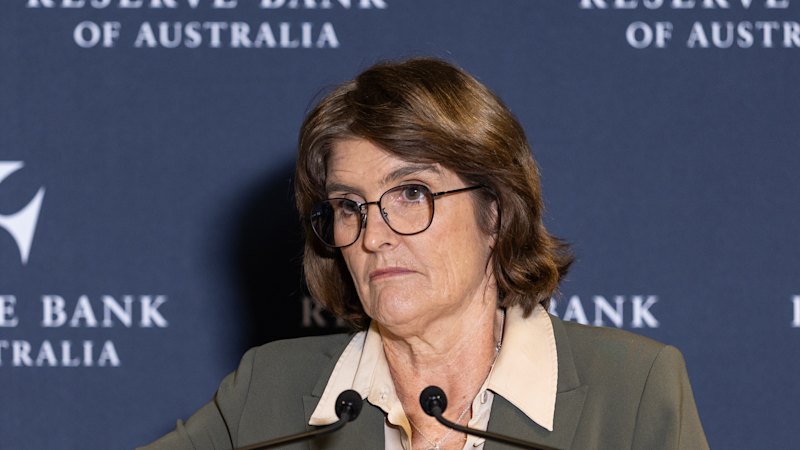

The Reserve Bank has kept interest rates on hold for the first time this year after three consecutive rate rises as it aims to curb inflation, but has warned it will “do what it considers necessary” including raising rates further if required.
On Tuesday, the RBA left the country’s official interest rate unchanged at 4.35 per cent in a decision that was widely expected.
Since February, the Reserve Bank’s three interest rate hikes have added nearly $300 in total to monthly repayments on an average mortgage of $600,000.
The bank’s latest decision, aimed at continuing to tackle inflation while ensuring unemployment does not rise too sharply, comes after the latest inflation data showed the consumer price index rose 4.2 per cent in the 12 months to April, slightly slower than the 4.6 per cent in March.
Trimmed mean inflation – the Reserve Bank’s preferred gauge of price pressures – rose 3.4 per cent over the same period, continuing to climb faster than the bank’s target of 2 to 3 per cent.
In a statement accompanying the unanimous decision, the RBA board said both underlying and headline inflation were “still too high” despite oil prices easing in recent weeks, house prices falling in some capital cities, and consumer spending slowing.
“Energy and most related commodity prices remain higher than they were prior to the conflict in the Middle East,” the board said, adding there were also signs some firms experiencing cost pressures were increasing prices or looking to do so.
Higher fuel prices have added directly to inflation, the board said, with price pressures “likely to remain high for some time”, adding to pre-existing capacity constraints from earlier in the year.
The latest labour market figures, meanwhile, showed that unemployment jumped from 4.3 per cent in March to 4.5 per cent in April, hitting the highest rate since November 2021.
While unemployment was higher than expected, the board said other measures of labour market conditions had been more resilient.
The bank also said there continued to be “heightened uncertainties” about the outlook for the domestic economy and inflation with global oil supply issues taking some time yet to resolve, maintaining upward pressure on global energy prices and inflation.
At the same time, the bank said a period of prolonged uncertainty may also cause growth to be lower in Australia – potentially while inflation remains higher – with the resolution of the conflict in the Middle East still at an early stage.
“The board remains focused on ensuring that inflation does not get embedded once the impulse from higher oil prices has passed through,” the bank said, meaning it was appropriate to leave rates on hold while assessing the response to previous interest rate rises and the impact of oil supply disruption.
“[The board] will do what it considers necessary to achieve [price stability and full employment], including increasing the cash rate target further if required.”
Ahead of the decision, markets were putting the chance of a rate rise by February next year at 64 per cent, with near certainty of a rate cut by November 2027.
RBA governor Michele Bullock will provide more information and take journalists’ questions at a press conference at 3.30pm.
More to come.
Cut through the noise of federal politics with news, views and expert analysis. Subscribers can sign up to our weekly Inside Politics newsletter.
 Millie Muroi is the economics writer at The Sydney Morning Herald and The Age. She was formerly an economics correspondent based in Canberra’s Press Gallery and the banking writer based in Sydney.Connect via X or email.