
Updated ,first published
Disability ministers across the political divide are uniting to defy the Albanese government’s radical overhaul of the National Disability Insurance Scheme, with all states and territories warning draft laws risk “undermining the original intent” of Julia Gillard’s landmark reform.
In a joint submission, state and territory disability ministers said there was a “significant risk” that Australians with a disability will be funnelled into state-funded hospitals – and that some will languish in ward beds with no access to disability services whatsoever – if federal Health Minister Mark Butler presses ahead with his plans.
The government forecasts that 350,000 people will either exit the NDIS or be diverted from the scheme, after changes designed to cut spending by $38 billion over four years.
However, Health Department officials conceded to a parliamentary inquiry on Thursday that the government had not calculated how many people in each state would be affected.
Independent Senator David Pocock asked how senators, and state governments, could be expected to endorse the proposed changes when they did not know how many more people may fall back to the states for disability support.
“How can senators, who represent states and territories, be sure the changes won’t smash states and territories and their services,” he asked.
Departmental official Anthea Long, who lead a taskforce that advised on cost-cutting options, said more granular modelling would be developed in consultation with states.
All state and territory ministers made a joint submission to the inquiry, published on Thursday, which warned that while the changes could improve some outcomes, they also risked “undermining the original intent of the NDIS”.
“The pace of reform – focused heavily on expenditure constraint, without a clearly defined broader ecosystem and with limited consultation – creates a significant risk of fragmented service delivery.”
The state ministers argued they were not in a position – and have made no agreement to deliver – like-for-like services to those eventually removed from the NDIS.
“[T]here is a significant risk that people with disability will end up in hospitals or other settings that are inappropriate and unable to meet their needs, or have no access to services at all.
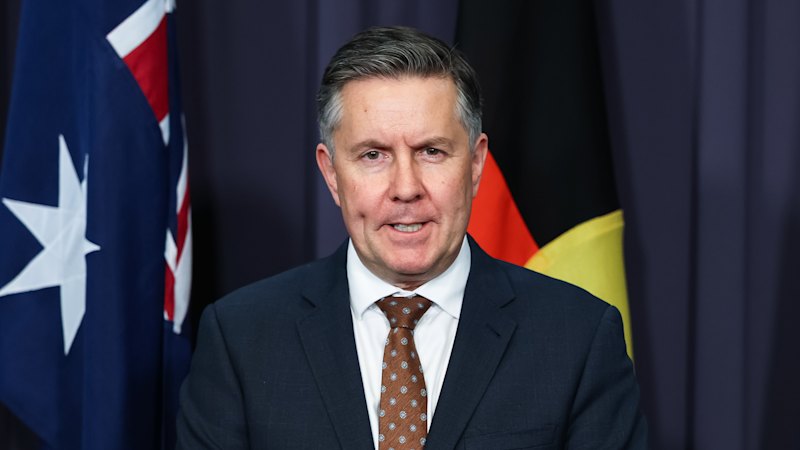
Federal Health Minister Mark Butler did not respond to a request for comment, but a spokesman said state governments had already agreed to work on the overhaul of the $56 billion a year NDIS and the Albanese government would push ahead with its agenda.
“All governments share the goal of a sustainable NDIS. All leaders agreed at National Cabinet in January this year to work together to target cost growth of 5 to 6 per cent or lower. The bill before Parliament proposes pathways to progress that work, ” the spokesperson said.
The government is seeking the Coalition’s support to pass the laws by the end of June, so it can execute plans to cut $38 billion in projected spending within four years as a major budget savings measure. Recent data shows the scheme’s growth rate is picking up speed, adding urgency for Labor.
Opposition NDIS spokesperson Melissa McIntosh did not say if the Coalition would support Butler’s changes, but criticised his “epic failure” to adequately consult states and territories.
“It’s a rare event when the states and territories are in alignment but there is no doubt that they are rock solid on this,” McIntosh said.
“The changes proposed by this Bill will have significant consequences and we do not want to this to be reduced to a cost shifting exercise, as opposed to real reform.”
Labor holds power in NSW, Victoria, Western Australia and the ACT, while Queensland, Tasmania and the Northern Territory are governed by the Coalition.
Ministers have called for Labor’s draft laws to be amended to limit service gaps and the federal minister’s new, centralised powers.
“Disability ministers remain committed to working constructively with the Commonwealth to strengthen this legislation and secure the long-term integrity, sustainability and participant focus of the NDIS.”
Labor’s proposed changes would remove 240,000 people from the NDIS from January 2028, according to departmental modelling, as the government seeks to curb growth in and limit access to people with the most severe disabilities.
The government is hoping to secure the Coalition’s support to pass the laws by the end of June, so it can deliver on its major budget savings measure.
The Senate inquiry, which kicked off on Monday, has already heard from distressed families worried their financial support will be axed under the proposed changes. Its findings are expected to be handed down next week.
Victoria’s Minister for Disability Lizzie Blandthorn said the submission highlighted “concerns that the legislation potentially goes further than where our agreements have reached”.
“The Victorian government pays $3 billion a year to the NDIS, and the Victorian government and all states and territories should remain co-governors of the scheme, and we should maintain a role in rule-making, particularly as it relates to things like access and eligibility,” she said on Thursday.
Cut through the noise of federal politics with news, views and expert analysis. Subscribers can sign up to our weekly Inside Politics newsletter.
 Broede Carmody is a health reporter for The Age. Previously, he was a state political reporter for The Age and the national news blogger for The Age and The Sydney Morning Herald.Connect via X or email.
 Mike Foley is the climate and energy correspondent for The Age and The Sydney Morning Herald.Connect via email.