
An acclaimed Sydney private school with an extensive property portfolio has raked in tens of millions in government funding in a decade – all while its teachers go unpaid, relying on a small stipend and, for some, Centrelink benefits.
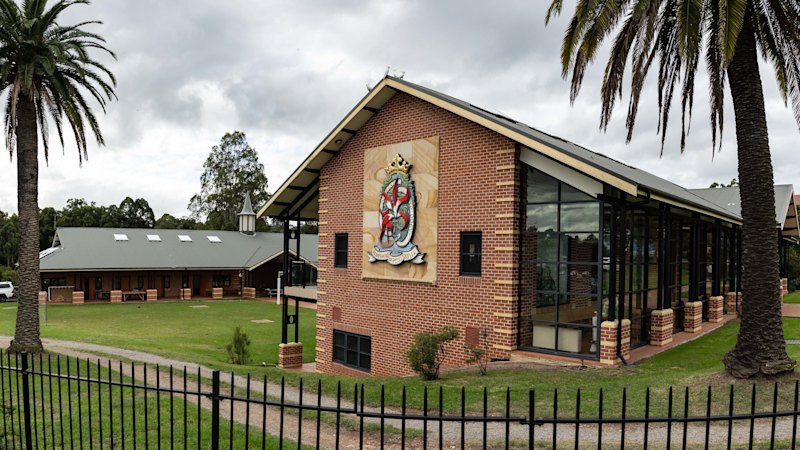
Redeemer Baptist School in North Parramatta promises parents a disciplined education. Sharing the same leafy parklands as The King’s School and Tara School for Girls, Redeemer’s students boast high ATARs and win state science competitions. It has been praised in parliament and is visited by politicians and dignitaries.
But behind the accolades lies an unorthodox – but perfectly legal – financial structure that has allowed the Redeemer organisation to amass its real estate empire.
On Sunday, The Sydney Morning Herald revealed the extent of the Redeemer Baptist Church’s control over its members’ private lives, from orchestrating careers and marriages to dictating household structures.
Its school operates without a single paid employee, records show. Instead, its teachers and support staff are classified as volunteers, made up entirely of members of Redeemer Baptist Church.
“It’s the accounting equivalent of opening the bonnet of a car and instead of seeing an engine, seeing nothing,” Sydney University Accounting Professor Clinton Free said. “I’ve never seen anything like this.”
Several ex-students and staff have told this masthead about the financial and psychological toll of this arrangement.
The ‘zero wage’ school

Professor Free examined Redeemer Baptist School’s financial records from 2015 to 2024, describing the arrangement as a “deeply unusual set of accounts that raise a whole raft of issues”.
Over the past 10 years, the school received income of about $106.7 million, comprising $52.7 million in government grants and $54 million in parent fees and other income. While this is standard for a private institution of its size, the outflows are unconventional. Its 2025 annual report shows half of its expenditure to be “non-salary expenses” and a further 16 per cent to be “services rendered and allowances”.

“If you look at published databases on costs in public and independent schools, we see that labour costs typically amount to somewhere between 60 and 75 per cent of overall expenses,” Free said. “In this case, what we’re seeing is zero.”
Because none of Redeemer Baptist School’s teachers are classed as employees, standard rules – such as paying superannuation – do not apply. Redeemer did not specifically answer the Herald’s question about paying superannuation.
Instead, staff are classified as members of the ministry order of the Redeemer Baptist Church, a religious order involved in the practice, study, teaching and propagation of the Christian faith. The stipend is paid at a discretionary amount whether members work or not; and, members regard their work as voluntary.
Responding to a “calling”, they forgo wages in exchange for a modest church stipend, which sits below the threshold for welfare benefits. Some highly qualified, full-time educators also collect Centrelink benefits, many former church members said. These payments can include family tax benefits and Austudy.
“It certainly seems like there’s a risk of double payment here, that the public purse is effectively funding the school to pay teachers,” Free said. In some cases, “at the same time, teachers are drawing on social welfare payments instead of wages. Most Australians might reasonably ask: if a school is receiving public funding to teach students, why aren’t teachers being paid?”
Redeemer said that individual members of the community may “of their own volition apply for Centrelink benefits”, but that neither the school nor the church “relies on benefits in any way”.
The workforce
For those inside the church, the financial structure serves as a mechanism for control.
One former church elder explained that school funds are transferred to the church, which then pays stipends to people who are formally part of the church ministry. The stipends vary but generally sit at about $2000 a month. The minimum award wage for a teacher in NSW is $7515 a month.
Because the church covers housing, electricity, gas and vehicles, members become reliant on the institution. “There’s no superannuation, there’s no personal investment for your future,” the former elder said. “You are held captive by their financial system and, the older you get, the worse it becomes. The members can’t survive without the church.”
For younger members, the pipeline into unpaid labour begins immediately after graduation. Ex-students who are also part of the church are expected to complete a “year 13” – a gap year of unpaid volunteer work. Female students are typically assigned to work as teacher’s aides, handle bookwork or run the uniform store. Male students often work for the church’s building services team.
Redeemer said it did not monitor or control members’ finances. All members of Redeemer’s ministry order, it said, had “chosen a lifestyle of sacrifice”, and the church “encouraged volunteer work by year 13 students if they wish to do so”. It said that “some members of the order receive a stipend for support”.

Michael Jones was born into Redeemer Baptist Church and attended the school from kindergarten to year 12. During his unpaid gap year, Jones was provided with a roster and directions to work for the building team from 7am to 3pm, followed by paperwork until 5pm, while also leading school camps and maintaining the home of school principal and church elder Jonathan Cannon.
“Their ethic is work,” Jones said. “It’s non-stop work. It is so you don’t have time to think.”
After university, the only way Jones could receive any form of payment for his labour was to sign a ministry order and receive a stipend. In doing so, he renounced “in principle” any possessions or property and agreed to make “any self-sacrifice to uphold the goals of the order, even if this results in loss of material wellbeing”.

After signing, Jones said that he was pressured by Cannon and headmaster and elder Russell Bailey to work at the school as a temporary teacher, despite possessing an engineering degree and having no teaching qualifications. He taught unaccredited, with a teacher sitting in the back of the classroom, for three weeks before starting a master’s of teaching through an online college.
“[Redeemer] told me I needed to get conditional accreditation to teach on my own, and I was like, ‘Hold on, this was meant to be a temporary thing.’ I kept getting pushed down the road to be a full-time maths teacher … that was one of the biggest things that led me to making the decision to leave,” Jones said.
One former student and church member bluntly described feeling like an “indentured servant”. The relationship between the church and members of the ministry order is formed on a voluntary basis.
“You get home at the end of the day with nothing, and you are just exhausted for the next day already. And it was very soul-destroying.”
The closed-loop financial empire
If the school isn’t paying teachers a salary and related employee entitlements, where is its $106.7 million in decade-long revenue going? The answer lies in a highly complex, legally protected, closed-loop system.
When the school needs to construct a building, fix IT systems or sell uniforms, it doesn’t always hire independent businesses. It pays another arm of its own enterprise: Redeemer Baptist Services Limited and Redeemer Baptist Church Property Limited.
Because these separate services and their property arm are registered as charities, they are exempt from income tax. The services charity runs 10 commercial businesses, including Redeemer Baptist Constructions, Redeemer Baptist Uniforms, and a bookstore. Money is shuttled from the school to these businesses without paying corporate taxes.
Free said: “This appears to be a tightly integrated internal economy, with the school generating the income, the services entity capturing internal spending, and the church sitting above the structure.
“The model appears to allow the network to have it both ways: the benefits of charitable status, and the practical advantages of keeping commercial activity largely inside the house.
“What deserves scrutiny is the combination: public-facing charity status, internally controlled service provision, related party flows, and a governance structure that appears highly concentrated.”
The NSW Education Standards Authority said that state government funding must contribute to the educational needs and outcomes of students, but it does not require the funding to be used on employment costs.
Jones, who has since left the church and started his own engineering business, said: “The number of entities that Redeemer has to move money around is astounding.”
“As a business owner, I would love to be able to do that. I would love to be unethical,” he said. Despite his view, there is nothing illegal about Redeemer’s financial arrangements.
Redeemer said the governance and operation of its entities adhere to Australian regulations and laws.
It said its school “meets the requirements of the NSW and federal governments”.
Unlike the school, the services arm reports 10 casual employees accounting for $213,229 in employee expenses in its latest reporting period. The majority of work remains done by volunteers.
The construction arm is particularly lucrative, said a former elder, relying heavily on the unpaid labour of male graduates completing their gap years.
Free said: “The building services made significant money. That money would be pooled back into the finances and called ‘not for profit’ because the profits were not distributed.”
Redeemer Baptist Church itself is classified as a “Basic Religious Charity,” meaning it is exempt from submitting financial reports to the government.
On paper, each charity is a distinct entity. Yet, in reality, financial records show this entire network of school, charities and businesses is largely controlled by the same tight-knit circle of men, including Jonathan Cannon and Russell Bailey.
NSW Education Minister Prue Car and federal Education Minister Jason Clare said the allegations were “deeply concerning” and “very serious”. Clare has referred his department to investigate the school, and Car said it was “entirely appropriate that NESA is investigating”.
The federal assistant minister for charities, Andrew Leigh, said: “I have referred the concerns raised in your reporting to the charities commission.”
The Property Empire
According to real estate data, Redeemer Baptist School owns 37 properties worth more than $67 million – in addition to the school campus itself, which is jointly owned by the school and the church. The properties encompass residential homes in Oatlands and a sprawling camp. By holding these properties within a religious structure, Redeemer takes advantage of tax concessions.
Free observed: “This is an unusually asset-rich environment.”
These properties house church members as well as domestic and international homestay students – another lucrative revenue stream. Some international students, who pay from $20,320 to $33,280 a year, are housed in cramped bunk rooms inside community members’ and teachers’ homes.
The school said it has “no reports” of students, including international students, being “forced to stay in any teacher’s home”.
One former international student recalled being required to wake early to wash buses, collect firewood, mow lawns and clean community members’ homes.
Cash grab
Despite the school saving millions of dollars on salaries and receiving $14,851 per student in government funding, parents – who pay an average of $10,895 a year – are still subjected to a “relentless cash grab”, one parent said.
Invoices obtained by this masthead from 2024 to 2026 reveal a pattern of unitemised “goods and services” fees. One mother who demanded an itemised receipt discovered that she was billed for a printed participation certificate for a sports carnival.
“The job of regulators is to identify unusual relationships and structures like this, and to investigate them,” Free said. “If you have an organisation drawing tens of millions of dollars of public funding, transparency becomes absolutely essential.”
Financial reports show non-salary and service allowances account for 66 per cent of the school’s expenditure.
During a 2006 court case, the school’s then bursar, Russell Bailey, said at the time that the service charges were mostly paid directly to the Redeemer Baptist Church.
This is not the first time the school’s financial structure has faced scrutiny. Between 2005 and 2007, then NSW Greens MP Dr John Kaye used parliamentary privilege to accuse Redeemer of operating an “extraordinary tax sham and welfare fraud that is costing the federal government up to $910,000 each year”.
Documents sighted by the Herald show that the federal government became aware of the financial arrangements two decades ago but did not consider the model required further scrutiny.
“A huge number of churches, charities and community groups operate and are powered by volunteers,” Free said. “But I think the question to be asked here is looking at substance over form and label. If workers are being directed by the school in terms of hours and expectations … are these people volunteers or are they employees?” In 2006, a court held that they were volunteers. It’s been 20 years.
“There is a lot that warrants attention here. I think it’s in the public interest that regulators look closely at this situation.”
- with Amelia Adams and Natalie Clancy