
One of the great things about political journalism is we are never wrong for long.
A breathless headline about an impending move against Jacinta Allan’s leadership is soon followed by another declaring that a well-planned coup has collapsed, leaving her job safe until the November election.
The rather more dull alternative is that a leadership challenge bigger in the telling than reality amounted to bugger all.
That may be because the challenge, as far as it can be discerned, never entirely convinced the purported challenger.
Will the non-events of the past couple of weeks stop further speculation about Allan’s leadership? Almost certainly not. This week’s Resolve poll was not good for the government. There are still people within Labor, both inside and outside the parliament, who think a change of leader is needed to avoid electoral disaster.
There will be more polls and good news will be hard to come by for a third-term government battling its own natural life cycle and, with the rise of One Nation, a potent disruption within Australian politics.
But this episode has taught us a couple of things.
One is about the character of Deputy Premier Ben Carroll, the challenger who never quite was. In the eyes of his Labor colleagues who were pushing for a change of leader and saw him as the most viable contender, Carroll finishes this week as a diminished figure for not seizing his opportunity to become premier.
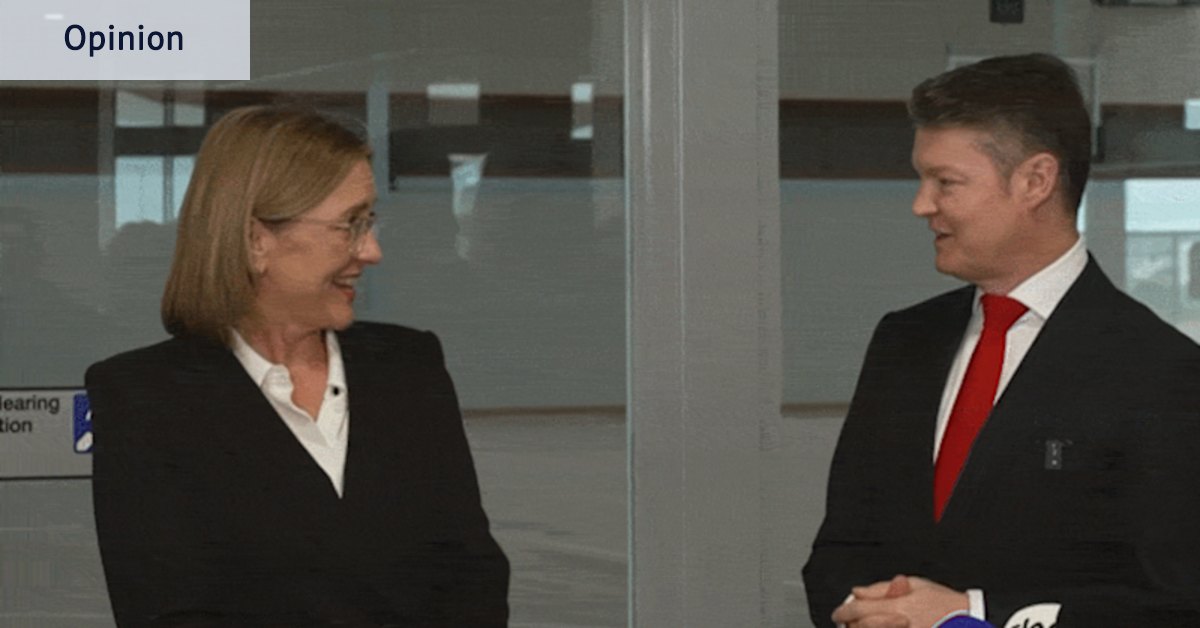
They argue that, when Carroll stood next to Allan on Monday morning to announce a new schools initiative, he fluffed his lines by sidetracking into a soliloquy about the woman trying to become the first to win a state election in Victoria.
“I’ve got a young daughter at home and I couldn’t be more proud to make sure she grows up knowing that I supported Jacinta Allan to be a world-class premier,” Carroll said.
From the would-be plotters counting on Carroll to lead their putsch, an audible groan could be heard. This was not the expected script. They now cast Carroll as Brandoesque figure who coulda been a contender, in the mould of other reticent challengers such as Peter Costello or Josh Frydenberg.
An alternative analysis is that Carroll thought carefully about what he was going to say and, when given the opportunity, spoke from the heart.
If we put aside cynicism about the political class, it may just be that being a decent person, a loyal deputy and a man who supports a woman in a difficult job is very important to Carroll. Whatever the outcome of the next election, he doesn’t want to be remembered as the guy who turned against his own leader when things got tight.
As an aside, during the Rudd/Gillard troubles Carroll worked in the office of then senator Stephen Conroy, one of Gillard’s chief factional backers. Labor types who lived through those years saw up close the damage that was done to the party, its people and its electoral prospects.
This does not mean that Carroll, the state’s education minister, is without leadership ambitions. He is just not willing to realise them at any cost. He will now return to landing a pay deal with teachers and defending his marginal seat of Niddrie.
The second thing we learned is about the nature of Victorian Labor.
The modern electoral success of the Labor Party in Victoria and its ruthless tradition of factionalism invites assumptions. One of those is that Labor MPs are well skilled in the dark arts of internal political warfare. The truth is, most aren’t.
No one in the caucus has ever been involved in toppling a state leader, as had become evident to bemused Liberal MPs, who change leaders as easily as a pair of socks. In parliament earlier this month, former opposition leader Matthew Guy called across the chamber to ask Carroll whether he would like to borrow James Newbury for a while.
The shadow attorney general, who has been involved in more spills than the Exxon Valdez, was not the least bit offended. Carroll flushed pink.
The prospective challenge against Allan that had taken form over the past couple of weeks was more advanced than previous iterations. There were more extensive discussions between different groupings in the party. Most MPs from Carroll’s Right faction were ready to rumble, along with some MPs from the Left.
But it was missing two key ingredients.
There was no reliable count of numbers from the dominant Left faction. There was no consensus on key policy shifts.
There is no point challenging unless you are sure you have the numbers and there is no point in changing leaders and nothing else if the aim is to reset the party’s electoral appeal.
Carroll’s views about the current direction of the party are broadly known within caucus. He does not share Allan’s opposition to a royal commission into Big Build corruption and has never been sold on the merits of the Suburban Rail Loop. He wants to repair the government’s relationship with business.
The Left MPs encouraging Carroll to challenge did not commit to policy changes in these areas.
It is unclear how a Carroll government would be different to the Allan government. Without this distinction, it was difficult for anyone to assess whether the electoral benefits of leadership change would outweigh the costs, least of all Carroll.
In the absence of this essential calculus, any move against Allan risked being undercooked. Some MPs question whether this challenge was anything more than an empty pot. “There are very few people in the parliament who think this is a thing,” an Allan supporter said.
It was a thing.
This week in Victorian politics, a deputy leader stuck by his boss. That doesn’t make for a breathless headline but tells us plenty.
Chip Le Grand is state political editor.
The Opinion newsletter is a weekly wrap of views that will challenge, champion and inform your own. Sign up here.
 Chip Le Grand leads our state politics reporting team. He previously served as the paper’s chief reporter and is a journalist of 30 years’ experience.Connect via email.