
Fifteen years ago, when the Gillard government was working to introduce legislation for plain packaging of cigarettes, British American Tobacco put out a seven-minute film in which gangsters were depicted claiming the packs would be “easier for us to copy”, that they would “use persuasion” to protect profits and that they could bomb critics and murder rivals over their cut.
The imaginary scenarios were dismissed by Quit Victoria at the time as “Z-grade fiction” and “big tobacco propaganda”.
Perhaps so. But as Victorians wake up each morning to news of another tobacco outlet or nightspot having been burnt to the ground, the state appears to be living in a realisation of that plot.
Detective Superintendent Jason Kelly, head of Victoria Police’s anti-gangs division, likened the now-regular attacks to a service industry, telling our crime reporter John Silvester: “The leaders can be offshore, interstate or sitting on a couch anywhere, using an encrypted app on a phone to put it out there that they have a job that is paying well.”
What is more, the danger is escalating. The transition from years of gang conflict over the illicit cigarette trade to the current attacks on restaurants, nightclubs and brothels across Melbourne has the potential to put the public squarely in the line of fire, as the tragic death of Katie Tangey should warn us.
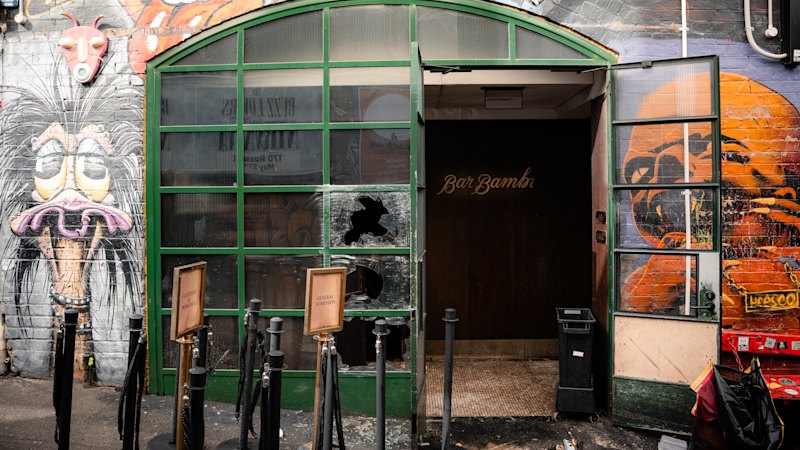
While the recent firebombings occurred when nightspots were closed, The Emerson bar in South Yarra was targeted in a drive-by shooting last weekend while it was open with customers still inside. The venue’s management insisted that the shots fired were blanks, but that is scant consolation in a situation that seems increasingly out of control.
At a time when the hospitality industry is reeling from cost-of-living pressures topped with a fuel supply crisis, the additional expense of what one source in the security sector called “tobacco shop enforcements” – round-the-clock security costing thousands of dollars a week, bollards, secondary gates – also threatens a crucial part of the city’s economy. As one bar owner in the CBD put it: “This is our livelihood, and it’s being taken away. And the worst part is that the police and the industry don’t really know why.”
One of the central figures in the tobacco wars, Kazem Hamad, has even been linked to the firebombing of the Adass Israel synagogue in Ripponlea, showing that unchecked, this sort of crime can have implications for our national security.
With an election looming in which law and order is likely to dominate debate, Premier Jacinta Allan has declared the investigation into the latest wave of crimes Victoria Police’s “highest priority”. But what will this actually mean?
The gang warfare around tobacco outlets is driven by the yawning gap taxation created between the legal and black markets. This weekend, our reporters Lachlan Abbott and Nick McKenzie ask whether changes to the excise regime around alcohol may be driving the targeting of nightlife venues.
With organised crime conducting much of its business through legitimate fronts, it is surely time to pursue assets as well as offenders. Greater co-ordination between the Australian Taxation Office, the Australian Securities and Investments Commission and police is needed to break this “industry”.
Tracking down the digital communications that organise these attacks and the cryptocurrency platforms used to pay for them will require a new breed of tech-literate officers.
Chief Commissioner Mike Bush promised last year that the state’s crime co-ordination centre would be up and running within the first half of this year as “a high-tech hub that will bring together information, intelligence, and operational capability under one roof”, but this sort of commitment has been made before, by the Andrews government. Meanwhile, the operations of these criminals have become more sophisticated and now span the globe.
The dozen or so arrests made so far in this crime wave are, by the police’s own admission, of young hirelings who often know next to nothing about why they are striking their targets. The Allan government has made much of its crackdown on youth crime and its changes to sentencing laws, but tracking down the paymasters of this crime wave would solve a significant part of the problem at its source.
This series of crimes and the rackets that are being contested by those committing them are now so much a part of daily life in Victoria that they seem almost normalised. Even in a state facing enormous budget pressures, we simply can’t afford for that to become the case.
The Allan government and Victoria Police need to formulate a response that takes in the whole problem of organised crime and then set out their strategy for Victorians. Every day that this doesn’t happen brings us a day closer to catastrophe.
Get a weekly wrap of views that will challenge, champion and inform your own. Sign up for our Opinion newsletter.
 The Age’s View – Since The Age was first published in 1854, the editorial team has believed it important to express a considered view on the issues of the day for readers, always putting the public interest first.

