Among all the big-ticket changes touted in the federal budget, the government has raised a little-understood fee imposed on travellers leaving the country, making international departures even more expensive as the war in the Middle East pushes up airfares.
In Tuesday’s federal budget, the Albanese government increased the Passenger Movement Charge for travellers departing Australia, taking it to $80 per head in 2027 from its current level of $70.
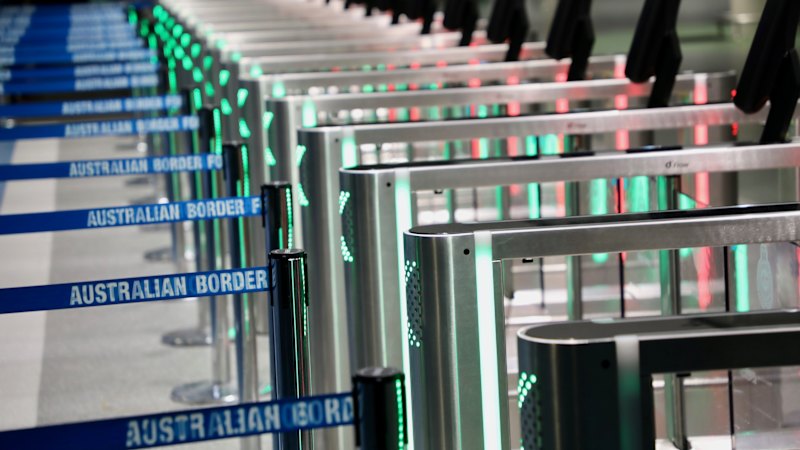
The move drew criticism from the airport lobby, which is anxious to see the government spend more on modernising Australia’s notoriously slow border system.
The Australian Airports Association chief executive Simon Westaway said increasing the PMC would put more pressure on price-sensitive travellers in the cost-of-living crisis and hurt Australia’s tourism competitiveness.
“At a time when household budgets are already stretched, any increase to this passenger tax needs to be carefully considered because it risks making overseas travel more expensive for regular families wanting to take a holiday,” Westaway said.
“If passengers are being asked to pay more, it is essential that the additional revenue is reinvested in tangible border upgrades rather than being absorbed into consolidated revenue,” he said.
Some passengers were also concerned about the fee rise. Tokyo-based traveller “Mayu”, visiting Melbourne, said the increase to the PMC was not good because flights were already expensive.
“If flights become too expensive, people won’t have that much of a chance to go abroad,” she said.
The PMC has been incrementally increased since its creation in 1978, then known as the “departure tax”. The latest increase takes effect on January 1.
It was “originally introduced as a cost-recovery measure to recoup the cost of customs, immigration and quarantine processing of passengers entering and leaving Australia and the cost of issuing short-term visitor visas,” according to parliamentary research from 2008.
However, the fee has since “become, at least in part, a general revenue-raising measure.”
Turned into a money-raising tool, the fee has long raised eyebrows in the industry as airports bemoan the nation’s clunky border process, marked by long lines, multiple checkpoints for passengers, and the continued use of paper Incoming Passenger Cards.
The AAA wants the government to digitise the Incoming Passenger Card, which has long been a source of unhappiness for travellers and the aviation industry alike. The airport peak body described digitising the card a “modest productivity investment”.
“The paper card is an outdated method to gather information and gives the impression that Australia is falling behind on new technology,” Westaway said.
Qantas is conducting a test of a digital passenger card on routes to Sydney and Brisbane.
The higher Passenger Movement Charge will probably be passed along to travellers as a higher fee on tickets.
However, Andrew Gillard of Melbourne-based Darebin Travel said the price increase pales in comparison to the cost of the flights.
“Costs are rising and for a family of five, well, the [raised PMC] is an extra expense, but it’s still only $50 extra overall,” said Gillard. “And you might have a family that’s paying $10,000 worth of air travel. They’re not going to look at $50.”
Gillard notes that even at $80, Australia is still modest compared to fees seen elsewhere. For example, a flight from London to Australia could attract a tax of $199.
Yet airlines, grappling with sharply higher fuel costs in the fallout from the Iran war, see the PMC increase as creating more of a drag on international travel.
Peak body Airlines 4 ANZ argues that on some short-haul international routes, taxes and charges can make up more than 70 per cent of the total ticket price, leaving little room to absorb further increases such as $320 in passenger movement charges for a family of four.
“It comes at a time when consumers are already facing significant cost pressures – including from higher fuel prices,” said A4ANZ CEO Stephen Beckett.
Beckett called the PMC increase “disappointing,” saying it “ultimately means higher travel costs for Australians and for visitors to our country”.
However, not everyone sees the increase as a problematic. “In the big picture, if you have to leave the country, what’s 10 bucks?” said one passenger surveyed about the change, Karen Hasset.
Another passenger, who didn’t give her name, said she was “lucky enough” that $10 more wouldn’t make a difference to her.
“But I fully understand that not everyone is in that position.”
The Business Briefing newsletter delivers major stories, exclusive coverage and expert opinion. Sign up to get it every weekday morning.
 Chris Zappone is a senior reporter covering aviation and business. He is former digital foreign editor.Connect via X, Facebook or email.