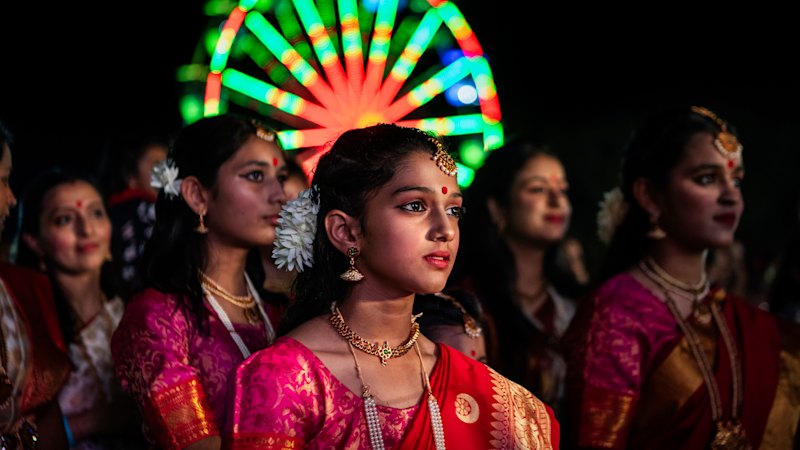

India has overtaken England to become Australia’s top overseas country of birth as the overseas-born share of the national population climbed to 32 per cent, the highest since 1891.
Australia had 8.8 million overseas-born residents in 2025 compared to 18.8 million people born within the country, figures released by the Australian Bureau of Statistics on Wednesday show.
The Indian-born population rose to 971,020 making it the largest group born overseas for the first time. The number of residents born in India has risen by 522,000 since 2015.
Those born in England made up the second-largest group (970,950) with China third (732,000), New Zealand fourth (638,000) and the Philippines fifth (412,530).
The ABS said the proportion of overseas-born people in Australia is approaching the all-time high of 32.4 per cent reached in 1891, when the national population was about 2.7 million.
Australia’s overseas-born population increased by 258,000 people in 2024-25, helping to lift the national population to 27.6 million.
Political conflict over immigration policy has flared during the past fortnight after federal Opposition Leader Angus Taylor promised a migration crackdown and an emphasis on “Australian values” in determining the country’s migrant intake.
In a speech unveiling the new policy, Taylor claimed “declining immigration standards have seen our door opened to too many migrants of transactional intent”.
Labor ministers have slammed the Coalition proposals and accused Taylor of trying to “compete” with One Nation.
The new ABS figures showing population by overseas country of birth underscored the scale and diversity of Australia’s migrant community.
KPMG urban economist Terry Rawnsley said the distribution of migrant communities differed from state to state.
“In NSW, China-born is No.1,” he said. “In Victoria, Indian‑born residents are the largest migrant group; in Queensland, it’s New Zealand‑born residents that hold sway, and western Sydney has a strong concentration of Maltese communities.”
Western Australia had the highest share of overseas-born residents among the states at 34.1 per cent followed by Victoria (31.7 per cent) and NSW (31 per cent).
Rawnsley said communities that migrated to Australia in large numbers following World War II were ageing; the median age of those born in Greece, Italy and Malta is in the 70s.
“In contrast, today’s largest migrant communities are more likely to be in their 30s and 40s, with the exception of the English‑born population, which has a median age closer to 60,” he said.
The median age of those born in India was 36.1 years, China 39.9 years and Nepal 29.6 years.
People born in Italy and England had the largest decreases in their populations since 2015.
“Both groups had a median age of 60 or over – reflecting the high levels of migration to Australia from these countries after World War II,” the bureau said.
The proportion of Australians born overseas fell to an all-time low of 9.8 per cent in 1947, but a post-war wave of migration meant the overseas-born population share rose steadily during the 1950s and 1960s.
Start the day with a summary of the day’s most important and interesting stories, analysis and insights. Sign up for our Morning Edition newsletter.
 Matt Wade is a senior economics writer at The Sydney Morning Herald.Connect via X or email.