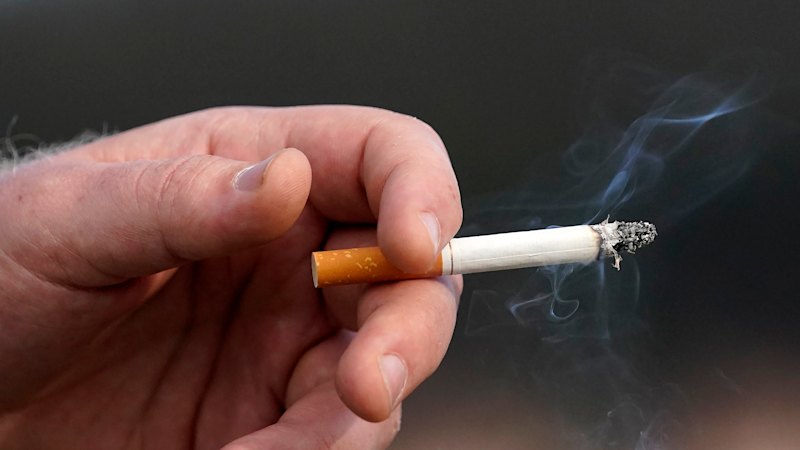

London: A tough new law on tobacco has drawn acclaim in Britain for banning the product for the next generation of customers – as well as sparking warnings that it will not work.
The law makes it illegal for stores to sell cigarettes and vapes to anyone born in or after 2009, in changes that have passed parliament after years of advocacy from both Conservative and Labour governments.
But the ambitious reform is being challenged by critics who believe it will drive customers to the black market and send tax revenue up in smoke.
In a regime that goes far beyond Australian curbs, the British law will raise the legal age for buying tobacco by one year each year until anyone currently 17 or younger can no longer legally buy the product.
Supporters are hailing the law as a way to give the next generation freedom to live longer and healthier lives.
“It will protect future generations from the misery of repeated attempts to give up smoking,” said the Association of Directors of Public Health during the long argument over the changes.
“There is no liberty in addiction, and nicotine robs people of their freedom to choose.”
The goal is to create a “smoke-free generation” by making it illegal to sell tobacco products to younger customers and, over time, any customers at all.
While it is already an offence in the UK to sell nicotine vapes to anyone under 18, the new law also bans non-nicotine vapes for these customers. And it would make it illegal to distribute vapes free of charge to this group.
Police will have the power to issue on-the-spot fines for anyone selling tobacco or vapes to those below the age limit, or those buying them for someone else who is underage.
No other large country is attempting such sweeping change. While New Zealand attempted a ban several years ago, the law was later overturned. Only the Maldives has a similar regime, which it set up last November.
The ferocious argument in Britain has parallels in Australia, however, because critics of the UK law have pointed to the surge in the Australian black market as a sign of things to come.
The Australian approach, which seeks to curb vapes and increase excise without banning cigarettes outright, has been described as a social, economic and legal disaster because of the rise in the black market and the fall in tax revenue for the government.
The UK law, approved by parliament on Tuesday, can be traced to the previous government under Conservative leader Rishi Sunak, who put forward the plan as prime minister in 2023. It was continued under the Labour government by Prime Minister Keir Starmer.
Whether it survives, however, depends on the next election, due in 2029. Reform UK leader Nigel Farage has vowed to repeal the law if he wins.
The stakes are high. Cancer Research UK told parliament last year that smoking causes around 57,800 cancer cases a year across the country – and that two out of three people who smoke will die from the habit.
“Smoking has the illusion of a free choice, but it is an addiction, and people need support to quit,” it said.
“Around six million people in the UK still smoke. Nothing would have a bigger impact on reducing the number of preventable deaths in the UK than ending smoking.”
The government’s modelling said the law would prevent 470,000 disease cases by 2100.
But that assumes everybody obeys the ban. The critics believe customers will find other ways to buy what they want.
Tobacco duties are tipped to raise £8 billion (about $15.1 billion) this financial year, according to the Office for Budget Responsibility, but that is down from £10.2 billion in 2022. The government thinks this is due to falling cigarette consumption.
The problem is that smoking rates are declining slightly, but the tax revenue is falling heavily, which suggests that the black market is growing.
The number of smokers as a proportion of the population fell from 14.1 per cent to 11.7 per cent between 2019 and 2022, according to the Office of National Statistics.
Christopher Snowdon, a researcher at the Institute of Economic Affairs, a free-market think tank, points to a much bigger fall in legal cigarette sales – down 52 per cent from 2021 to 2025, based on official figures from His Majesty’s Revenue & Customs (the august term for their tax office).
“The conclusion is obvious: more and more smokers are buying tobacco from illicit sources,” he says.
Snowdon expects this to lead Britain towards the Australian problem of falling tax revenue and rising crime associated with the illicit tobacco trade.
“Legal sales have continued to plummet,” he says. “Tax revenues are greatly undershooting [Office for Budget Responsibility] estimates, and I expect this to continue.
“The generational tobacco ban will only accelerate Britain’s journey towards an Australian-style fiasco, although it is difficult to predict by how much.”
For some, the health benefits of the ban outweigh the concerns about tax receipts and the black market. One advocacy group, Action on Smoking and Health, estimates smoking costs society £46 billion every year for England – an astonishing $89 billion. The burden on the National Health Service, the nation’s healthcare safety net, is significant.
But what if Britain drives smokers to the black market and sacrifices tax revenue without making a meaningful difference to the use of tobacco? The “smoke-free generation” is a bold ambition. If it angers voters, they will know how to stub it out.
Get a note directly from our foreign correspondents on what’s making headlines around the world. Sign up for our weekly What in the World newsletter.
 David Crowe is Europe correspondent for The Sydney Morning Herald and The Age.Connect via X or email.