Last Christmas Eve, I received the best present ever. It was news that Australia had submitted a dossier to the World Health Organisation seeking confirmation of the elimination of trachoma – a bacterial eye infection that is the world’s leading infectious cause of preventable blindness – in the nation.
On April 29, WHO declared Australia had become the 30th country to eliminate trachoma as a public health problem. Until now, Australia had been the only developed nation that still had endemic rates of trachoma. And all those affected are Aboriginal or Torres Strait Islanders, largely as a result of repeated episodes of trachoma bacterial infection due to poor sanitation.
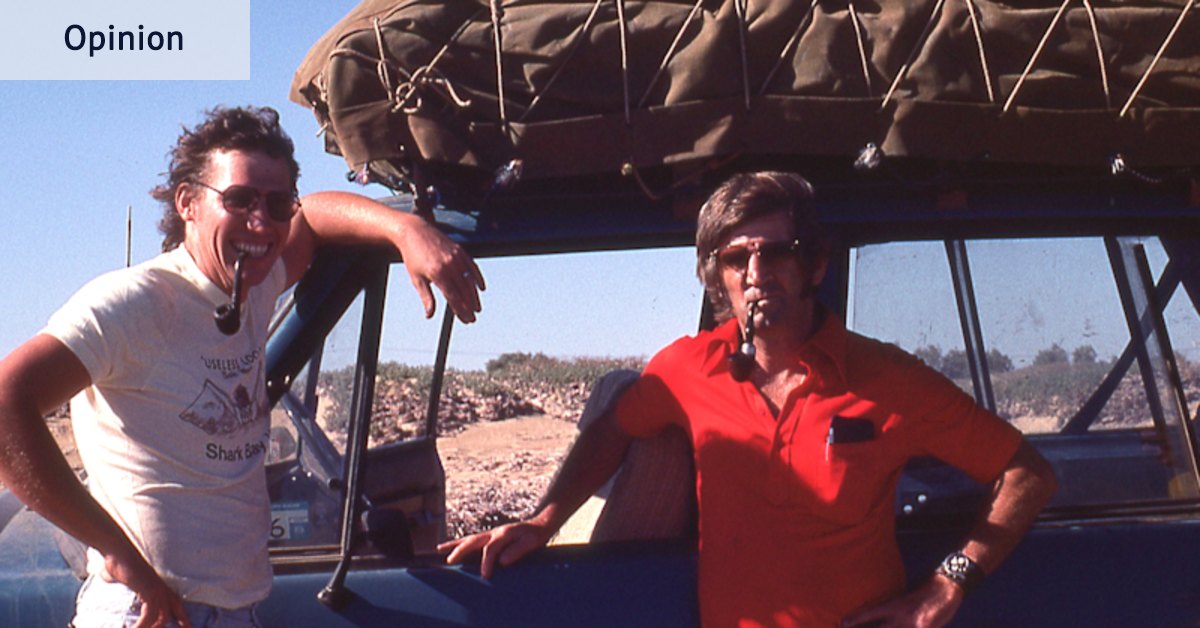
This milestone was reached almost 50 years to the day that I started work on trachoma. On a bit of a whim, I had asked Professor Fred Hollows if I could join him on his next trip to Bourke, in the NSW outback. Fred would travel there for a long weekend two or three times a year to provide free eye care and eye surgery for Aboriginal people.
It was 1976, and Fred was profoundly concerned about equity and the injustice of the desperate state of so many Aboriginal people and their communities.
I was surprised when a little later I received a call from Fred as he barked down the phone: “Taylor, I want you to be in Port Augusta, 19 May.
“I want you to spend two weeks working with me as we start up this new national program on Indigenous eye health.”
I didn’t know at the time that he and the College of Ophthalmologists were in talks with the Commonwealth government to set up the National Trachoma and Eye Health Program.
I’ve often said I was led astray by Fred Hollows at a tender age, and have been “a stray” ever since.
When I heard the news about WHO confirming trachoma’s elimination, I had a nip of scotch in memory of Fred and all the work we had done together with our teams.
Fred was always very supportive to me, a true mentor and teacher. He opened my eyes to the appalling state of Aboriginal health. He showed me how much more one could do by looking and thinking about what was happening in the community. There was no way I could influence the eye health of communities just by doing examinations one at a time.
He changed my life.
From 1976 to 1978, the trachoma program teams visited every Indigenous community in Australia. The work would start with Trevor (Buzza) Buzzacott, an Arabunna man. As the liaison officer, he would let communities know what the program was about. We would arrive and set up the examination area, sometimes in a clinic building, or under a shelter, or in an old army tent that we carried.
People would be registered, and checked. If they had a late stage of trachoma, we would arrange surgery, which gave us a chance to save their sight. If their vision was otherwise poor, they would be measured up for glasses. We would prescribe lenses and OPSM would deliver the glasses a few weeks later to the local clinic, at no cost.
After returning to the Eye and Ear Hospital in Melbourne for a few weeks later in August 1976, Fred called me up again, this time to lead a second team on a full-time basis to speed up the work of the program.
People who are blind are twice as likely to die as those who have good vision. They are eight times more likely to fall. So, blindness has a devastating impact. And Aboriginal people still have three times more blindness than Australia’s non-Indigenous population.
The first post-operative dressing and the removal of the eye pads was a time of excitement and joy – every single time we performed that surgery. Having blind people who can see again, you actually transform their lives. The astonishing lesson that one could assemble resources in such a remote area so that world-class eye surgery services could be provided still amazes me.
I stayed on as the assistant director of the program for a year or so. In the end, we examined more than 60,000 Aboriginal people across about 400 communities and nearly 40,000 others in rural and remote areas.
Despite this work, rates of trachoma changed little over the following years. In 2008, I set up the Indigenous Eye Health Unit so I could focus on mobilising resources to finally eliminate trachoma. Finally the government committed to supporting and funding the WHO “SAFE” strategy: Surgery for the in-turned eyelashes caused by scarring; antibiotics for the infected communities; facial cleanliness, especially for young children; and environmental improvements. Most important of all was a community-driven change in habits. Trachoma requires 150 to 200 instances of reinfection to cause blindness, so cases can be minimised by keeping kids’ faces clean and stopping the spread of infection.
Trachoma prevalence in Indigenous children aged five to nine in at-risk communities dropped from 14.9 per cent in 2009 to 1.5 per cent in 2024, closing a major health equity gap.
It was achieved after decades of community-led action, advocacy and philanthropy. Success was driven by Aboriginal Community Controlled Health Organisations, which provided culturally safe care and built trust, crucial for sustainable health improvements.
The elimination of trachoma in Australia underscores a powerful public health lesson: preventable diseases can be defeated through persistence and people-centric interventions.
As WHO director-general Dr Tedros Adhanom Ghebreyesus said on declaring this proud moment for eye health in Australia: “This success reflects sustained commitment, strong partnerships, and a focus on reaching populations most affected by health inequities.”
Thirty years ago, I founded the Centre for Eye Research Australia to translate research that can be applied in low- and middle-income communities around Australia and the world, where more eye care services are needed.
Like Fred showed me 50 years ago, bringing people together builds collective strength from individual expertise. And funding research is critical to continue driving that research with the right tools, to take those ideas from the lab out to the community to transform lives.
Just as we’ve done with trachoma.
It’s what well-funded eye research looks like, and what’s possible when people – governments, business, institutions and generous philanthropic supporters – choose to support it.
Hugh Taylor is a Melbourne laureate professor emeritus and founder of the Indigenous Eye Health Unit at Melbourne University and the founder of the Centre for Eye Research in Australia, which celebrates its 30th anniversary this year.
 Hugh Taylor is a Melbourne laureate professor emeritus and founder of the
Indigenous Eye Health Unit at Melbourne University and the founder of the Centre for
Eye Research in Australia.