Updated ,first published
Labor’s efforts to control the NDIS have gone backwards this year and growth is picking up speed, raising the stakes for Health Minister Mark Butler as his new laws to deliver $38 billion in budget savings within four years meet fierce resistance from affected participants.
Fresh data in the National Disability Insurance Agency’s March quarter report, published on Friday, shows the annual rate of NDIS growth has jumped from 10.3 per cent to 11.3 per cent in three months as pressures keep weighing on the $56 billion scheme. It added 13,000 new participants last quarter.
The blowouts underscore why Labor is seeking dramatic new powers to put a quick brake on runaway spending by allowing the minister to make sweeping cuts to funding or therapies across entire sections of the NDIS.
But the vast expansion of ministerial powers, contained in the bill that Butler introduced to Parliament on Thursday, is generating pushback from participants whose budgets could be driven down even when they have been assessed as needing a higher level of funding.
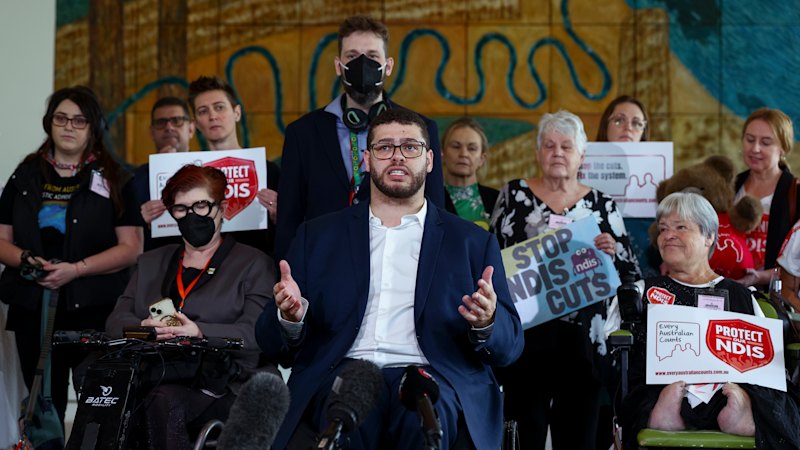
The Every Australian Counts campaign group – which led to the creation of the scheme 13 years ago – has warned the laws will break the central promise that underpins the policy.
“When governments established the NDIS, they made a promise to people with disability and our families that we would receive the reasonable and necessary supports we need to live ordinary lives safely and with dignity,” said the campaign group’s chair, George Taleporos.
“This bill risks undermining that promise by allowing the minister to cut whole categories of NDIS funding, even where those cuts leave participants without enough funding to pay for reasonable and necessary supports.”
Butler says he will use the powers to cut social and community participation budgets, which have tripled overall to $12 billion in four years, and lower average therapy allocations from about 72 hours to 68 hours a year.
The bill, which also includes tighter eligibility criteria and more rules to deal with fraud, enables an NDIS overhaul that will be crucial to delivering the majority of $64 billion in savings that Labor baked into Tuesday night’s budget to improve its bottom line.
Michael Brennan, chief executive of think tank e61, said it was the first time savings from a single program had dominated the budget so heavily. “Perhaps never before has the entire fiscal strategy rested so heavily on the successful implementation of one budget measure,” he said.
The closest example was former treasurer Joe Hockey’s budget, which sought to cut $80 billion in future spending on health and education. But while Hockey’s changes could have been made with the stroke of a pen, Brennan said: “The NDIS save is different”.
“It does not have the usual set-and-forget quality. The implementation task will be constant and complex – a daily grind of hard decisions at the coalface. If the current and future governments are unable to achieve the full save, the fiscal outlook worsens materially,” he said.
“The recent history of NDIS cost revisions is not encouraging. [It] is one of actual spending consistently exceeding projections. Time and again, governments have forecast a flattening of the curve, only to see actual spending continue on its steep upwards trajectory.”
Even if the NDIS grew at 5 per cent over the four-year forward estimates, rather than the projected 2 per cent, Brennan said the deficit at the end of the decade would decline by $6 billion – the combined effect of Labor’s major changes to taxation of trusts, property and capital gains.
NDIS Minister Jenny McAllister said the $350 million blowout contained in Friday’s quarterly report showed why the government’s changes were urgent. “[It] makes it clear that the fundamental barrier we face when it comes to sustainability is the design of the scheme itself,” she said.
Labor will need Coalition support as the Greens have joined disability advocates in fighting the laws, which were on Thursday sent to a Senate committee that has one month to turn around a report.
While the government is promising to consult the disability community, the speed and scale of cuts have caused anxiety. Every Australian Counts is conducting surveys, supporting protests and encouraging people to email MPs in a campaign against the cuts.
Taleporos, the chair, said people appreciated the scheme’s financial sustainability was important but that “it cannot become a justification for reducing essential supports to people with disability need”.
“The NDIS was created so people with disability could live ordinary lives, leave home, participate in the community, work, study, build relationships and have choice over our supports,” he said.
“If passed, this bill risks changing reasonable and necessary supports from what people with disability need into only what government decides it can afford… Our lives and safety are at stake here. This bill needs proper scrutiny and cannot be rushed through.”
Get across all our coverage
 Natassia Chrysanthos is Federal Political Correspondent. She has previously reported on immigration, health, social issues and the NDIS from Parliament House in Canberra.Connect via X or email.